Highest Rated Videos
 7,977 views
12,195 views
7,977 views
12,195 views 12,783 views
11,758 views
11,561 views
12,783 views
11,758 views
11,561 views
 502,890 views
 15,961 views
 18,701 views
 13,103 views
Related Videos
 241 views
 1,473 views
 1,199 views
 2,971 views












Secular geologists have long claimed that oil can survive millions of years underground because it somehow becomes pasteurized at 80 oC (176 oF), preventing further biodegradation.1 These geologists argue that oil can be preserved for millions of years because the subsurface temperatures are simply too hot for microbial activity. And once the oil is pasteurized (heated enough to destroy microorganisms) and t… More… …read more Source: icr.org

By Ken Ham Researchers have announced what they believe to be the oldest flowering plant, a flower with a tree-shaped style and spoon-shaped petals from the early Jurassic, some supposed 174 million years ago. The fossils of this plant were examined with high-powered microscopes that revealed it was an angiosperm, a specific group of plants that have flowers and enclosed seeds. One researcher describes the origin of angiosperms as a long “academic headache,” and the lead author of this new paper on this fossilized flower comments, Researchers were not certain where and how flowers came into existence, because it seems [More]

By Harry F. Sanders, III The hoatzin is a very unique bird, a conglomeration of traits typical of birds, reptiles, and mammals. Its most unique features are distinctly un-birdlike. …read more Source: AIG Daily

By Heather Brinson Bruce Do fossils require millions of years to form? Hardly! Even secular geologists now recognize that rocks form very quickly. …read more Source: AIG Daily
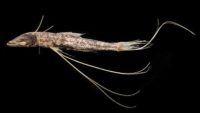
By Harry F. Sanders, III The tripod fish, which is challenging to evolutionists, is a truly unique creature that exhibits remarkable evidence of God’s hand in his creation. …read more Source: AIG Daily

Secular science believes Earth’s oceans have existed for about four billion years.1 They also think the level of the ocean has remained about the same over that vast period of time. However, a new study published in Nature creates serious problems for the uniformitarian origin of our oceans and their long-term sustainability.2 Chen Cai and his colleagues from Washington University … More… …read more Source: icr.org

The sea creature that makes so much of an impression, its effects can be seen from outer space. …read more Source: creation.com
In the opening sentence in an article titled “Scientific Regress”, the author William Wilson remarks: “Scientific claims rest on the idea that experiments repeated under nearly identical conditions ought to yield approximately the same results, but until very recently, very few had bothered to check in a systematic way whether this was actually the case.”1 The article is about science and the repeatability of scientific results published in the peer-reviewed scientific literature. (Indented paragraphs are quoted from this article, unless otherwise referenced.) Claims not replicated Read More: Science and fraud – creation.com

The evolutionary timeline has a problem: Saturn’s icy rings are too ‘pristine’. …read more Source: creation.com

By Harry F. Sanders, III 2018 was a busy year for biology. We covered many of these events on Answers News or our website to equip the church to answer the questions of our day. …read more Source: AIG Daily
How did this fascinating tourist feature form? …read more Source: creation.com

Harvard scientists are planning to inject a small cloud of tiny particles called aerosols into the atmosphere. They then hope to study the behavior of these particles.1,2 This effort, called the Stratospheric Controlled Perturbation Experiment (SCoPEx), is designed to obtain information relevant to geoengineering—an attempt to deliberately cool the climate as a means to fight global warming. … More… …read more Source: icr.org

By Ken Ham A recent editorial reminded me of the secular claim that diamonds take billions of years to form. Is that true? …read more Source: AIG Daily
When investigating true-vs.-false controversies, words are very important. Yet Christians sometimes unintentionally perpetuate false teachings by using misleading terms that accommodate evolutionary assumptions.1,2 This is what law courts call confusion of issues, a truth-interference problem so serious that trial judges, invoking Evidence Rule 403, ban such confusing terminology when admitting trial evidence.3 For example, the origin of species is a confusing topic. What exactly is a species? How can we properly analyze and discuss our origins if the words we use mean different things to different people? Consider this approach by Wikipedia, the multi-anonymous online encyclopedia that institutionally assumes [More]
While I was chatting once with an inmate at a Pennsylvanian prison, he told me that upon his arrival a guard wryly said he was free to do whatever he wanted…so long as it was regulated. Regulations are a method of control using rules in lieu of physical handling. Since regulatory control over systems, processes, and behaviors is often essential, regulations are pervasive in organizations—and also in biology. If engineered control systems and biological regulatory systems are both based on rules, how similar are they? Read More: Engineered Adaptability: Biological Networks Feature Finest Engineering Principles | The Institute for [More]
Archaeopteryx is a big word that simply means “ancient wing.” It refers to a set of fossils of a strange-looking extinct bird. Books promoting evolution often show pictures of Archaeopteryx. Its beak had small teeth, so many scientists see it as playing a lead role in an unthinkably long plot about reptiles evolving into birds. Others admit it was just a bird. New research places Archaeopteryx more firmly in the bird category than ever before. Read More: Does Archaeopteryx Show Bird Evolution? | The Institute for Creation Research

Time to clear up the confusion caused by misleading use of the term ‘fitness’. …read more Source: creation.com

By Dr. Danny R. Faulkner What’s up in 2019? The year begins with a bang, for on the morning of January 1, the moon and Venus will be close together in the sky. …read more Source: AIG Daily

A Polish research duo described the remains of an elephant-size synapsid from upper Triassic rocks. Only it’s not supposed to be there. Secular reactions express shock at this turn from a longstanding evolutionary tale. Synapsids are commonly referred to as “mammal-like reptiles,” but were neither reptiles nor mammals. They were unique—the sail-finned dimetrodon was a synapsid. Like dinosaurs, … More… …read more Source: icr.org

By Dr. Don DeYoung There have been many attempts to explain the Christmas Star scientifically, and three will be mentioned here. …read more Source: AIG Daily
What does Grand Canyon tell us about the Genesis Flood? ICR geologist Dr. Tim Clarey uncovers the evidence and shares about his work with the ICR Discovery Center. Can Christians be confident about the origin of life? And what are genetic clocks? ICR geneticist Dr. Jeff Tomkins explains how genetic research confirms the Bible. Listen: Grand Canyon and Genetic Clocks Confirm the Bible | The Institute for Creation Research
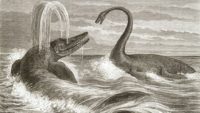
By Ken Ham New research reveals ichthyosaurs, extinct marine creatures, likely had blubber, smooth skin, countershading, and were warm-blooded. Now that’s interesting and will certainly prompt scientists to take another look at this fascinating creature. But the real story here is one you have to read between the lines to get. Johan Lindgren, the lead researcher on this study published in Nature, states of the find: This animal’s preservation is unusual, especially for a marine environment . . . This specimen has given us more evidence that these tissues and molecules can preserve for extremely long periods, and that soft [More]

Does CMI just bash evolution? Learn about both the positive and negative arguments in biblical apologetics. …read more Source: creation.com

When it comes to explaining how our universe came into being, widespread speculation is embraced over hard evidence. …read more Source: creation.com

The lovable, designed gecko makes the news again this year.1 In 2009, it was discovered the gecko had amazing nocturnal vision.2 Even their sophisticated feet that secrete phospholipids, complex membrane molecules, are a wonder of creation.3 The impediment of directional hearing in small animals, such as the gecko, is cleverly solved by the Creator’s design. In larger creatures, … More… …read more Source: icr.org

It does not add up for the evolutionary story. …read more Source: creation.com

A research team described a form of fossilization that it thinks can explain how original proteins have lasted for millions of years in Earth’s crust. It does match certain fossil features, but leaves two key questions unanswered. And that leaves soft tissue fossils still looking quite young. Publishing in Nature Communications, Yale University scientist Jasmina Wiemann and colleagues drew two parallels… More… …read more Source: icr.org