• Search By Category

    • Search Box

    • Categories

  • Categories

  • Tag Cloud

  • Highest Rated Videos

    12,643 views
  • Related Videos

    138 views
    360 views
  • Archives

Here’s what the old-earth creationist book Dinosaur Blood and the Age of the Earth gets right and wrong about radiocarbon dating.
The supposed age of the earth—four-and-a-half billion years ago—isn’t based on dating the earth. It’s based on dates from meteorites! Learn More


A male daddy longlegs may spend days guarding a cluster of eggs. He cleans them and drives away threats.1 A new study says this type of parental care arose many times through evolution.2 A report from the Linnean Society of London describes the research as helping explain the “origins of fatherhood.”3 Yet the study did not observe fatherhood coming into existence. Instead, it documented creatures... More...

All around the earth, we find scars from meteorite impacts. Some of these are relatively small; others are huge and would’ve been catastrophic. Learn More
Did you know many secular scientists believe life’s raw ingredients arrived here on meteorites? Learn More  
According to evolutionary ideas, dinosaurs went extinct around 65 million years ago. But we find evidence that dinosaurs lived much more recently than that! Read More
Our tongues can sense five basic tastes: sweet, salty, sour, bitter, and savory. Well, one study suggests we can sense a sixth “taste”: tasteless water! Learn More
A jumping spider in Central America looks like an athletic predator, but it eats Acacia leaf tips and nectar. Read More
The termite nests that weren’t—doing good science is important in meeting challenges to the Bible. Read More


Could an asteroid impact really spark life? A recent AGU Advances paper says early asteroid impacts might have cracked Earth’s crust and made large hot-water systems where life could have begun.1 But the main problem remains: the study gives a possible opportunity for chemistry to happen, but it doesn’t show how dead chemicals made the coded systems needed for life.


The paper simply suggests large im... More...

Evolution is a blind-faith belief.
Is creation science “anti-science” and “anti-intellectual”?


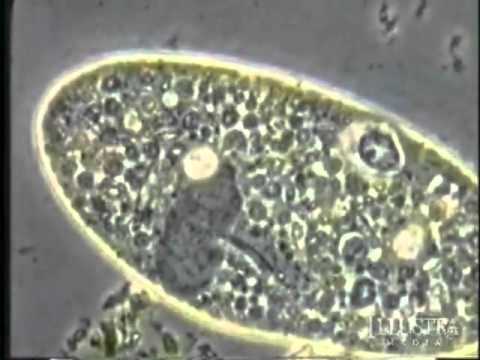
Imagine an intersection where the red stop sign suddenly means, “Right turn only.” Most drivers wouldn’t reach their destinations efficiently or safely if their traffic signs changed meaning. Yet inside one tiny pond organism, something similar is happening—and the system still operates.


Conventional scientists recently studied a microscopic ciliate called Oligohymenophorea sp. PL0344 and found that... More...

NASA’s JWST telescope is enabling us to see further into the universe than we’ve ever seen before. Will it give the big bang big headaches? Read More
When debating skeptics who insist that science is all about evidence, it’s important to show that their worldview is incoherent; it does not make rational sense of the world we live in. Read More
The James Webb Space Telescope has produced images of the most distant galaxies we’ve ever observed. Does this new evidence clearly refute the big bang and support biblical creation? Or is the truth more nuanced? Read More
See why they are gigantic underwater landslides formed during Noah’s Flood. Read More
Bird feeding is so popular across the UK that some scientists say it’s “driving rapid evolution.” Learn More
Creationists have often dismissed the concept of dark matter. But could it be that the observations point, not to hidden mass, but to an inherent—and designed—structure of space itself? Read More
How did a system designed to find truth become so vulnerable to falsehood? Read More
Many dinosaurs are now depicted with feathers, but the evidence is far from conclusive. Read More


Paleontologists recently rediscovered the largest known set of vertebrae from the giant fossil shark Otodus megalodon, popularized by The Meg movies as a hungry, gigantic man-eating version of the great white shark.1,2 These fossils were lost until recently, where they were found in one of the collections at the Natural History Museum of Denmark. The substantial size of the vertebrae and their associated growth band... More...

The complexity of life is, overall, unimaginable. Let’s briefly explore how the complex design of just one tiny part of this—a fascinating enzyme called glutamine synthetase—challenges naturalistic explanations of life’s origin. Read More


The prestigious journal Science has published evidence that a planet orbiting a red dwarf star has an atmosphere.1,2 This extrasolar planet, or exoplanet, is located 48 light-years from Earth and has been given the designation LHS 1140b, because it is the first exoplanet discovered around the star LHS 1140 (the designation “a” is reserved for the exoplanet’s host star). Biblical creationists should be exc... More...

News reports shouldn’t shake our faith in God’s Word. Because the Bible is true, scientists’ findings will eventually confirm it, when more research is done.


Over 60 years ago, conventional scientists taught that Neanderthals were slouching, subhuman brutes—just another evolutionary link bridging the gap between animals and people. But recent research calls such a claim into question once again.


According to evolutionary theory, Neanderthals lived 34,000 to 400,000 years ago, but creationists would say they lived only about 4,000 years ago, shortly after the Flood (early Ice Age... More...

If Lyme disease causes such urgent and chronic disease issues, where do Borrelia bacteria and ticks fit into a very good creation?