Highest Rated Videos
 8,465 views
12,716 views
8,465 views
12,716 views 13,186 views
11,836 views
13,186 views
11,836 views
 503,440 views
 16,370 views
 19,258 views
 13,602 views
Related Videos
 1,625 views
142 views
371 views
1,625 views
142 views
371 views 2,810 views










Another example of a natural selection favouring an information-losing mutation, which is the opposite to that required for goo-to-you evolution. …read more Source: creation.com

Sorghum is an important food crop due, in part, to its extreme drought-tolerance. This characteristic makes it an ideal model for demonstrating how biological entities are able to continuously track environmental changes. A new study takes a big stride in revealing some mechanisms underlying drought tolerance. It shows that when water is scarce sorghum radically manipulates the expression of its photosynthesis-related genes and its relation… More… …read more Source: icr.org
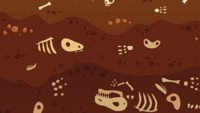
By Ken Ham A scientific journal recently published a review of eighty-five reports of “organic remains in fossils.” These included “blood vessels, dried but intact skin, and connective tissues on or inside fossils like dinosaur bones . . . red blood cells and bone cells . . . [and] biochemicals specific to animals (not microbes), including proteins, collagen, elastin, ovalbumin, and keratin.” What was the big takeaway for them from this incredible report? You’ll have to read on to find out! The Institute for Creation Research wrote an excellent article on the above review. It states that the reports in [More]
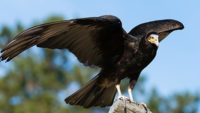
By Dan Breeding Vultures are possibly the creepiest birds on the planet. But there is a beautiful design behind this yellow-headed vulture. …read more Source: AIG Daily

Koalavirus likely not example of invasive genetic element but rather part of the genome’s overall design. …read more Source: creation.com

Can uniformitarianism be saved from the drastic incompleteness of the rock record under long-age assumptions? …read more Source: creation.com
01/18/20 “Fascinating article detailing how a baby develops from conception to birth. The sheer complexity involved in this process is mind boggling. Nonetheless atheists insist that all of this is a product of blind random chance processes – what foolishness!” Admin The very moment a male sperm cell penetrates a female egg cell, a new human life comes into being. This event, known as fertilization, forms a tiny, single-celled human distinct from his or her mother mother. This little life is called a zygote, meaning “yoked or joined together.”1 It’s the living seed that will be a newborn [More]
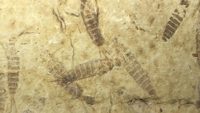
By Ken Ham More and more scientists and researchers are shocked by the discovery of fossilized soft tissue (or, even more incredibly, unfossilized soft tissue!) in creatures thought to have died millions of years ago. These findings don’t fit the narrative most of us learned in school: a creature is slowly buried by sediments, gradually becoming fossilized. Instead, such fossils point to rapid, catastrophic burial. And a new find points, yet again, to catastrophic burial. Fossilization is a catastrophic process, as something has to be buried quickly. Researchers uncovered the fossils of tiny bug-like creatures that are buried in so-called [More]

How do you know when something has been engineered? One way to tell is to study the words used to describe its characteristic features. The Mt. Rushmore rock faces have different characteristics from the surrounding uncarved rock that don’t resemble portraits of American Presidents. Good scientific theories should be able to make predictions—including ones intended to explain biological phenomena. ICR previously… More… …read more Source: icr.org

Not a problem for the biblical timescale. …read more Source: creation.com

Deactivation of genes coding for limb morphology and loss of limbs is yet another case of devolution, not evolution. …read more Source: creation.com

Bonnethead sharks have short ‘carnivorous ancestry’ intestines, yet their stomachs have been found to contain up to 62% seagrass …read more Source: creation.com

By Harry F. Sanders, III Top stories of 2019 in biology: Plant communication, Human Y chromosome molecular clock, and remembering popular AiG speaker, Dr. Tommy Mitchell. …read more Source: AIG Daily

By Dr. Andrew A. Snelling How could neat uniform sedimentary rock layers be deposited during the Flood cataclysm with all the fast-moving waters? …read more Source: AIG Daily
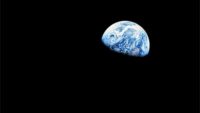
By Dr. Danny R. Faulkner What’s happening in the night sky with Venus, Mercury, Mars, Jupiter, Saturn, and the Perseid Meteor Shower in 2020. …read more Source: AIG Daily

Does the supposed ‘flat earth/solid sky’ cosmology of the ancients mean we can read the Genesis 1 days non-literally? …read more Source: creation.com

By Dr. Danny R. Faulkner Betelgeuse, the 2nd brightest star in Orion, is one of the brightest stars in our sky. Some reports suggest it’s becoming a supernova—which is doubtable. …read more Source: AIG Daily

A new review paper published in the journal Expert Review of Proteomics summarizes 85 reports of organic remains in fossils.1 Some of the reports describe whole tissues like blood vessels, dried but intact skin, and connective tissues on or inside fossils like dinosaur bones. Other reports describe whole cells like red blood cells and bone cells. Other reports in the review paper describe biochemicals specific to animals… More… …read more Source: icr.org

By Troy Lacey The biggest stories in 2019 in geology and paleontology: includes how diamonds can take weeks to form in a lab, fossilized insects in gemstones, mass extinctions, and more. …read more Source: AIG Daily

A crayfish that reproduces asexually raises some important questions regarding the origins of sex. …read more Source: creation.com
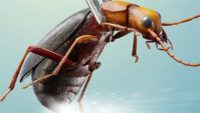
By Melissa Webb When Dr. Andy McIntosh investigated the bombardier beetle, he discovered explosive evidence of God’s intricate design. …read more Source: AIG Daily

By Dr. David Menton Transitional forms in the fossil record are rarely, if ever, observed. This lack of evidence is very damaging to macroevolutionary theory. …read more Source: AIG Daily
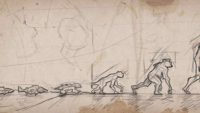
By Ken Ham What is evolution? Well, that really depends on whom you ask. There are all kinds of definitions out there. Typically, when we think of evolution, we think of Darwinian evolution—the idea of all life descended from a common ancestor as one kind turns into another kind, and eventually ape-like creatures supposedly evolved into humans. But now we often hear a very different definition: those small changes within a kind are, well, evolution! A recent article defined evolution according to a definition from famous evolutionary biologist, Richard Dawkins: “evolution is changed gene frequencies in populations.” The article goes [More]

Echinoderms, “spiny-skinned” invertebrates, are first found in the Cambrian sedimentary rock layers as 100% echinoderms. The first brittle stars (Echinoderm, class Ophiuroidea) were found in the Early Ordovician sediments and don’t show any evolution. One of the more interesting of the Ophiuroidea is the brittle star (Ophiocoma wendtii). While snorkeling the waters of Hawaii several years ago, I f… More… …read more Source: icr.org
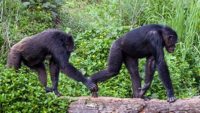
By Ken Ham Sometimes you just have to shake your head. That was my reaction when I read this headline, “Zoo Chimps Doing a ‘Conga Line’ Could Teach Us How Humans Evolved to Dance.” Yes, you read that right! Two chimps swaying and walking in synchronization is thought by these researchers to provide insight into the evolution of dance. These particular chimps were very closely bonded, having been together since they were just a few months old (one of the chimps died in 2018). For several years, they exhibited this strange, apparently self-taught behavior, of walking and swaying in sync. [More]

It doesn’t fit any evolutionary story. …read more Source: creation.com

Based on biblical chronologies, we can determine that the global Flood recorded in Genesis occurred about 4,500 years ago.1 After the Flood, the earth was repopulated by Noah’s three sons and their wives. So we should find genetic signatures of this timeline in human DNA. While a number of previous studies by both secular and creation scientists have supported this general timeline,2-3 a recent study using extens… More… …read more Source: icr.org