Highest Rated Videos
 8,496 views
12,738 views
8,496 views
12,738 views 13,214 views
11,860 views
13,214 views
11,860 views
 503,481 views
 16,391 views
 19,277 views
 13,624 views
Related Videos
578 views
 2,437 views











Dolphins use ‘double sonar beam’ to narrow down prey’s location. Algorithm used to analyse this could help design better body scanners. …read more Source: creation.com

By Troy Lacey A new study in the journal Nature Medicine revealed a nasty downside to the mutant gene variant of CCR55, which prevents HIV infection. …read more Source: AIG Daily

By Melissa Webb Kids don’t just play differently from adults, they think differently too—by God’s design. …read more Source: AIG Daily


Researchers have just reported a newly recoded bacterial genome in which genetic optimization was markedly reduced.1 Optimization is a principle of designed systems. Scientists hacked the bacteria’s genetic code and it experienced a huge reduction in growth. It also exhibited an abnormal cell shape. Despite this obvious detriment to the bacteria, the researchers gloated that life could still operate—a common, yet fail… More… …read more Source: icr.org

May 29 is World Digestive Health Day. The digestive system involves ten organs over nine meters of space, and contains over 20 specialized cell types. …read more Source: AIG Daily

Electron microscope unlocks the amazing design of the structures that makes avian flight possible. …read more Source: creation.com
Perhaps the largest creature God created, this denizen of the deep is awesome to behold. Read More

Can a single fossil showcase the immense power of the global Flood? One such revelatory fossil may have been found recently in Myanmar encased in beautiful, golden Cretaceous amber.1 And secular scientists are scrambling to come up with an adequate explanation for its existence. Tingting Yu, from the Nanjing Institute of Geology and Palaeontology in China, and colleagues published their baffling discovery i… More… …read more Source: icr.org
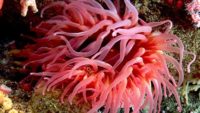
By Harry F. Sanders, III A recent study sequenced the mitochondrial genome of tube anemones species and revealed surprises that cause headaches for evolutionary classification. …read more Source: AIG Daily

The duck-billed dinosaurs (order Ornithischia, family Hadrosauridae) were a diverse group that allegedly lived 90 million years ago, with hundreds of specimens unearthed by paleontologists in China and North America. Hadrosaurs are noted, of course, for their expanded duck-like bills, solid crests, and fleshy combs (a projection of fleshy material above the head).1 Much has been learned about hadrosaurs due to the discovery of se… More… …read more Source: icr.org

Eukaryotic genes in newly discovered Medusavirus hints at devolution and not evolution …read more Source: creation.com

By Harry F. Sanders, III Over one hundred researchers have recently examined the genomes of over two hundred fossil horses and compared it to the genomes of modern horses. …read more Source: AIG Daily

By Ken Ham We constantly see headlines proclaiming the “rapid evolution” of one species or another. The latest one announced the so-called “rapid evolution” of bird species in the tropical island paradise of Hawaii. It’s happening so fast, they describe it as “a blistering pace” of evolution. But, like all the other supposed “rapid evolution” articles, there’s no evolution taking place—just changes based on the genetic diversity that likely already existed in the living thing. The popular article summarizing the research explains that non-native birds are replacing the now extinct species previously native to Hawaii. These birds have quickly filled [More]

Hybridization occurs in the wild more than evolutionists thought. What does this mean for biblical creation? …read more Source: creation.com

By Ken Ham Due to their evolutionary assumptions, evolutionists believe so-called “early” animals are simple. One such animal is the tube anemone. Because they live slow, long, predictable lifestyles, it was assumed that they were simple. But new research shows their mitochondrial DNA is anything but simple. Mitochondrial DNA (mtDNA, located in the mitochondria of the cell and not the nucleus) is usually found in a ring shape, but in the tube anemone, it’s found in linear fragments. And the tube anemone now holds the record for the largest mitochondrial genome of any animal, with 81,000 base pairs. In comparison, [More]

By Ken Ham A new study, summarized in a lengthy National Geographic article, looked at the genome of over 200 fossil horses, as well as domesticated horses and the Przewalski’s horse, a rare wild horse in Mongolia. The National Geographic headline declared, “Speedy horses evolved only recently, says landmark equine study.” But what they were really looking at was not evolution—it was artificial selection! The study compared genetic diversity between fossil horses and living ones, including our domesticated varieties (of which there are around 600, all belonging to the same species). And what they found was that genetic diversity is [More]

By Frank Sherwin and Jeffrey Tomkins Fruit flies have been the foundational invertebrate of biology research for decades. Not only do they resist change, but there’s no record—fossil or otherwise—of their evolution from an unknown arthropod ancestor and they are clearly not related to any other creature.1-3 They have always been fruit flies. Researchers have recentl… More… …read more Source: icr.org

Sometimes scientists are so enthralled by the wonders of the nitty-gritty, they forget what’s really at issue. …read more Source: creation.com
Complex operations within a cell have to be present from the start for it to function at all. Read More
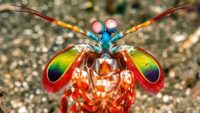
By Dr. Elizabeth Mitchell Tiny technology—an environmentally matched biological cloaking device—hides shrimp in plain sight. …read more Source: AIG Daily

A recent study on a plant in the mustard family (Brassica Rapa) provides evidence that plants continuously track environmental changes both in real time and across generations. Brassica Rapa utilize regulated innate mechanisms to produce “rapid” and highly tailored responses to the presence of pollinating bees, leaf-eating caterpillars, and the combined activities of both simultaneously.1 … More… …read more Source: icr.org

By Ken Ham The more we learn about what God has created, the more in awe of our Creator we should be. Just when we think we understand something, a new study shows we really didn’t know as much as we think we did. In fact, as finite beings we know hardly anything about creation compared to what there is to know. The layers of complexity in God’s creation are simply astounding! And that was highlighted in a new study that showed it’s not just our nose that contains olfactory receptors (the protein responsible for detecting smells)—it’s also our tongue. [More]
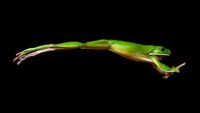
Does a “primitive” frog show how frog-hopping evolved? …read more Source: AIG Daily
The word “scallop” usually evokes a juicy, round adductor muscle – a seafood delicacy. So it isn’t widely known that scallops have up to 200 tiny eyes along the edge of the mantle lining their shells. The complexities of these mollusk eyes are still being unveiled. A new study published in Current Biology reveals that scallop eyes have pupils that dilate and contract in response to light, making them far more dynamic than previously believed. “It’s just surprising how much we’re finding out about how complex and how functional these scallop eyes are,” says Todd Oakley, an evolutionary biologist [More]

By Harry F. Sanders, III A study looked at the colors of lice on the feathers of numerous varieties of pigeons. According to the authors, the research was proof of evolution. Is it so? …read more Source: AIG Daily

How did their digestive biology change to make them need meat? …read more Source: creation.com