Highest Rated Videos
 8,496 views
12,738 views
8,496 views
12,738 views 13,214 views
11,860 views
13,214 views
11,860 views
 503,481 views
 16,391 views
 19,277 views
 13,624 views
Related Videos
 503 views
 4,069 views








By Dr. Matthew E. Ingle How could large reef systems with many generations of coral have grown in the approximately 4,400 years since Noah’s Flood? …read more Source: AIG Daily

Someone said the three-pound human brain is the most complex and least-understood biological structure in the known universe. Scientific research regarding this incredibly intricate organ will never end. In fact, a fascinating new discovery in the field of human brain microanatomy was recently made. Scientists discovered a nerve cell called a rosehip neuron—so-called because of its bushy appearance.More… …read more Source: icr.org

Do ‘quill knobs’ indicate that some dinosaurs have feathers? …read more Source: creation.com

As every jigsaw enthusiast knows, getting every piece of the puzzle to fit in perfect juxtaposition with its neighbours doesn’t happen by itself. …read more Source: creation.com
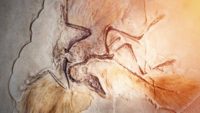
By Dr. David Menton Did dinosaurs evolve into birds? Are the birds we see at our window actually feathered dinosaurs? For many evolutionists these claims are unassailable facts. …read more Source: AIG Daily

By Jeffrey P. Tomkins Results from this study negate the concept of the 98.5% DNA similarity myth and highlight the extremely flawed and humanized nature of the panTro4 version of the chimpanzee genome. …read more Source: AIG Daily
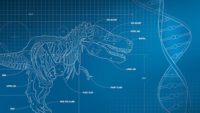
By Harry F. Sanders, III A study out of the University of Kent claims to have pieced together a portion of a dinosaur’s genome. This is a massive accomplishment—if their claim is true. …read more Source: AIG Daily
By Ken Ham The scientific community has been buzzing with the recent news that a small bone fragment recovered from a cave in Siberia is the remains of a 13-year-old girl whose parents belonged to what they call two different human species, Neanderthals and Denisovans. Her ancestry was revealed by a study of her mitochondrial DNA (from her mother) and her nuclear DNA (from both mother and father). The results showed her mother was a Neanderthal and her father a Denisovan. Now, is this surprising in a biblical worldview? Not at all. Neanderthals and Denisovans are not separate species, though [More]

By Buddy Davis What a nose! If you’ve ever seen a bloodhound at work, you can’t help but be impressed. …read more Source: AIG Daily

The scientific community continues to reel and exhibit bewilderment that well-preserved carbon-based (organic) fossil material regularly appears in sediments supposedly many millions of years old. One recent discovery of organic matrix is “evidence of exceptional preservation in the nacre and prismatic layers of a 66 Ma [million years] bivalve shell.”1 The mollusc shell in… More… …read more Source: icr.org

By Ken Ham According to a study of flowers trapped in amber, flowering plants had the same fragrant scents at the so-called “time of the dinosaurs” as many flowers today. …read more Source: AIG Daily

Deer show us that nearly any animal could become a carnivore … under the right conditions. …read more Source: creation.com
By Jean O’Micks Cephalopods, including octopuses, squids, cuttlefish, and nautiluses, are underrepresented in both genome sequencing projects as well as baraminology studies. …read more Source: AIG Daily

By Jeffrey P. Tomkins Have you ever woken up just before your alarm went off? It’s as if your body is wired with an internal clock. Actually, scientists have discovered trillions of them! …read more Source: AIG Daily
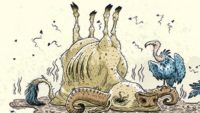
By John UpChurch Cleaning up dead animals really stinks—and that’s a good thing, which shows God’s wise provision even in a fallen world. …read more Source: AIG Daily

A recent Livescience article1 is entitled “The Galápagos Islands: Laboratory of Evolution.” It addresses, among other things, “unique examples of plant and animal life.” The islands contain a variety of biota (the animal and plant life in a particular area), such as the Galápagos giant tortoise, sea lions, the varieties of finches, waved albatrosses, penguins, marine iguanas, and hundreds of … More… …read more Source: icr.org

Biblical Creation predicts and requires rapid speciation! …read more Source: creation.com
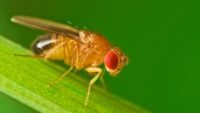
By Dr. Ross Anderson While design may be seen in all living creatures, the early development of the fruit fly shows the making of a “simple” fruit fly exhibits forethought. …read more Source: AIG Daily

Australopiths are in the news again. …read more Source: creation.com

By Dr. Tommy Mitchell Your body produces toxic chemicals all day every day. Not to worry. Your liver’s got it covered. …read more Source: AIG Daily

Coffee has nutritional benefits! Scientists in Duesseldorf, Germany, report, Caffeine consumption has been associated with lower risks for multiple diseases, including type II diabetes, heart disease, and stroke…1 Coffee has nutritional benefit… More… …read more Source: icr.org
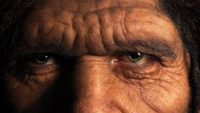
By Marvin Lubenow There are three lines of evidence demonstrating that the Neanderthals were fully human ancestors of modern humans in spite of their undeserved sordid reputation. …read more Source: AIG Daily

By Harry F. Sanders, III In the parable of the mustard seed, Jesus calls it the smallest seed. But was it really? Both evolutionists and old-earth creationists latch onto this parable. …read more Source: AIG Daily
According to the evolutionary story, humans evolved from an unidentified ape-like ancestor over two million years ago. But this story doesn’t line up with the Bible or scientific evidence. What can we learn from our DNA to decipher the origins debate? How does genetics support the Christian worldview of a recent creation? Listen: The Institute for Creation Research

In the battle to control pests with pesticides, things can change. …read more Source: creation.com
In the mid-1800s, a mild Augustinian friar named Gregor Mendel crossbred pea plants and pioneered the beginnings of understanding inherited traits. Genetics has come a long way since then. Neither Mendel nor Charles Darwin knew anything about the incredible molecule of life, DNA. Today, papers are published daily in science journals describing new discoveries of DNA’s role as a regulator and repairman. Scientists… More… …read more Source: icr.org

Within the past 20 years or so, dozens of papers have been written regarding the human microbiome. Microbiota inhabit a variety of niches in the human body, with the gut being the primary location. Remarkably, “The human gut has the highest known cell densities of any microbial habitat on Earth.”1 The number of microbiome cells number into the trillions for a single person. More… …read more Source: icr.org