Highest Rated Videos
 8,496 views
12,738 views
8,496 views
12,738 views 13,214 views
11,860 views
13,214 views
11,860 views
 503,481 views
 16,391 views
 19,277 views
 13,624 views
Related Videos
319 views 365 views














By Prof. Andy McIntosh The way the human voice works is a marvel of acoustic engineering. Each person’s voice reflects the way that the original sound is produced at the vocal chords. …read more Source: AIG Daily

By John UpChurch What if we could find an efficient process that extracted a pure source of power—hydrogen gas—directly out of water. …read more Source: AIG Daily

By Ken Ham A recent study reports that 1% of squirrels in North America have black fur, instead of gray or red. This study found that the black fur is caused by a variant form of the same gene in both gray squirrels and fox (red) squirrels. They believe the most likely explanation is both squirrel species have this same variation because of interbreeding. Is this surprising? We know from the book of Genesis that organisms reproduce according to their kinds. Well, both squirrel species belong to the same created kind, the squirrel kind (the family Sciuridae, which also includes [More]

As powerful evidence for a Designer’s existence, look no further than inside your head. …read more Source: creation.com

By Dr. Elizabeth Mitchell Are you an animal? Are you a mammal? People eager to use words correctly want to know! …read more Source: AIG Daily

Philippine snout weevil has brilliantly coloured spots. What causes them, and what can engineers learn? …read more Source: <a href=https://creation.com/a/13585 target=_blank title="Rainbow spot design challenges engineers” >creation.com

By Troy Lacey The biogeographic importance of log and vegetation mats is slowly gaining popularity, even in the mainstream scientific community. …read more Source: AIG Daily

Shaun Doyle …read more Source: creation.com
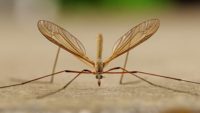
By Ken Ham Convergent evolution—it’s the convenient term used to describe similar features (often very complex ones such as echolocation or flight) that have supposedly arisen in organisms separated by vast ages of evolutionary distances (millions of years) due to similar environments or stressors. And the newest example of so-called “convergent evolution” is the eyes of crane flies and humans, as supposedly revealed by the fossil record. Scientists found that the insects trap light similarly to the way humans do, using the pigment melanin. Scientists discovered a cache of crane fly fossils, dated to be allegedly 54 million years old. [More]

Did Eve transition from a single bone to a 206-bone human? What about the transition from molecules to man? …read more Source: creation.com

An extra copy of a gene is new information, but not a new kind of information –; evolution still doesn’t happen! …read more Source: creation.com
By Ken Ham Headlines around the world announced that an international team of scientists working in China had created human-monkey chimeras. These “chimeras,” grown as embryos, have both human and monkey cells, and the goal is to grow organs able to be transplanted into humans waiting for an organ donor. This kind of research shows a complete and utter disregard for human life on a number of levels and crosses lines I don’t think should be crossed. Dr. Georgia Purdom, a molecular geneticist here at Answers in Genesis, sent me her thoughts on this troubling news item: When I first [More]

Unique structures in rare bacteria suggest the amazing process of photosynthesis is much “older” than evolutionists assumed. Photosynthesis is the process of turning sunlight, water and carbon dioxide into sugar and oxygen. There are two types. The first is anoxygenic photosynthesis that uses molecules other than water to drive the process and doesn’t produce oxygen as a byproduct. The second is More… …read more Source: icr.org

You have been designed with many trillions of cells. Within the nucleus of each cell (except for red blood cells) is the “molecule of life” called DNA. It’s organized into chromosomes (humans have 46) upon which many thousands of genes are found. Genes are hereditary units, comprised of nucleotide bases called T, G, C, and A. Each cell undergoes complex metabolic processes, or metabolism. Because we live in a fallen world,… More… …read more Source: icr.org
By Harry F. Sanders, III A recent article from Cell discusses the roundworm and its ability to transmit a learned trait from parent to offspring through four generations. …read more Source: AIG Daily
By Dr. Nathaniel T. Jeanson One of the keys to the origin of species is a concept that few have heard of—genetic drift—the simple application of statistics to basic genetics. …read more Source: AIG Daily

A recent Public Broadcasting Service (PBS) report highlighted creatures’ designed innate capacity to self-adjust to incredibly challenging exposures.1 The article, by Stuart Thompson who is a senior lecturer in plant biochemistry at the University of Westminster, describes plants thriving around the former Chernobyl nuclear reactor in spite of high doses of radiation. Though he claims the radiation-resistant mechanisms in p… More… …read more Source: icr.org

Stick insect research upsets one of evolutionists’ long-held beliefs …read more Source: creation.com

Loss of flight several times is not evolution, no new structures, no new genes. …read more Source: creation.com

By Dr. Don DeYoung What if we could design tape and adhesives that automatically cleaned themselves every time they got dirty or wet? …read more Source: AIG Daily

Scientific investigation supports the idea that we descend from an original couple. …read more Source: creation.com

Does the reviled coyote deserve its reputation? …read more Source: creation.com

By Dr. Alan L. Gillen Blood reveals much about the majesty of our Creator and Master Craftsman, irreducible complexity, and the health or disease state of the human body. …read more Source: AIG Daily

Transporting water up a tree ten stories high from the roots to the leaves is no easy feat. How is this accomplished? The answer lies in tiny, specially designed vessels called xylem—plus a combination of other factors. Scientists are getting closer to mimicking this amazing vertical passage of water for the purpose of future large-scale desalination and sewage treatment.1,2 Evolutionists give credit to th… More… …read more Source: icr.org

Despite capability of taking up new sugar, yeast species has not undergone evolution …read more Source: creation.com
By Michael By John Vibes For decades, scientists have known that trees communicate with one another through a network of underground fungi, which even allows them to trade nutrients back and forth. This… …read more Source: Natural Blaze

By Harry F. Sanders, III One of the problems inherent in the evolutionary dogma is going from a single-celled organism, once such a thing exists, to a multi-celled organism. …read more Source: AIG Daily