Highest Rated Videos
 8,496 views
12,738 views
8,496 views
12,738 views 13,214 views
11,860 views
13,214 views
11,860 views
 503,481 views
 16,391 views
 19,277 views
 13,624 views
 1,314 views
Related Videos
 788 views









There’s compelling evidence that the evolutionary concept of junk DNA has held back medical science for decades. …read more Source: creation.com

According to detailed biblical chronologies and genealogies, the global Flood recorded in Genesis that wiped out humanity occurred about 4,500 years ago.1,2 Then the earth was repopulated by Noah’s three sons and their three wives. As I reported a couple months ago, a research project was just published that used high quality DNA sequence data to develop a human Y-chromosome genetic clock that matches up perfectly with the … More… …read more Source: icr.org
Nuclear physicist Dr Heinz Lycklama explains the importance of biblical creation, the folly of radiometric dating, and the bankruptcy of goo-to-you evolution. …read more Source: creation.com

By Keoprommony Huy How our immune system protects us from deadly pathogens and parasites through antibodies to demonstrate how we’re fearfully and wonderfully made. …read more Source: AIG Daily

By Ken Ham Devastating wildfires have been burning throughout my home country of Australia for several months now. Firefighters and others have been working tirelessly, risking their lives, attempting to save people, homes, animals, and more from the fires. And one of the things they successfully saved was the only known grove of Wollemi pines—a species of tree I love talking about. Why? Well, this particular type of tree is believed by evolutionists to be older than the dinosaurs, according to secular dating. They were thought to have been extinct a long time. That is until 1994, when an officer [More]

Some evolutionists claim that the RubisCO enzyme is an evolutionary leftover, but when we look at the details it is obviously a design element! …read more Source: creation.com

Research associated with the Simos Foundation’s Collaboration of the Origins of Life offers a new answer to an old problem for getting a soup of chemicals to somehow turn into a living cell. Assuming that life arose spontaneously, how did the rarely available element phosphorus get concentrated into high enough amounts to supposedly incorporate itself into the many essential biochemicals that contain phosphorus? DNA a… More… …read more Source: icr.org
“Please remember, even though this screams out design, it all was developed by blind random chance processes, at least that what evolutionists want you to believe.” Admin By Thomas Perry Source: Trees Communicate in a Language We Can Learn, Ecologist Claims For more content like this visit REALfarmacy.com. A massive web of hair-like mushroom roots transmit secret messages between trees, triggering them to share nutrients and water with those in need. Like humans, trees are extremely social creatures, utterly dependent on each other for their survival. And, as it is with us, communication is key. After scientists discovered pine [More]

Another example of a natural selection favouring an information-losing mutation, which is the opposite to that required for goo-to-you evolution. …read more Source: creation.com

Sorghum is an important food crop due, in part, to its extreme drought-tolerance. This characteristic makes it an ideal model for demonstrating how biological entities are able to continuously track environmental changes. A new study takes a big stride in revealing some mechanisms underlying drought tolerance. It shows that when water is scarce sorghum radically manipulates the expression of its photosynthesis-related genes and its relation… More… …read more Source: icr.org
By Ken Ham A scientific journal recently published a review of eighty-five reports of “organic remains in fossils.” These included “blood vessels, dried but intact skin, and connective tissues on or inside fossils like dinosaur bones . . . red blood cells and bone cells . . . [and] biochemicals specific to animals (not microbes), including proteins, collagen, elastin, ovalbumin, and keratin.” What was the big takeaway for them from this incredible report? You’ll have to read on to find out! The Institute for Creation Research wrote an excellent article on the above review. It states that the reports in [More]

By Dan Breeding Vultures are possibly the creepiest birds on the planet. But there is a beautiful design behind this yellow-headed vulture. …read more Source: AIG Daily

Koalavirus likely not example of invasive genetic element but rather part of the genome’s overall design. …read more Source: creation.com
01/18/20 “Fascinating article detailing how a baby develops from conception to birth. The sheer complexity involved in this process is mind boggling. Nonetheless atheists insist that all of this is a product of blind random chance processes – what foolishness!” Admin The very moment a male sperm cell penetrates a female egg cell, a new human life comes into being. This event, known as fertilization, forms a tiny, single-celled human distinct from his or her mother mother. This little life is called a zygote, meaning “yoked or joined together.”1 It’s the living seed that will be a newborn [More]

How do you know when something has been engineered? One way to tell is to study the words used to describe its characteristic features. The Mt. Rushmore rock faces have different characteristics from the surrounding uncarved rock that don’t resemble portraits of American Presidents. Good scientific theories should be able to make predictions—including ones intended to explain biological phenomena. ICR previously… More… …read more Source: icr.org

Deactivation of genes coding for limb morphology and loss of limbs is yet another case of devolution, not evolution. …read more Source: creation.com

Bonnethead sharks have short ‘carnivorous ancestry’ intestines, yet their stomachs have been found to contain up to 62% seagrass …read more Source: creation.com

By Harry F. Sanders, III Top stories of 2019 in biology: Plant communication, Human Y chromosome molecular clock, and remembering popular AiG speaker, Dr. Tommy Mitchell. …read more Source: AIG Daily

A crayfish that reproduces asexually raises some important questions regarding the origins of sex. …read more Source: creation.com
By Melissa Webb When Dr. Andy McIntosh investigated the bombardier beetle, he discovered explosive evidence of God’s intricate design. …read more Source: AIG Daily
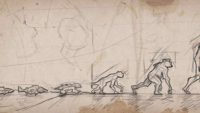
By Ken Ham What is evolution? Well, that really depends on whom you ask. There are all kinds of definitions out there. Typically, when we think of evolution, we think of Darwinian evolution—the idea of all life descended from a common ancestor as one kind turns into another kind, and eventually ape-like creatures supposedly evolved into humans. But now we often hear a very different definition: those small changes within a kind are, well, evolution! A recent article defined evolution according to a definition from famous evolutionary biologist, Richard Dawkins: “evolution is changed gene frequencies in populations.” The article goes [More]

Echinoderms, “spiny-skinned” invertebrates, are first found in the Cambrian sedimentary rock layers as 100% echinoderms. The first brittle stars (Echinoderm, class Ophiuroidea) were found in the Early Ordovician sediments and don’t show any evolution. One of the more interesting of the Ophiuroidea is the brittle star (Ophiocoma wendtii). While snorkeling the waters of Hawaii several years ago, I f… More… …read more Source: icr.org
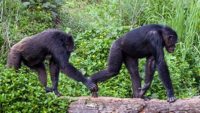
By Ken Ham Sometimes you just have to shake your head. That was my reaction when I read this headline, “Zoo Chimps Doing a ‘Conga Line’ Could Teach Us How Humans Evolved to Dance.” Yes, you read that right! Two chimps swaying and walking in synchronization is thought by these researchers to provide insight into the evolution of dance. These particular chimps were very closely bonded, having been together since they were just a few months old (one of the chimps died in 2018). For several years, they exhibited this strange, apparently self-taught behavior, of walking and swaying in sync. [More]

It doesn’t fit any evolutionary story. …read more Source: creation.com

Based on biblical chronologies, we can determine that the global Flood recorded in Genesis occurred about 4,500 years ago.1 After the Flood, the earth was repopulated by Noah’s three sons and their wives. So we should find genetic signatures of this timeline in human DNA. While a number of previous studies by both secular and creation scientists have supported this general timeline,2-3 a recent study using extens… More… …read more Source: icr.org

Scientists have reported the presence of methane-producing microbes living deep beneath the Siljan impact crater in Sweden.1 Although the researchers stopped short of claiming the impact somehow brought the microbes to Earth, they do assert that impacts can create favorable habitats for colonization. The 30-mile wide Siljan impact site is ringed by Ordovician and Silurian sediments, including black shales that ap… More… …read more Source: icr.org

By Ken Ham What exactly is it? That’s the question researchers are trying to figure out after the discovery of a frozen puppy preserved in permafrost in eastern Siberia. The two-month old canine was “remarkably preserved,” with fur, nose, and teeth still intact, even after a supposed 18,000 years. According to the BBC, scientists are wondering if this puppy represents an evolutionary link between wolves and dogs, or if it’s just a wolf or what we call a dog today. Researchers sequenced the puppy’s DNA but were unable to determine whether it was a wolf or a dog. This suggests [More]