Highest Rated Videos
 8,517 views
12,751 views
8,517 views
12,751 views 13,226 views
11,876 views
13,226 views
11,876 views
 503,506 views
 16,405 views
 19,291 views
 13,638 views
Related Videos
1,990 views

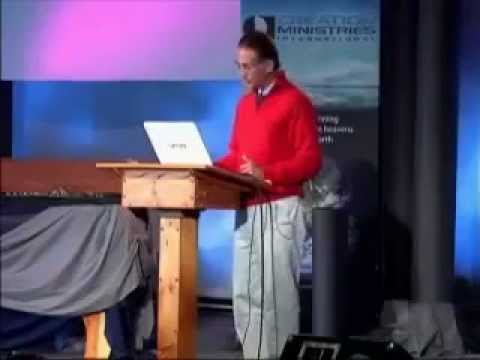










By Ken Ham Well, our newest research associate, Dr. Nathaniel Jeanson, a graduate of Harvard University, explained in a recent discussion with some AiG staff how the creation model can be used to make testable predictions that are far more accurate than evolutionary predictions: Because we start from the right foundation, we’re going to get the right answer. Now, one of the things evolutionists commonly challenge us with is, “Well, you’re not scientists. You don’t make testable predictions. You just say ‘God did it, that’s the end of it.” This is a stereotype, a straw man, and it’s not true. [More]
By Dr. Elizabeth Mitchell Three of the genes that control our immune system’s first line of defense (and our allergies) bear a significant footprint from Neanderthals. …read more Read more here: AIG Daily
Researchers have uncovered scientific evidence that the human brain recognizes the existence of God. Scientists have discovered that the reality of God is hardwired into the human brain — even by those who are not taught directly taught about Him — according to new research divulged by National Geographic. Global Neuroscience Initiative Foundation Executive Director Shaheen E. Lakhan, who holds numerous doctorate degrees, including an M.D. from the Technion-Israel Institute of Technology, contends that something that has been revealed by the Bible for millennia is now recognized by modern science. Read More: Research: Brain recognizes reality of God
Christian scientists who believe in a young earth are citing the recent discovery of fossilized silk cocoons as evidence that many fossilized materials are much younger than evolutionists allege. As previously reported, scientists have repeatedly been surprised by the discoveries of various delicate biomaterials that have supposedly remained intact for millions of years. These materials include shell proteins, ancient embryos, dinosaur skin, and dinosaur blood vessels. Now scientists are puzzled by another material that purportedly survived millions of years: silk cocoons. Read More: 295 Million Year Old Silk? Recent Discovery Could Be Problematic for Evolutionists | Christian News Network

The discovery of gravitational waves that match Einstein’s general relativity theory for a binary black hole merger is an example of solid operational science. …read more Read more here: creation.com

Children’s book challenge-answers to questions about fossils, the origin of oil, and the geology of Canada. …read more Read more here: creation.com

Namib desert beetles collect faint water droplets on their exquisitely designed outer surfaces so they can survive in their dry environments. And polar bears keep a tight grip on smooth ice using precisely designed footpads. Engineers have copied these exquisite designs to make useful tools. More… …read more Read more here: icr.org
By Dr. Gary Parker It’s what we do know and can explain about DNA and protein and the laws of chemistry which suggests that life itself is the result of special creation. …read more Read more here: AIG Daily
The Deep Down Under project explores “relict faunas,” living creatures with eerily similar counterparts among some of the world’s oldest fossils. Deep-sea researchers used a remotely operated vehicle (ROV) to look for life around Osprey Reef off Queensland’s coast. They found some surprises including animals known only from faraway places and long-gone times. More… …read more Read more here: icr.org
By Dr. Elizabeth Mitchell If a computer simulation can trace a path for the evolution of multicellular organisms from single-celled ones, does that mean they actually evolved that way? …read more Read more here: AIG Daily

Two catastrophic floods were responsible for separating the British Isles from Continental Europe. …read more Read more here: creation.com
By Dr. Danny Faulkner The observations themselves merely tell us that green pea galaxies have unusual amounts of doubly ionized oxygen atoms, not an evolutionary story. …read more Read more here: AIG Daily
By Ken Ham This study really highlights how, when you ignore the history revealed in God’s Word, you come to all kinds of silly conclusions. These conclusions are based on ice core records (that are based on many fallible assumptions) and lots of imagination. Since evolutionists assume that the ice has been slowly building up for tens of thousands of years, they believe ice cores capture climate and atmospheric history for some of Earth’s history. But the ice cores don’t show tens of thousands of years of winters and the slow accumulation of snowfall each year. Instead, they are …read [More]

“Here is another marvel of complexity in nature that we are supposed to believe just happened by chance … ridiculous.” Admin By By David Gutierrez, staff writer (NaturalNews) Scientists are beginning to uncover the mechanisms by which plants — which depend upon sunlight to provide them with energy — protect themselves from the damaging effects of the sun’s ultraviolet rays. Most recently, in a study published in the Journal of the American… …read more Read more here: Natural News

Can the problems of ordered complexity be solved by using the tools of randomness? …read more Read more here: creation.com

A 21 year old mystery has been solved! But kayak accident victim reveals problems with anthropologist’s expert identification. …read more Read more here: creation.com

When the tarsier opened its mouth and no sound could be heard, people thought it was simply yawning or stretching. How wrong they were. …read more Read more here: creation.com

Whoever said the human brain is the most highly organized collection of matter in the universe was more correct than they could have known. New research modeled tiny structures within nerve cells and discovered a clever tactic brains use to increase computing power while maximizing energy efficiency. Its design could form the basis of a whole new and improved class of computer. More… …read more Read more here: icr.org
By Dr. Danny Faulkner Pluto fans may be encouraged by the announcement that astronomers think they have evidence there is a ninth planet after all, a sort of replacement for Pluto. …read more Read more here: AIG Daily

Recently in Dorset, England, bad weather washed a massive section of a cliff into the sea revealing scores of ammonite fossils. Creation scientists are interested in this event because substantial erosion was accomplished in literally seconds. It didn’t take hundreds of thousands to millions of years of slow and gradual erosion. One headline recently stated, “Climate can grind mountains faster than they can be rebuilt.” More… …read more Read more here: icr.org
By Dr. Elizabeth Mitchell The only positive evidence supporting the assertion that these dinosaurs were dancing for mates is that some modern birds engage in ritual courtship dances. …read more Read more here: AIG Daily

In complete contradiction to evolutionary predictions, the language systems in the genome continue to reveal nothing but unimaginable complexity. As a news story on a recent discovery explains, “The world of epigenetics…has just got bigger with the discovery by a team of scientists from the University of Cambridge of a new type of epigenetic modification.” More… …read more Read more here: icr.org
By Dr. Elizabeth Mitchell The National Geographic article treats every aspect of our world of vision as evidence for evolution: eye diversity and the fact that eyes share common designs. …read more Read more here: AIG Daily

The process of cell division is so complicated and selective that evolutionists can’t adequately explain its origin. …read more Read more here: creation.com

They seem cute when young. And cranky when they’re older … but bears are some of God’s most amazing creatures! …read more Read more here: creation.com

Scientists exhibiting at London’s Natural History Museum are unable to identify an evolutionary progression from apes to men. …read more Read more here: creation.com

‘Dark ages’ not Dark! Medieval scientists knew about the tiny size and sphericity of Earth, and proposed that it rotates. Learn about Ptolemy, Boëthius, Buridan, and Oresme. …read more Read more here: creation.com