Highest Rated Videos
 8,517 views
12,751 views
8,517 views
12,751 views 13,226 views
11,876 views
13,226 views
11,876 views
 503,507 views
 16,405 views
 19,291 views
 13,638 views
 1,206 views
Related Videos
317 views 1,460 views
 1,971 views
994 views
2,714 views
1,971 views
994 views
2,714 views









Biologists recently sequenced the seagrass genome. They claim, “Uniquely, Z. marina has re-evolved new combinations of structural traits related to the cell wall.” Re-evolved? There is no scientific reason—no empirical evidence—to say the structural traits somehow “re-evolved.” How can these scientists make such a statement? More… …read more Read more here: icr.org
By Ken Ham A “Sudden and Catastrophic Event” Well, as I was reading a report about this new research, I had to smile. Some of the comments the lead author of the paper makes about his research sound more like something a biblical creationist who believes in Noah’s Flood would say than statements from an evolutionist! He says, Our research essentially shows that one day everything was fine—the Antarctic had a thriving and diverse marine community—and the next, it wasn’t. Clearly, a very sudden and catastrophic event had occurred on Earth. Of course, he’s referring to the supposed dinosaur extinction [More]

Reveals compelling evidence of the cataclysmic global Flood of Noah’s day. …read more Read more here: creation.com
A New Scientist article1 ponders a baffling enigma to evolutionists—‘living fossils’. These are creatures alive today which are identical to fossilised forms, believed to have lived ‘millions of years ago.’ Examples include the coelacanth fish (fossil coelacanths are believed by evolutionists to be 340 million years old2), Gingko trees (125 million years), crocodiles (140 million years), horseshoe crabs (200 million years), the Lingula lamp shell (450 million years), Neopilina molluscs (500 million years), and the tuatara lizard (200 million years). This poses a conundrum for evolution: ‘Why have these life-forms stayed the same for all that time?’This poses a conundrum [More]
By Dr. Elizabeth Mitchell Named Monocercomonoides, this eukaryotic microorganism doesn’t have the slightest trace of mitochondria. How does it survive? …read more Read more here: AIG Daily

Further study of a previously-decreed ‘simple’ and ‘early’ fossil forest shows more complexity than assumed. …read more Read more here: creation.com
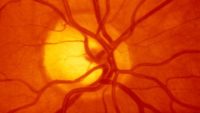
By Dr. David Menton The retinas of your eyes are made of living cells, which must be nourished by blood vessels. But with all this blood covering your eyes, how can you see? …read more Read more here: AIG Daily

An increasing number of evangelical Christian leaders have publicly stated that combatting ‘global warming’ or ‘climate change’ is a moral imperative.1 Likewise, Pope Francis recently called for action on this issue in a recent encyclical letter.2 However, at the same time, some scientists and environmental activists have become quite skeptical of alarmism on this issue, including former president of Greenpeace Canada Patrick Moore, physicist Freeman Dyson, and emeritus MIT professor of meteorology Richard Lindzen.3,4,5 Read more here: creation.com
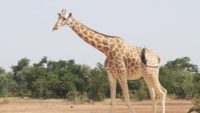
By Dr. Elizabeth Mitchell The giraffe’s genome explains its long neck but does not support an evolutionary tall tale. …read more Read more here: AIG Daily

Long-age explanations for the Ice Age based on cyclical changes in the earth’s orbital geometry raise more questions than answers. …read more Read more here: creation.com

By Dr. Danny R. Faulkner The earth could be both round and flat, if it were disk-shaped. Have we all been fed a whopping lie about the true shape of the earth? …read more Read more here: AIG Daily

WWII fighter planes abandoned on a Greenland glacier were found 50 years later, already under 75 metres of ice. …read more Read more here: creation.com
An influential scientific discovery that was once celebrated as compelling evidence for evolution may require reinterpretation, according to a growing number of scientists and researchers. In 2008, biologist Richard Lenski of Michigan State University jubilantly announced that he had witnessed a “major evolutionary innovation.” Lenski, as part of his Long-Term Experimental Evolution (LTEE) project, had been carefully observing the bacteria Escherichia coli (E. coli) reproduce in a lab. Finally, after 20 years and 31,000 E. coli generations, Lenski noticed that one of the bacteria populations had seemingly mutated and acquired the ability to process the chemical citrate when oxygen was [More]

By Jake Hebert Part I of this series presented a number of serious problems with the Pacemaker paper. It is necessary to also understand the Blackman-Tukey (B-T) method. …read more Read more here: AIG Daily
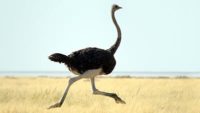
By Donna O’Daniel When we think of birds, we think of flight. But it appears the Creator had other plans, too. …read more Read more here: AIG Daily

An aquatic ‘impressionist’ is not all that it seems to be. …read more Read more here: creation.com

Evolutionary teachings hold that all mankind arose from a population of ape-like ancestors. But Genesis, the rest of the Bible, and Jesus teach that mankind arose from Noah’s three sons and their wives. A new analysis of human mitochondrial DNA exposes two new evidences that validate the biblical beginnings of mankind. More… …read more Read more here: icr.org
By Dr. Elizabeth Mitchell Does the discovery that sleeping dragons as well as mammals and birds experience REM sleep support the evolutionary story of their common ancestry with humans? …read more Read more here: AIG Daily
By Ken Ham Scientists have traditionally divided North American mammoths into several “species” based on physical differences and differing environments. But new research suggests that all of these species of mammoths could successfully interbreed with one another. One of the scientists involved in this study commented, Species boundaries can be very blurry. We might find differences in features of the teeth or skeleton that closely correspond to what we think are real species boundaries. But other features may not correspond to those boundaries, suggesting that what we formerly regarded as separate species are in fact not at all. . . [More]
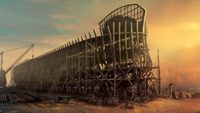
By Dr. Nathaniel T. Jeanson The more we learn about the origin of species, the more we know about Noah’s Ark. The Flood reverberates to the present day in the form of genetics. …read more Read more here: AIG Daily

Simply touching a baby deer could end its life. …read more Read more here: creation.com
By Ken Ham Pregnant mothers often choose to take a chorionic villus sampling (CVS) test when they are 11 to 14 weeks pregnant. This test analyzes placental cells for genetic abnormalities to predict genetic disorders, such as Down syndrome. Well, research on mouse embryos suggests that even when normal cells and abnormal cells are mixed half and half in the placenta, the baby can still be born perfectly healthy. This happens because the abnormal cells are killed via programmed cell death, and healthy cells replace them. Although the baby mouse itself has replaced the abnormal cells, the placenta still retains [More]
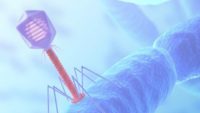
By Dr. Andrew Fabich The list of beneficial functions for Endogenous Retroviruses continues to grow. ERVs also promote healthy immune responses—another creationist confirmation. …read more Read more here: AIG Daily

By Dr. David W. Boyd, Jr. A scientist with a biblical worldview has to account for the different species of birds found today in each created bird kind from the Flood to the present. …read more Read more here: AIG Daily
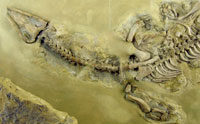
Those who have difficulty accepting reports of collagen (a type of protein) preserved in supposedly 80-million-year-old dinosaur bones will scratch their heads with new vigor over a recent report. Supposedly 247-million-year-old fossils from Poland show signs of excellent preservation and even hold blood vessels. More… …read more Read more here: icr.org
By Ken Ham A fire was deliberately started in a nature preserve in Australia to help fire-dependent vegetation grow. Instead of fleeing the fire, as most animals would do, the echidnas stuck around, and nearly all of them survived. Researchers believe it’s likely that they curled up in thick trees or logs and entered a state known as torpor. This allows them to become “inert and chilly,” thus heavily reducing their energy needs and helping them to survive with limited resources. Interestingly, some creation researchers think that perhaps some animals on the Ark entered a torpid state during …read more [More]

Humans alone cry tears which are vital to our emotional health. …read more Read more here: creation.com