Highest Rated Videos
 8,517 views
12,752 views
8,517 views
12,752 views 13,226 views
11,876 views
13,226 views
11,876 views
 503,507 views
 16,405 views
 19,291 views
 13,638 views
 1,330 views
Related Videos
260 views
353 views
368 views









Biophysics researchers recently demonstrated that people can see just one photon of light. This led them to ask how evolution could have crafted a visual system sophisticated enough to overcome the overwhelming problem of discerning single photons from the sea of electromagnetic, molecular, and electrochemical “noise” inside a human head. More… …read more Read more here: icr.org
By Dr. Nathaniel T. Jeanson When God created the kinds, He frontloaded them with genetic differences—with the potential to form all sorts of new species and varieties. …read more Read more here: AIG Daily

By Dr. Andrew A. Snelling Dr. Snelling documents the methodology and history of determining present decay constants and half-lives of parent radioisotopes used for dating methods. …read more Read more here: AIG Daily
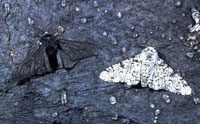
In England, a population of peppered moths supposedly shifted their coloring from mostly white to mostly black after soot darkened their tree-trunk homes. However, later researchers could not replicate these results. More… …read more Read more here: icr.org

Dinosaurs captivate old and young alike, but why do people think they prove evolution? …read more Read more here: creation.com

Just like the subject matter under investigation, opinions shift about in regards to plate tectonics. …read more Read more here: creation.com

By Dr. Elizabeth Mitchell Like children assembling a jigsaw puzzle, evolutionists have long been trying to piece together the mysteries of turtle shell origins. …read more Read more here: AIG Daily

By Creation Moments In the arid desert regions of the southwestern United States lives a creature with so many astonishing abilities, it speaks loud and clear about God’s hand in creation! read more …read more Read more here: Creation Moments

By Ken Ham Apparently the research team analyzed several hundred thousand stars looking for ones that seemed to disappear. The 148 candidates quickly dwindled to one as they weeded out false positives and negatives. And the one that was left might not actually have disappeared at all “because it looks faint in the second data set.” What I find interesting is that creationists doing real, observational science in astronomy, genetics, or any other field cannot reference a biblical worldview or a Creator God or their work will never be published in a secular journal—even though they have real evidence to [More]
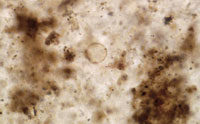
Rock researchers highly regard Ontario’s Gunflint chert for its fresh-looking microfossils. Long ago, the chert’s microcrystalline quartz grains embedded microscopic single-celled creatures, including algae. A research team used new techniques to analyze the chemicals inside these fossil cells. They found protein remnants where they should no longer exist—given these rocks’ vast age assignment. More… …read more Read more here: icr.org

Dark matter is a fudge factor with no experimental support, and new physics explains the observations better …read more Read more here: creation.com
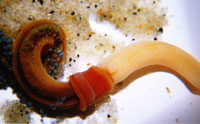
On July 7, BBC News reported the rare discovery of a fossilized sea worm, classified as a hemichordate, a sophisticated invertebrate. Evolutionists are excited because this find supposedly provides insight into early evolution. And some evolutionists even see this worm—called Oesia—as a half-billion-year-old ancestor of man. More… …read more Read more here: icr.org

By Dr. Nathaniel T. Jeanson The major remaining question is how tens of thousands of species could arise in a few thousand years. …read more Read more here: AIG Daily
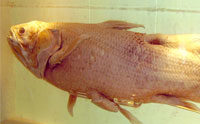
Mark Carnall at the Oxford University Museum of Natural History recently wrote an article for the U.K. newspaper The Guardian. He argues that we should stop using the term “living fossil.” What does his argument reveal about evolutionary thinking? More… …read more Read more here: icr.org

When the claims that the Denisovan fossils represent a “new kind” of human are put under scrutiny, a different picture emerges. …read more Read more here: creation.com

By Dr. Jean Lightner God designed one mighty beast to thrive in extreme Tibetan conditions. …read more Read more here: AIG Daily

Radiometric dating methods often give wrong dates for rocks. Some critics argue that creationists shouldn’t point this out, because the methods should not have been used in the first place. …read more Read more here: creation.com

Amazing design allows a tiny, fragile creature to lift objects way beyond its size. …read more Read more here: creation.com

Convergent evolution is the idea that the same trait, or set of traits, in completely different organisms were somehow produced through independent evolutionary processes. Now a new study shows how two different types of snakes have adapted to a diversity of environments by expressing the same traits (skin color and skull shape), but the study describes no mechanism for it. The authors simply attribute the highly repeatable process to the black box of convergent evolution. More… …read more Read more here: icr.org

By Callie Joubert Is it possible that we are facing a situation where there is a massive production of wrong information or distortion of information? …read more Read more here: AIG Daily

By Dr. Elizabeth Mitchell Could hobbits be a dwarfed variety of Homo erectus, an archaic human whose presence in Southeast Asia, specifically Flores, has been demonstrated? …read more Read more here: AIG Daily
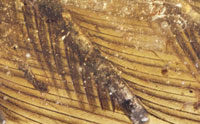
Newly described bird wings—not just a single feather or a strange-looking fiber or two—rose to the top of a long list of spectacular amber-trapped fossils. Two tiny hatchlings may have seen dinosaurs just before their wings got trapped in fast-flowing tree resin. At least four waves of the magic evolutionary wand would be needed to shove these unique fossils into deep time. More… …read more Read more here: icr.org

By Dr. Andrew A. Snelling Diamonds are dazzling but definitely not “forever.” In fact, they wouldn’t exist without special conditions that God provided. …read more Read more here: AIG Daily

By Dr. Andrew Fabich All questions on the origin of life hinge on our understanding of genetics because the first cell couldn’t just form and then die. …read more Read more here: AIG Daily
ICR often receives passionate social-media feedback on our articles and news posts. For example, we recently reported the discovery of organic protein remains in fossils.1 Although the secular scientists themselves described these remains as original animal tissue (i.e., unmineralized), one of our readers responded: “They never found soft tissue. They found preserved soft tissue. It was mineralized and not organic.” His words sound familiar. Almost without fail, whenever an ICR scientist discusses original tissue in fossils, we hear well-intended explanations of how we got it all wrong—that the fossils in question are actually made of minerals. But they are not [More]

The thinking behind the existence of old objects close to Earth. …read more Read more here: creation.com

Design in nature could not be more obvious, but it’s a mountain too high to climb for some. …read more Read more here: creation.com