Highest Rated Videos
 8,496 views
12,738 views
8,496 views
12,738 views 13,214 views
11,860 views
13,214 views
11,860 views
 503,481 views
 16,391 views
 19,277 views
 13,624 views
Related Videos
 311 views
420 views
311 views
420 views 2,362 views








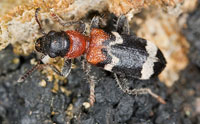
If ancient history according to Scripture is true, then what should we expect to find in animal fossils? Surely excellent body designs would top the list, closely followed by a lack of “transitional forms.” A newly discovered specialized beetle inside Indian amber provides another peek into the past and an opportunity to test these Bible-based expectations. More… …read more Read more here: icr.org

Within the solar system, Mars appears most promising for life outside of the earth, so much attention has been given to the search for biogenic markers on Mars. …read more Read more here: AIG Daily
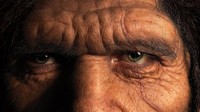
Were Neanderthals our cousins, our ancestors, or just our fellow human travelers in the post-Babel world? …read more Read more here: AIG Daily

By Ken Ham Human evolution and alcohol have been together in the news a lot recently. Discover Magazine wrote about a new study that was aimed at discovering when our supposed human ancestors “acquired the ability to consume foods containing ethanol, such as fermented fruits.” This study, “using the tools of paleogenetics,” supposedly “traced the evolutionary history of an enzyme that helps us metabolize ethanol, the principal type of alcohol found in adult beverages. Scientists believe early human ancestors evolved their ethanol-digesting ability about 10 million years ago to fortify their diet as they shifted from a tree-based lifestyle to [More]

By Ken Ham Bacterial infections are tragically killing tens of thousands of people in India as doctors are discovering that most known antibiotics are not working, according to a New York Times article . Many people will look at the tragedy and blame God in response. But is God truly at fault for the death and suffering we witness and experience in our post-Fall world? I encourage you to read Dr. Tommy Mitchell’s article on the Answers in Genesis website that answers questions like “Was God’s creation really ‘very good’?” and “Why do we die now?” I think Dr. …read [More]
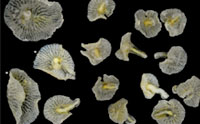
A strange, new, mushroom-shaped species discovered alive on the deep seafloor off the southeastern coast of Australia may be a record-breaking living fossil. It’s not a jellyfish, sea squirt, or sponge. What is it? More… …read more Read more here: icr.org

Evolutionists are being forced to rethink so-called vestigial organs in the light of some embarrassing and harmful mistakes. …read more Read more here: creation.com

Does inbreeding in people groups explain so-called races? …read more Read more here: creation.com

Did you know that this faunal icon of Australia uses less energy to breathe when it’s hopping than when it’s standing still? …read more Read more here: creation.com

In this study, I analyzed a theropod dinosaur group, Tyrannosauroidea, through the use of statistical baraminology. …read more Read more here: AIG Daily

Does this giant groundhog-like animal that shared the world with dinosaurs tell us anything about how we evolved? …read more Read more here: AIG Daily

Biting opened the way for biodiversity, evolutionists say. …read more Read more here: AIG Daily

Did your cat evolve to like you? …read more Read more here: AIG Daily

By Ken Ham I recently saw something in Discovery News that perfectly highlights the difference between observational and historical science. Common Tenrec (Tenrec ecaudatus). By John Mather (Own work) [CC-BY-SA-4.0 (http://creativecommons.org/licenses/by-sa/4.0)], via Wikimedia Commons A study has shown that tenrecs, hedgehog-looking creatures, have an amazing ability to hibernate (observational science) so the scientists inferred that the tenrecs must have hibernated through the dinosaur extinction (historical science)! As I’ve said many times previously, there are two different kinds of science. Observational science deals with the present and is observable, repeatable, and testable. It’s what produces our technology and our medical innovations. [More]
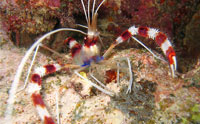
Fossils seem to tell amazing stories about ancient animal life, but close inspection reveals that these stories differ from each other not because of different fossils, but because of different interpretations. Do the remarkable circumstances surrounding a newly discovered fossil arthropod tell two stories or just one? More… …read more Read more here: icr.org
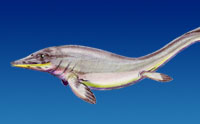
Recently there has been some celebration from the Darwinian community regarding a fossil discovery that allegedly links terrestrial animals to their future aquatic relatives. More… …read more Read more here: icr.org

The apparent redundancy of the genetic code has long been called codon “degeneracy”—evidence that the present genetic code is an evolutionary product. …read more Read more here: AIG Daily

A highly unusual spider testifies to biblical creation. …read more Read more here: creation.com

We hope you enjoy this sneak preview from the now-released December issue of Journal of Creation. Subscribers will be delighted by the powerful, stimulating content. …read more Read more here: creation.com

Sunlight can change in a heartbeat. One second, a leaf could be under intense sun and may receive more light than it needs to build sugar molecules through a process called photosynthesis. But a few seconds later, a cloud may wander overhead and block the sun, starving the plant’s photosynthetic machinery. A team of plant biologists recently discovered new mechanisms that help plants cope with these fast-changing light conditions. More… …read more Read more here: icr.org

Creationists are often slammed for saying that e.g. abiogenesis (chemicals to first life) is all part of ‘evolution’. But leading evolutionists affirm the creationist claim-and more. …read more Read more here: creation.com

Evolutionists declare stickier toes reveal the path up the evolutionary tree. …read more Read more here: AIG Daily

Refuting creationist Randy Guliuzza’s criticisms of natural selection, which is actually an important part of the creation model. …read more Read more here: creation.com

Recently the abdomen of a certain hornet was discovered to have intricate structures that look like space-age solar panels. …read more Read more here: AIG Daily

Scientists who try to make a case for the ‘evolution’ of the hand actually highlight its perfect design. …read more Read more here: creation.com

Eastern box turtles can literally be “frozen alive” and emerge unharmed. …read more Read more here: AIG Daily

The design in the complex movements of plants is obvious. …read more Read more here: creation.com