Highest Rated Videos
 8,496 views
12,738 views
8,496 views
12,738 views 13,214 views
11,860 views
13,214 views
11,860 views
 503,481 views
 16,391 views
 19,277 views
 13,624 views
Related Videos
8 views
108 views
183 views
278 views
34 views









A team of American and British scientists has published a new report detailing how natural selection, “the engine of evolution,” can actually prevent evolution from happening—a potentially devastating setback for evolutionists. Natural selection, a term first popularized by Charles Darwin, plays a fundamental role in the theory of evolution. In his infamous book “The Origin of Species,” Darwin proposed that natural selection “leads to divergence of character and to much extinction of the less improved and intermediate forms of life.” Read More Natural Selection, ‘Engine of Evolution,’ May Actually Inhibit Evolution, Scientists Find | Christian News Network.
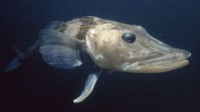
By Heather Brinson Bruce Subzero water is a death trap for most animals. Icefish, on the other hand, make their home in it. …read more Read more here: AIG Daily
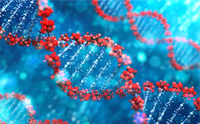
A new study investigating the three-dimensional human genome (the nucleome) in the context of time and gene expression revealed unimaginable complexity and precision. The authors of a new research paper, published in the Proceedings of the National Academy of Sciences, wrote at the very beginning of their report, “The human genome is a beautiful example of a dynamical system in three dimensions.” The results of their research spectacularly vindicated this opening statement. More… …read more Read more here: icr.org
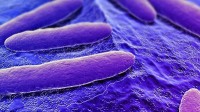
By Dr. Alan Gillen In a pure culture growing in a liquid medium, we find that the development and decline of bacterial populations follow a definite, predictable course. …read more Read more here: AIG Daily
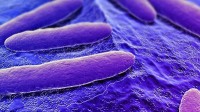
By Dr. Alan Gillen Bacteria are prokaryotes and among the most abundant organisms on earth. The vast majority play a positive role in nature. …read more Read more here: AIG Daily
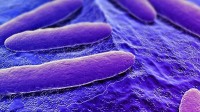
By Dr. Alan Gillen The basic elements of bacterial anatomy include (1) the cell wall and (2) the inner cell body, or cytoplasm. …read more Read more here: AIG Daily

The father gives birth and it has no evolutionary links. It may be the world’s most baffling fish! …read more Read more here: creation.com

By Dr. Elizabeth Mitchell Researchers claim to rewind evolution of bird beaks from dinosaur snouts by blocking beak-building genes to revert embryos to their ancestral state. …read more Read more here: AIG Daily

Bacteria sometimes face a rough life. At about a tenth the size of most plant and animal cells, they have no layer of skin to protect them. Environments can change quickly and if microbes don’t have the right tools to adapt, they won’t last long. Bioengineers modeled three interdependent aspects of a metabolic system that bacteria use to thrive in ever-changing environments, revealing an underlying array of interrelated parts that they described as “underappreciated.” More… …read more Read more here: icr.org

The human face is a clear example of overdesign that defies evolutionary explanations. …read more Read more here: creation.com
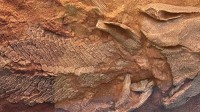
By Dr. Elizabeth Mitchell With Pappochelys‘s shell characteristics like those of other extinct turtles and a diapsid skull, should creation scientists be having nightmares? …read more Read more here: AIG Daily

By Ken Ham The Smithsonian currently has a traveling exhibition exhibited at certain public libraries promoting human evolution titled, “Exploring Human Origins: What Does It Mean to Be Human.” I have written on this traveling exhibit before. In Andover, Ohio, a news report stated that “30 people attended a lecture on why having a baby is so painful and difficult for humans at the Veteran’s Memorial Performing Arts Center on Sunday. The lecture was part of the Exploring Human Origins: What Does it Mean to be Human traveling exhibition, sponsored by the Smithsonian Institution and the Andover Public Library. The [More]
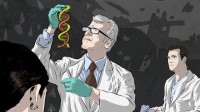
By Dr. Georgia Purdom For decades, evolutionary scientists have ignored “ junk” DNA that supposedly littered our genetic sequence. …read more Read more here: AIG Daily

By Dr. Alan Gillen Antibiotic resistance is one of the most important topics that a beginning biology student going into medicine should learn and understand. …read more Read more here: AIG Daily

“Excellent article about evidence for the young age of dinosaur bones.” Admin Collaborative creation research falsifies the evolutionary dates for the alleged ‘age of dinosaurs’. …read more Read more here: creation.com

Rather than supporting a belief in evolution, as Richard Dawkins claims, the DNA code points to a designer. …read more Read more here: creation.com

Answering a critic who claims that evolution is proven by trivial biological changes. …read more Read more here: creation.com

By Dr. Elizabeth Mitchell The giant panda’s adaptations for its specialized herbivorous diet may have fit it for its environment through the ordinary processes of natural selection. …read more Read more here: AIG Daily
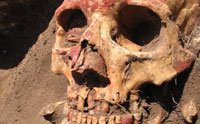
Scientists used new techniques to sequence 101 ancient human genomes believed to be from Bronze-Age populations in Europe. Their findings indicate a massive migratory influx of genetic diversity just a few thousand years ago. This data also coincides with known language diversification patterns, providing strong evidence for the dispersion of people groups at the Tower of Babel. More… …read more Read more here: icr.org

By Yingguang Liu HIV-1 is an important example which shows genetic entropy operating throughout the biological realm, even while meaningful genetic adaptations are occurring. …read more Read more here: AIG Daily
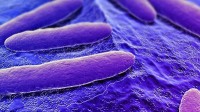
By Dr. Alan Gillen Another example of design which can be seen in the microbial world is the production of a blood-red pigment made by Serratia marcescens. …read more Read more here: AIG Daily

By Dr. Matthew E. Ingle This paper aims to determine the number of created kinds in this family of parasites, the original hosts, and what produced current species. …read more Read more here: AIG Daily
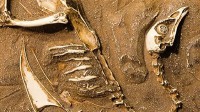
By Dr. Elizabeth Mitchell Evolutionists have come to largely accept the fact that soft tissues can be preserved in fossils for an extraordinarily long time. But millions of years . . . ? …read more Read more here: AIG Daily
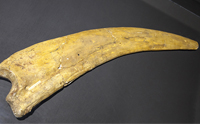
News reports around the world tell of red-blood-cell-like and collagen-like structures found in 75 million year-old dinosaur bones long stored in the British Museum. This news coincides with the release of the film Jurassic World, in which fictional scientists resurrect dinosaurs using dino DNA that “iron chelators” somehow preserved for millions of years. Though the movie is fiction, it does refer to a real study involving blood and bone. However, a closer look at the relevant chemistry shows that the iron-as-preservative story may be just as fictional as Jurassic World. More… …read more Read more here: icr.org

By Yingguang Liu Mutational degeneration of the nef gene manifests as increased pathogenicity of HIV-1. …read more Read more here: AIG Daily

By Dr. Alan Gillen There are many extraordinary examples of design in the microbial world. In this chapter, two examples are given. …read more Read more here: AIG Daily

By Heather M. Brinson God has equipped every human with backup systems that are programmed to respond to all sorts of emergencies. …read more Read more here: AIG Daily