Highest Rated Videos
 7,975 views
12,194 views
7,975 views
12,194 views 12,782 views
11,756 views
11,558 views
12,782 views
11,756 views
11,558 views
 502,888 views
 15,959 views
 18,700 views
 13,101 views
 1,881 views
Related Videos
![Sweeter As the Days Go By [Live]](http://img.youtube.com/vi/wdfbYQKz0S4/0.jpg "Sweeter As the Days Go By [Live]") 2,195 views
2,195 views 1,092 views
203 views
1,092 views
203 views 2,791 views
 2,103 views













Sea urchin spines are made from a crystal that contains impurities that stop cracks propagating. The fine architecture further strengthens the spine. …read more Read more here: creation.com
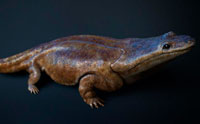
Scientists in Portugal unearthed a “super salamander” which, although “weird compared to anything today,” is still very much a salamander. The fossilized bones of the six-foot animal were discovered on a hillside dig “chock-full” of bones and declared to originate from the “Upper Triassic” period, some 200 million years ago according to evolutionary dating. But creationists see this as yet another discovery of a created animal that grew to large dimensions in the fertile world before the Flood, and was subsequently buried during the Flood itself. More… …read more Read more here: icr.org

As the genomes of many new creatures rapidly fill the public DNA sequence databases, the problems for the grand evolutionary story are becoming overwhelming. One issue is the fact that different creatures have unique sets of genes specific to their kind with no apparent evolutionary history. To explain this glaring problem, evolutionists have resorted to the myth of pervasive horizontal gene transfer. More… …read more Read more here: icr.org

By Dr. Elizabeth Mitchell Does the “world’s oldest sponge” confirm evolutionary beginnings of multicellular animal life at least 600 million years ago? …read more Read more here: AIG Daily

The humble fingernail turns out to have intricate design. The middle layer has fibres aligned to prevent tearing down to the nail beds, and the two outer layers make nails as strong as hooves. …read more Read more here: creation.com

By Tom Hennigan This paper is meant to lay creation groundwork for lizard systematics with the goal of estimating the number of baramins brought on the Ark. …read more Read more here: AIG Daily

By Dr. Elizabeth Mitchell From almost the same genetic building blocks, DNA, very different results are achieved! But is that the result of evolution, or God’s design? …read more Read more here: AIG Daily

Research indicates that many outward characteristics of organisms may be the result of ‘switching on’ of existing genes in response to the environment. …read more Read more here: creation.com

The bombardier beetle’s explosive secrets are inspiring engineers to design better aircraft engines. …read more Read more here: creation.com

The evolutionary tree of life popularized by Charles Darwin has been shaken to its roots by the molecular genetics revolution. …read more Read more here: creation.com
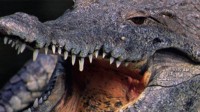
By Dr. Elizabeth Mitchell To evolutionists, the “butcher” crocodile demonstrates crocodiles had evolved to be major Triassic predators millions of years before dinosaurs ruled the world. …read more Read more here: AIG Daily

By Jeffrey P. Tomkins Based on differences in gene sets and molecular machines between bacteria and eukarya, we continue to demonstrate that unbridgeable evolutionary chasms exist. …read more Read more here: AIG Daily

Wrong evolutionary assumptions about the thymus gland and cot deaths led to the unnecessary demise of many more children. …read more Read more here: creation.com
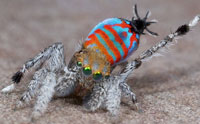
A University of California Berkley graduate student has discovered two beautiful new species of peacock spiders in southeast Queensland, Australia. The student, Madeline Girard, named the two colorful creatures “Sparklemuffin” and “Skeletorus,” both of the genus Maratus. Are these splendid specimens highly evolved species or have spiders always been spiders? More… …read more Read more here: icr.org

By Jeffrey P. Tomkins In the grand evolutionary paradigm, the origin of the eukaryotic cell represents one of the great mysteries and key hypothetical transitions of life. …read more Read more here: AIG Daily

New claims about this ‘classic’ origin-of-life experiment, but it remains inadequate-and evidence shows the earth always had an oxidizing atmosphere. …read more Read more here: creation.com

A recent discovery indicates our eyelashes must measure at just the right length to function properly. Scientists at the Georgia Institute of Technology studied 22 mammal lash lengths and reported that, from giraffes to hedgehogs, lash length was of “optimum” length—about one-third of the width of the given mammal’s eye. More… …read more Read more here: icr.org

High in the Andes, a furry member of the raccoon family has lived quietly for centuries without detection. …read more Read more here: AIG Daily

For thousands of years man has gazed in awe at the magnificent soaring ability of birds. Today we’ve even made our own winged machines. But it was the Creator’s idea first! …read more Read more here: creation.com
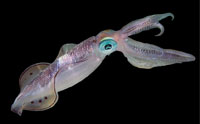
When the workings of the genome were first being discovered, the central evolutionary dogma of molecular biology claimed that genetic information passes consistently from DNA to RNA to proteins. Now we know that RNA messages can be altered by a variety of mechanisms, and a new study in squid genetics has vaulted one of these processes—called RNA editing—to an unprecedented level of biocomplexity. More… …read more Read more here: icr.org
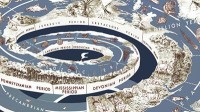
Some say evolutionary advantages led to the average size increase of marine animals in the fossil record, but they assume a timeline of millions of years. …read more Read more here: AIG Daily

A key type of rogue genetic data called orphan genes has just been reported in honey bees. Orphan genes conflict with ideas about genome evolution, and they are directly linked with the evolutionary enigma of phenotypic novelty, unique traits specific to a single type of creature. More… …read more Read more here: icr.org

Can time and chance really produce something as complex as insulin? …read more Read more here: creation.com

Evolutionists credit endogenous retroviruses with making mammalian evolution possible, but scientists now show they play a critical role in brain development. …read more Read more here: AIG Daily
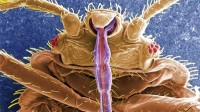
Research shows that bedbugs are still bedbugs. They don’t demonstrate Darwinian evolution—they vary within their created kind to survive in a sin-cursed world. …read more Read more here: AIG Daily
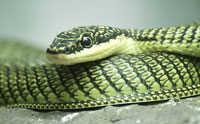
It’s an old story. An animal or plant is discovered in sedimentary rocks by paleontologists and it pushes the organism’s origin further back by many millions of years. This time snakes are the subject of a recent, unexpected discovery that pushes their first appearance back an additional 65 million years. More… …read more Read more here: icr.org
“Excellent article on the complexity of life and the probability of its origin by chance.” Admin How did life begin? The origin of life is a vexing problem for those who insist that life arose through purely natural processes. The naturalistic origin of life is also known as abiogenesis or sometimes chemical evolution. Some evolutionists try to claim that the origin of life is not a part of evolution. However, probably every evolutionary biology textbook has a section on the origin of life in the chapters on evolution. The University of California, Berkeley, has the origin of life included [More]