Highest Rated Videos
 8,464 views
12,716 views
8,464 views
12,716 views 13,186 views
11,834 views
13,186 views
11,834 views
 503,439 views
 16,370 views
 19,257 views
 13,602 views
Related Videos








Steve Turpin, O.D., M.S., a Doctor of Optometry, wrote about an alarming increase in nearsightedness in developed societies on behalf of the Evolution Institute (EI). His conclusions actually contradict Darwinian evolution.1 In fact, everything Dr. Turpin writes would have nothing to do with evolution were it not for his evolutionary conception of human history. Turpin, like many evolutionists, equate the primitive human ancestors that… More… …read more Source: icr.org
By Dr. Mercola Sepsis is a medical emergency that may become fatal or leave an individual with a significant disability. Data from the CDC1 show that every year at least 1.7 million adults in the U.S. develop sepsis and 1 of every 3 who die in the hospital has sepsis. While these numbers are shocking, a review of the literature2 shows the incidence of sepsis has grown over the last three decades at a rate faster than population growth. The percentage of severe sepsis cases has also increased from 25% in 1993 to 44% in 2003, indicating that not only [More]
By Dr. Mercola When you’re infected with a virus that causes an illness, that virus is shed in your saliva and other bodily fluids, and sometimes also via skin lesions. This means that a person who comes into direct contact with the shed virus may also become infected. The same holds true for live attenuated viral vaccines. While inactivated vaccines use a killed version of the pathogen, live viral vaccines use a weakened (or attenuated) version of the virus. Typically, the live virus used in vaccine production is passed through a living cell culture or other host, such as chicken [More]

By Simon Turpin When sharing the gospel with Muslims, it is not uncommon to hear the objection: “Where did Jesus say, ‘I am God; worship me’?” …read more Source: AIG Daily
By Dr. Mercola Table of Contents What is chlorella supplement? Health benefits of chlorella What else is chlorella used for? Studies on chlorella What to look for in a chlorella supplement Chlorella side effects to watch out for Frequently asked questions (FAQs) about chlorella You may have heard about chlorella because it’s being added to various health products. Its name is derived from a combination of two Greek words: “chloros” (green) and “ella” (small).1 If you’re curious about what chlorella actually is and how you can use it to your advantage, keep reading this article.

By Dena Schmidt, staff writer (NaturalHealth365) Most people think of basil as that robust, delicious flavor found in Italian and Thai cooking, but did you know basil can reduce inflammation, stress and anxiety levels, too? Those are just the start of the health benefits of basil. There are a number of different basil varieties grown around the world with flavors that range from pungent to sweet. Basil is rich in the vitamins A, K and C as well as vegetarian iron, magnesium, beta-carotene, calcium and potassium. Best of all, nutritionally speaking, its high antioxidant content helps to protect cells against [More]

By Ken Ham At its annual representative assembly earlier this month, the National Education Association (NEA) formally adopted a statement that endorses abortion. The NEA is the largest teachers’ union in the US. It’s tragically ironic that an organization that is supposed to support those who will teach the next generation of students endorses killing off the next generation of babies before they are born! The NEA declared that they will now include an assertion of our defense of a person’s right to control their own body, especially for women, youth, and sexually marginalized people. The NEA vigorously …read more [More]

By Daisy Luther by Daisy Luther If you haven’t heard by now, the World Health Organization has declared the Ebola outbreak in the Democratic Republic of Congo an international emergency. Despite this, experts … Read the rest The post Ebola Declared an INTERNATIONAL EMERGENCY But “Experts” STILL Recommend Keeping DRC Borders Open appeared first on The Organic Prepper. …read more Source: Organic Prepper

By Michael Greger M.D. FACLM Were the flax seed studies showing 20 pounds of weight loss just flukes? …read more Source: nutritionfacts.org

By Michael Greger M.D. FACLM Which foods should we eat and avoid to prevent and treat acid reflux before it can place us at risk for Barrett’s esophagus and cancer? …read more Source: nutritionfacts.org
By Sarah Chaffee “We don’t splice our DNA the same way chimps do,” says Dr. Ann Gauger. On this episode of ID the Future from the vault, she discusses human and chimpanzee genomes. Did you know that one stretch of DNA can code for multiple proteins? Listen in to learn more about how your DNA is different, and is expressed differently, than chimps! Your browser does not support playing Audio, please upgrade your browser or find our podcast on podOmatic Download Episode …read more Source: id the future

By Lance D Johnson (Natural News) Do you ever feel stressed, …read more Source: Natural News
Nothing incites anger and fear in us quite like the thought that we are being slowly poisoned by toxins in our food and water. From endocrine disrupting chemicals in everyday household products to lead in drinking water, it seems that we are increasingly at risk of developing diseases by things that we often have no control over. And glyphosate is no exception. The reports of harmful effects of glyphosate are exploding — within the medical and scientific community as well as the general public. At a time when bee populations are already declining, a recent study reported that glyphosate perturbs [More]

Doesn’t Genesis explain the “why” and ‘science’ the “how”? …read more Source: creation.com
By Michael By Daisy Luther Self-defense courses sound hard. Aggressive. Intensely physical. For some women, darn near impossible. When we reach a certain age, gain a certain amount of weight, see a drop in our… …read more Source: Natural Blaze
Sunglasses trick the brain into thinking it’s dark and prevent it from producing a hormone that protects against sunburn, according to new research. Emerging research is illuminating the dark side of wearing sunshades. Sunglasses block UV light from entering the pineal gland through the optic nerves in the eyes. This prevents the brain from sending the signal to the pituitary gland to produce melanin, the pigment that tans the skin and protects it from burning. …read more Source: Sott health news feed

By Ken Ham Want to discover how to more effectively share the gospel in our increasingly secular age and enjoy a great family vacation at the same time? Join us for Gospel Reset Mega Conference, November 21–23, 2019, in Niagara Falls—on the beautiful Canadian side of the Falls. You’ll hear from me, molecular geneticist Dr. Georgia Purdom, AiG-Canada director Calvin Smith, and evangelist Cory McKenna. And we’ll be on what most people say is the best side of the Falls—the Canadian side! It’s a beautiful area, with so much to do for individuals, couples, and families. Here are just …read [More]
Want to boost your IQ and promote health and wellness? Eat beef made from cattle — it’s as simple as that! In recent weeks, the latest in plant-based and petri-dish protein headlines have dominated the news. And despite consumers not exactly going wild over choices like the Beyond and Impossible Burgers — because really, these are just processed junk parading themselves as alternatives to beef burgers — there appears to be a new contender in town. It’s called the Awesome Burger, and it’s made by Nestle. According to Fast Company, “Three years ago, the plant-based but meat-like Beyond Burger hit [More]
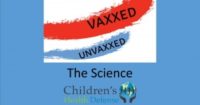
By AdminM By Robert F. Kennedy, Jr., ChairmanChildren’s Health Defense The Institute of Medicine (IOM) has repeatedly asked CDC to create studies which explain, “How do child health outcomes compare between fully vaccinated and unvaccinated children?” During a November 2012 Congressional hearing on autism before the House Committee on Oversight and Government Reform, Dr. Coleen Boyle, the Director of the National Center on Birth Defects and Developmental Disabilities, gave evasive answers to lawmakers pressing her on this point. After considerable badgering, she finally stated, “We have not studied vaccinated versus unvaccinated [children].” That was perjury. Boyle knew that CDC had [More]
By Dr. Mercola Stress is a response in the body that enables us to run, take down prey or run from predators, also known as the flight-or-fight response. Unfortunately, many of the same life-saving reactions your body uses to protect you from danger may also be triggered as a response to cope with the rising prices of gasoline, a fear of public speaking or dealing with difficult bosses. In other words, the body sometimes has a difficult time turning stress off. The good news is there are several strategies you might consider to relieve the response and reduce the negative [More]

By Ken Ham One of the biggest criticisms of biblical creation is, “Creationists don’t make testable predictions.” But that’s simply not true! Biblical creationists do make predictions—many of which have been confirmed by further research. Here are just a few of those predictions: The strength of several planets’ magnetic systems Helium in earth’s rocks The presence of radiohalos in metamorphosed sandstones Cold material from earth’s crust near the earth’s core The rapid reversal of earth’s magnetic field Harvard-trained scientist Dr. Nathaniel Jeanson, one of AiG’s research scientists, wrote Replacing Darwin, a book that challenges the evolutionary worldview with research from [More]

By Dagny Taggart By Dagny Taggart Are you planning to take your family to the beach this summer? If so, you might want to know the dirty details of a recently published study.… Read the rest The post E. Coli, Flesh-Eating Bacteria, Poop: THESE Are the Dirtiest Beaches in America appeared first on The Organic Prepper. …read more Source: Organic Prepper
07/30/19 ‘The origin of species is exactly what Darwin cannot explain’ David Gelernter, a famed Yale University professor, has publicly renounced his belief in Charles Darwin’s theory of evolution, calling it a “beautiful idea” that has been effectively disproved. Gelernter, who is known for predicting the World Wide Web and has developed many complex computing tools over the years, is today a professor of computer science at Yale, chief scientist at Mirror Worlds Technologies, member of the National Council of the Arts, and a prolific author. In May, the Claremont Review of Books published a column [More]
By Dr. Mercola Cancer is a disease of uncontrolled growth of abnormal cells, also called a malignant growth or tumor. In 1971,1 President Richard Nixon declared war on cancer, signing the National Cancer Act. His goal was to make a national commitment to find a cure, after which Fort Detrick was converted to a cancer research center and renamed the Frederick Cancer Research and Development Center. Since then a number of chemotherapeutic and surgical treatments have been developed in an effort to treat cancer.2 In 1991, mortality rates from cancer began to decline, falling 0.5% per year from 1990 to [More]

Darwin’s real message-have you missed it? Some evolutionists really do understand its materialistic implications. …read more Source: creation.com
Syphilis stopped being “a disease of the past” after its worrying resurgence in Europe, health experts told RT. Less fear of contracting HIV and the rise of dating apps are among the factors behind the problem. The spread of syphilis in Europe is intensifying due to worrying trends in human behavior, the head of the HIV/AIDS, sexually transmitted infections and viral hepatitis program at the European Centre for Disease Prevention and Control (ECDC), Andrew Amato-Gauci, told RT. Various factors play into the outbreak, such as “people having sex without condoms, multiple sexual partners and a reduced fear of acquiring HIV [More]

By Ken Ham My longtime, dear friend, Buddy Davis, celebrates his 70th birthday today. Happy birthday, Buddy! I’ve known Buddy, and his wife Kay, for half my adult life and they’ve been an integral and vital part of AiG and the Creation Museum. When you visit us, you’ll see Buddy’s sculpted dinosaurs throughout the museum. His dinosaurs are found throughout the museum and have been seen by millions of people. Many years ago (September 1994), AiG co-founders, Mark Looy, Mike Zovath, and I went to visit Buddy and Kay in their cabin way back in Amish country in Ohio after [More]