Highest Rated Videos
 7,975 views
12,194 views
7,975 views
12,194 views 12,782 views
11,756 views
11,558 views
12,782 views
11,756 views
11,558 views
 502,888 views
 15,959 views
 18,700 views
 13,101 views
 2,015 views
Related Videos
756 views
274 views













We widely believe that some core in each person will somehow live forever, but where does this idea come from? A new research tactic reveals that belief in eternal life is hardwired into each of us, inadvertently confirming the Bible’s message. More… …read more Read more here: icr.org

Dr. David DeWitt responds to claims that the creation model is not scientific and does not make predictions. …read more Read more here: AIG Daily
The human hand is undeniably a work of wonder. Its layout and suite of design features enable mankind,the only possessors of this particular arrangement of bones, tendons, muscles, and nerves,to type faster than 60 words per minute or swing a heavy hammer while holding a delicate potato chip. What would it take to duplicate a human hand? A series of robotic facsimiles of human hands have been developed, but none have approached the range of functions of the original. The latest and most advanced robot hand was recently described in the journal Smart Materials and Structures by two Virginia Polytechnic [More]
“Another marvel of design that confounds evolutionists.” Admin Animal and human life depends, either directly or indirectly, on plant life. And all plant life depends on extraordinarily precise biochemical machines that capture and convert light energy into energy that living cells can use. Researchers at the Argonne National Laboratory in Illinois have been using ultrafast spectroscopy to discover just how these systems work. Their most recent discovery has them baffled over the newfound complexity of photosynthesis in purple bacteria. It turns out that their photosynthetic machinery is such advanced technology that it takes advantage of the quantum nature of light. [More]

A parasitic fly has silenced the crickets on this Hawaian island. But crickets remain there yet. …read more Read more here: creation.com

Bright baboons know nutritional needs of “Nutcracker Man” were no problem. …read more Read more here: AIG Daily

Evolutionists proclaim discovery of the ancestral anatomy for air-breathing terrestrials in an African fish. …read more Read more here: AIG Daily

A genetically engineered toxin is said to show how scorpions evolved. …read more Read more here: AIG Daily

Birds flying in V formation take aeronautical engineering to new heights. …read more Read more here: AIG Daily

The lowly, ‘basal’ box jellyfish has astonished scientists with its capacity to see things above the water. …read more Read more here: creation.com

For the amazing echolocation ability of bats to function properly, both emitting and receiving organs must be present, and cooperate. (There are other problems too, to drive evolutionists ‘batty’.) …read more Read more here: creation.com

Paleontologists recently presented their analysis of original skin leftovers from three marine reptile fossils and inadvertently revealed three clues that darken their evolutionary explanations. More… …read more Read more here: icr.org
“One of the scientists quoted in the article states “We’ve got some catching up to do.….The nature-produced tiny structures are far beyond any human designs.” yet evolutionists want us to believe this marvel of design happened by chance … ridiculous.” Admin The diamond weevil, which makes its home in the Brazilian tropics, has a body studded with tiny, brilliant reflectors. Each one is like a diamond, reflecting different-colored light in shiny arrays. New research has probed the microstructure of these brilliant facets and discovered that the way they work is familiar—but the way they are made is not. These insect [More]

Does common anatomy necessarily point to common ancestry? …read more Read more here: creation.com

How should creationists respond to claims that dark matter has been found? …read more Read more here: creation.com

Evolution textbooks have said for years that placental mammals didn’t appear until after dinosaurs went extinct. But now many are saying that’s wrong. …read more Read more here: creation.com

Fish fingers were never on the evolutionary menu. …read more Read more here: AIG Daily

With green blood, three hearts, and able to change colour in a flash, the cuttlefish sounds like a ‘weird aliens’ movie creature. …read more Read more here: creation.com
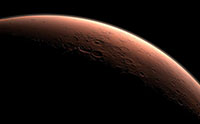
Venus’ tortured surface begs for explanation, but scientists have a trying time reconstructing the planet’s past based on its mysterious features. Secular geologists anticipate that additional measurements may help resolve the vexing Venusian riddles, but satisfactory answers may never come without something more substantial than just new data. More… …read more Read more here: icr.org

A hand fit for a human was found surprisingly deep in the fossil record. …read more Read more here: AIG Daily
“Once again man is copying one of the marvels of design in Gods creation.” Admin Harvard’s Wyss Institute specializes in designing new materials and devices that mimic patterns found in living things. Their latest contribution was inspired by the versatile material found in insect cuticle, which is strong and flexible, yet remarkably lightweight. The result was “shrilk,” a moldable, biodegradable substance derived from shrimp shells and silk that is as strong as some aluminum alloys but only half their weight. “Shrilk could be used to make trash bags, packaging, and diapers that degrade quickly,” according to a Wyss Institute press [More]

It’s all so slick in the evolutionary storytelling world, especially with one of its icons Tiktaalik roseae. Tiktaalik is a fish supposedly 3751 million years old which has been promoted as a transitional fossil in sea-to-land evolution. Tiktaalik has its own website2 and was even the theme of a song to promote evolution with the repeated line, “tik, tik, tik, tik, Tiktaalik.”3 The Tiktaalik story began in 2004 when University of Chicago researchers found a fossilized skull (not a fully formed fish) in Canada. More remains were found at the same locality on Ellesmere Island in 2006, 2008 and 2013 [More]

“The honeybee’s guidance system and waggle dance it does to communicate to other bees how to get to the nectar are complex marvels of design. Another testimony to God’s handiwork.” Admin Polarized light imprints GPS directions on the honeybee brain’s genes. The uncanny ability of honeybees to remember and communicate the location of sweet nectar has been the subject of ongoing investigations—both navigational and genetic. “The more we find out how honeybees make their way around the landscape, the more awed we feel at the elegant way they solve very complicated problems of navigation that would floor most people—and then [More]
100 Years of Fruit Fly Tests Show No Evolution http://www.icr.org/article/5532/ July 22, 2010, marked the 100th anniversary of genetic investigations using fruit flies. The first such study appeared in Science in 1910 and described the unexpected appearance of a male fruit fly with white eyes after generations of flies with pigmented eyes.1 This began a century of focused studies on fruit fly mutations, but what has really been learned by all this tinkering? For most of the past century–and especially since the discovery of DNA as a physical molecule carrying heritable information–the prevailing concept of neo-Darwinian evolution has held mutations [More]
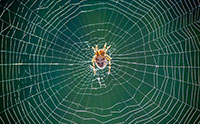
No, it’s not science fiction—it’s real. Spider webs use electricity to snare prey, and researchers recently discovered an added environmental benefit from these arachnids’ masterful constructions. More… …read more Read more here: icr.org

New “Nutcracker Man” is a mosaic of evolutionary assumptions and reality. …read more Read more here: AIG Daily
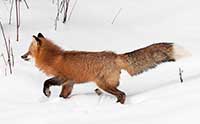
During winter, red foxes hunt snow-covered mice without even seeing their prey—but how? Foxes may see more than what visible light reveals. More… …read more Read more here: icr.org