Highest Rated Videos
 8,517 views
12,751 views
8,517 views
12,751 views 13,226 views
11,876 views
13,226 views
11,876 views
 503,506 views
 16,405 views
 19,291 views
 13,638 views
Related Videos
 1,532 views
428 views
1,532 views
428 views








![Point of Grace – Jesus Will Still Be There [with lyrics]](http://img.youtube.com/vi/XFqjq_LsZVg/0.jpg "Point of Grace – Jesus Will Still Be There [with lyrics]")


Long before Darwin, William Paley outlined the evidence for Divine design in living things, the natural world and the universe. …read more Read more here: creation.com

By Ken Ham Horse-lovers (and there are lots of them here in Kentucky!) might be interested in new research from the University of Sussex on horse facial expression. Apparently, according to this new research, “horses use a wide range of facial expressions as social cues—much like humans do.” Horses reportedly have seventeen “discrete movements, many of which are also used by humans, despite obvious differences in facial structure.” Humans, however, have twenty-seven “action units,” or facial movements, as opposed to the horses’ seventeen action units. Reportedly “both horses and humans modify their facial expressions roughly the same way—by using facial [More]
A new study published in The Open Evolution Journal described a paradox that particles-to-people evolution has failed to resolve. Called the “mutation protection paradox,” it could be an intractable problem that would leave creation as the only viable origins hypothesis. Study researchers observed that both living organisms and computer programs that copy and transmit coded information have built-in error detection and error correction systems. These systems are required to maintain the information’s integrity, which would otherwise be eroded by constantly accumulating random mutations. The coded information, organized in small sets called “bytes” in binary computer code and “codons” in the [More]
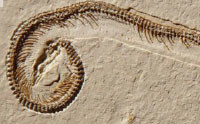
As weird as it may sound, some snakes had legs. Fossils reveal little legs on ancient snakes that have apparently been extinct for some time. Yet, those had only hind legs. Now, in the journal Science researchers describe a new fossil with four limbs. They suggest that this new fossil illustrates how legged snakes evolved from legged lizards. Is this accurate? More… …read more Read more here: icr.org

Apparently, it’s time to alter biology and anatomy textbooks again. There’s much more to mitochondria than we ever thought. Researchers revealed that these tiny cellular power houses are highly organized to efficiently deliver ATP energy. They interconnect throughout muscle cells, forming a gigantic mitochondrial network. Researchers published this stunning discovery in Nature, calling it the “mitochondrial reticulum.” More… …read more Read more here: icr.org
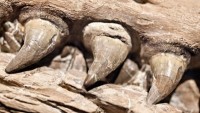
By Dr. Elizabeth Mitchell Evolutionists say scales and teeth share evolutionary history but wonder, “Which evolved first?” However, God created scales and teeth at the same time. …read more Read more here: AIG Daily
“Just one more of many marvels of design in nature that are proving extremely problematic for evolutionists.” Admin An international team of researchers has concluded an in-depth genetic analysis of the octopus, and some say their just-released findings present deep problems for the theory of evolution. The octopus has long been recognized as one of Earth’s most unusual creatures. Its intelligence, dexterity, and complexity are unparalleled among invertebrates. And, until last year, scientists had never fully mapped the genome of the octopus, so the eight-armed creature’s full genetic code remained a mystery. Finally, in a journal article published in Nature [More]

A darkness clouds the thinking of physicists, from dark matter to dark energy, dark fluid, dark flow, dark radiation and-now-dark photons. …read more Read more here: creation.com

Does the case for land-walking tetrapods, Tiktaalik and ‘fishapods’ as evidence for evolutionary transitional forms stand up to scrutiny? …read more Read more here: creation.com

Of all the scientific disciplines, underwater archaeology may be one of the most fascinating. These researchers examine artifacts our ancestors left behind before global sea level rose and covered them. A newly discovered monolith—a gigantic rock placed in what is today the Mediterranean Sea—confronts a few evolution-based errors about human origins. More… …read more Read more here: icr.org

The discovery of Earth 2.0 has evoked a speculative frenzy about it being habitable but does reality match the rhetoric? …read more Read more here: creation.com
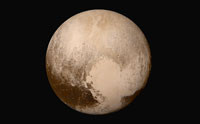
Congratulations to the New Horizons team on their remarkable achievement of sending a spacecraft to Pluto. The mission was a complete success, and we are enjoying high-resolution images of never-before-seen surface features of this distant little world. These pictures dazzle the mind and are already beginning to challenge secular thinking. More… …read more Read more here: icr.org
By Dr. Elizabeth Mitchell Many evolutionists believe the discovery of a four-legged fossilized snake is evidence of a burrowing lizard in the snake’s evolutionary past, but is it? …read more Read more here: AIG Daily

Incredible plant inspires technology that tackles environmental disasters. …read more Read more here: creation.com

By Dr. Alan Gillen Putrefying meat with its disagreeable appearance and foul odor is disgusting, but realize the vital importance of the rotting process. …read more Read more here: AIG Daily

By John UpChurch Two eyes are better than one. There’s more truth to that saying than you might realize. …read more Read more here: AIG Daily

Fossil experts are delighted, but somewhat bemused, by the discovery of a beautifully preserved snake, complete with four tiny, but definitely functional, legs-opinion is divided! …read more Read more here: creation.com
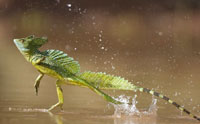
Jesus lizards literally run across the surface of ponds in Central and South America. According to evolutionary thinking, all reptiles—snakes, turtles, gavials, dinosaurs, pterosaurs, chameleons, skinks, and Jesus lizards—descended from an unknown original reptilian form. What evidence might demonstrate this? Strings of fossils should clearly connect each basic reptile kind back to that supposed key ancestor. It should have interchangeable or adjustable body features that natural forces could have manipulated without disrupting the evolving creature’s essential functions. A newly discovered fossil of a Jesus lizard in Wyoming shows just the opposite evidence. More… …read more Read more here: icr.org

By Dr. Terry Mortenson Noah’s Flood is the key to explaining most of the geological record and as such it washes away millions of years. …read more Read more here: AIG Daily

Proponents of an oxygen-less Earth atmosphere are faced with mounting evidence against the idea. …read more Read more here: creation.com

A reader asks for proof that Freud’s assaults on Christianity have been discredited. …read more Read more here: creation.com

The Jurassic World movie, though thrilling to watch, comes packed with fictional ideas like de-extinction, designer creatures, and iron somehow preserving dinosaur DNA indefinitely. But how would the world respond if live dinosaurs were verified to scientists’ satisfaction? More… …read more Read more here: icr.org

By Dr. Alan Gillen Pasteur and Lister had provided evidence that bacteria caused disease, but couldn’t provide the conclusive evidence needed to prove the developing theory. …read more Read more here: AIG Daily

A smelly mushroom shows clear evidence of special creation. …read more Read more here: creation.com
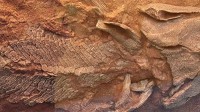
By Dr. Elizabeth Mitchell Finding an unexpected combination of traits in one animal does not demonstrate that animal is a transitional form. …read more Read more here: AIG Daily
A team of American and British scientists has published a new report detailing how natural selection, “the engine of evolution,” can actually prevent evolution from happening—a potentially devastating setback for evolutionists. Natural selection, a term first popularized by Charles Darwin, plays a fundamental role in the theory of evolution. In his infamous book “The Origin of Species,” Darwin proposed that natural selection “leads to divergence of character and to much extinction of the less improved and intermediate forms of life.” Read More Natural Selection, ‘Engine of Evolution,’ May Actually Inhibit Evolution, Scientists Find | Christian News Network.
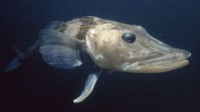
By Heather Brinson Bruce Subzero water is a death trap for most animals. Icefish, on the other hand, make their home in it. …read more Read more here: AIG Daily