Darwin’s finches have been a poster child for evolution for more than a century, but recent genetic analysis reveals God’s creative brilliance and how He created species to change over time.
How easily can peptides spontaneously begin to link together in conditions posited for abiogenesis?
Racemization of amino acids is frequently claimed to have half-lives on the order of tens of thousands to millions of years. This is misleading. I show that L?D residue interconversion in small, soluble peptides occurs at 25°C on the timescale of only about a century for the first 10% in oceans, rendering them already unsuitable for life-related chemistry. Read More
Simple explanation of how the Flood formed fossils. Fossils formed by the Flood makes more sense than evolution.
Free chapter on the Earth's age and ‘dating’ methods, from the world’s best selling creationist book (after the Bible!).
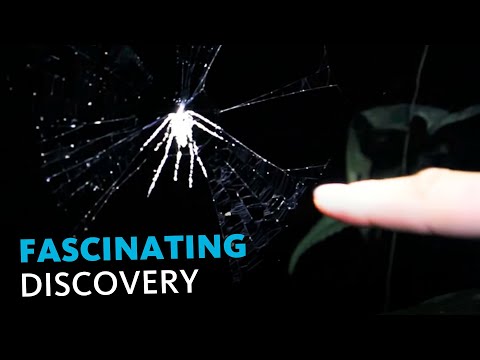
Evolutionists are DEAD wrong about this new species… In this episode of Amazing Animals, Calvin Smith teaches us about a recently-discovered spider species that creates decoy spiders.
Scientific hypotheses that make falsified predictions should be abandoned, so why is cosmic Evolution still accepted?
The design and plasticity of the human brain shows God’s goodness. Read More
James Tour, Ph.D., is a synthetic organic chemist at Rice University. He has about 650 research publications and over 200 patents. In 2015, he was inducted into the National Academy of Inventors. In 2014, he was named among the 50 most influential scientists in the world, as well as “The World’s Most Influential Scientific Minds.” In 2013, he was named “Scientist of the Year” by R&D Magazine. Recently, Dr. Tour issued a 60-day public challenge to the 10 top origin-of-life researchers, by name. His challenge was that he would take down all of his public material, which exposed the fallacies of the
[More]
Sneak peek for the latest Creation magazine: Ancient Juvenile Fossil Skull Unearthed in China Rewrites Human Evolution: Mysterious 300,000-year-old HLD 6 Skull Challenges the Human Family Tree.
According to a new study, true crabs have evolved to leave their marine environment a stunning 7 to 17 times! Read More
How much do we really know about all those human and ape fossils displayed in museums and textbooks? The dating methods aren’t as rock-solid as most people assume. Read More
Examining a critical part of the earth’s surface. Read More
The salinity of the oceans is a strong evidence that they, and the Earth itself, are far younger than the billions of years required for evolution, and is consistent with the biblical age of about 6,000 years.
What seems like a spikey and dreadful lizard, proves itself to be an amazing example of God’s design. Living in extreme conditions, the thorny devil lizard has to have extreme abilities. Join Kyle Butt as he investigates this specialized little lizard and how its design is perfectly suited to its needs. Watch: Wonders of Creation: Thorny Devil Lizard – Apologetics Press
Although plants aren’t alive in the biblical sense,1 they are most certainly complex in their physiology and anatomy.2,3 Some plants have been designed by our Creator Jesus Christ to endure and even proliferate in formidable areas such as the desert.
Recently, Marieh Al-Handawi of New York University Abu Dhabi studied a water condensate on briny crystals on the Athel tamarisk (Tamarix aphylla)... More...
How might the biblical framework explain ecological symbiosis?
With their six-foot-long, tube-shaped, scaleless bodies, electric eels look like a snake but are classified as a knife fish. Yet, these creatures are much different than most fish you know. They can produce enough electricity to generate a shock of up to 600 volts—enough to stun a horse. How can these aquatic creatures survive their own defenses? Join Eric Lyons as he reveals the wonderful secrets of this incredible creation. Watch: Wonders of Creation: Electric Eel – Apologetics Press
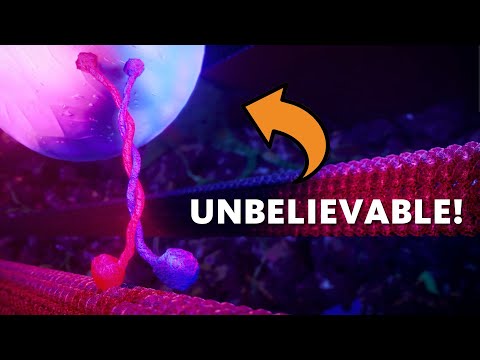
In this video, Calvin Smith takes a deep dive into the amazing kinesin protein. Unfortunately, evolutionists will claim that this protein is the result of chance, but if you take the time to listen to the experts who have researched this topic, this video will change your mind.
In our individual, hustle-and-bustle lives, we are often so distracted that we fail to “count the stars” and “smell the roses.” Yet, the natural revelation in creation testifies to God’s infinite power, intelligence, and care. And such splendor in God’s created realm should have a serious impact on all mankind—as we humbly and excitedly respond with acceptable worship and service to our awesome Creator. Watch: Wonders of Creation: Consider God’s Creation – Apologetics Press
Exactly how fast do amino acids racemize under natural conditions?
In this eye-opening video, Calvin Smith challenges popular misconceptions regarding human and dinosaur coexistence. Examining the complexities of the fossil record, he underscores the reality that the absence of evidence is not evidence of absence. Drawing parallels with other known coexisting species that lack joint fossil records.
Simple explanation of globe-covering Flood in Genesis. God judged people’s wickedness, but showed mercy with His Ark design. Flood formed most rock layers and fossils, so no place for millions of years—so evolution is impossible!
Sunflowers (Helianthus annuus) are not only big and beautiful, but they also have an amazing biomechanism called heliotropism.
ICR’s Dr. Jim Johnson stated,
In fact, the sunflowers move during the daytime, in order to track the sun—that’s because God designed and bioengineered their physiologies for such continuous environmental tracking, so that they can photosynth... More...
How the explosive, 1980 eruption of Mt St Helens demolished radio-isotope dating.
Calvin Smith dives deep into the intricate structure and function of DNA, challenging the evolutionary perspective of its origin. Highlighting the complexity and precise information embedded within DNA, he argues that it transcends mere matter, suggesting a thoughtful design. Join this insightful exploration that posits DNA as a testament to an intelligent mind, rather than random chance.
A variety of explorations to the mountains of Ararat have taken place over the years. So, after all these explorations, has Noah’s ark been discovered? Read More
 8,517 views
 13,226 views
 503,507 views
 16,405 views
 19,291 views
 13,638 views
 2,564 views