Highest Rated Videos
 8,517 views
12,751 views
8,517 views
12,751 views 13,226 views
11,876 views
13,226 views
11,876 views
 503,506 views
 16,405 views
 19,291 views
 13,638 views
 1,330 views
Related Videos
5 views
306 views
369 views
540 views
568 views
564 views
570 views
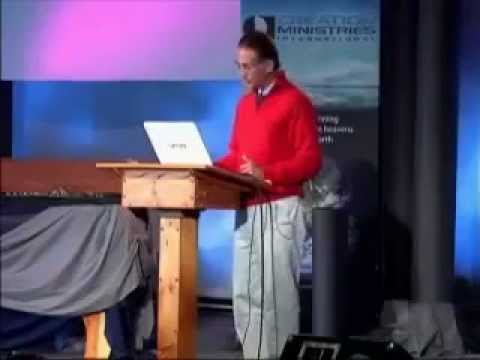







Drs. Michael Boyle, Tim Clarey, Randy Guliuzza, Frank Sherwin (Hon.), Brian Thomas, Jeff Tomkins, and I represented ICR at the 2025 Creation Research Society (CRS) meeting in July. One hundred ninety people attended the meeting at Missouri Baptist University in St. Louis. With the exception of the Creation Science Fellowship in the UK, the CRS, founded in 1963, is the world’s oldest creationist organization.
Preconference a... More...
Who: Johannes (or Johann) Kepler
What: Father of Physical Astronomy
When: December 27, 1571 - November 15, 1630
Where: Born in Weil der Stadt, Württemburg, Holy Roman Empire, of German nationality
Johannes Kepler developed a love for astronomy at an early age. He observed the Great Comet of 1577 when he was six and the 1580 Lunar Eclipse, events that no doubt fueled his curiosity and enthusia... More...
Who: Isaac Newton
What: Father of Universal Gravitation
When: January 4, 1643 - March 31, 1727
Where: Woolsthorpe, a hamlet of Lincolnshire, England
Nature and Nature's laws lay hid in night:
God said, Let Newton be! and all was light.1
Sir Isaac Newton, perhaps the most influential scientist of all time, came from very humble beginnings. The Jul... More...
Astronomers have discovered an earth-sized exoplanet, designated TOI-2431 b, that is so close to its host star that it completes a full orbit in just 5 hours and 22 minutes.1,2 Or, to put it another way, this planet’s year is less than six hours long! Astronomers designate exoplanets having orbital periods less than one Earth day long as ultra-short period (USP) exoplanets. Out of the approximately 6,000 known exoplanets, a... More...
Biofluorescence is a phenomenon in which creatures—plant or animal—absorb light at a certain wavelength and release or emit it at a different wavelength. The light from the animal becomes a different color from the light that was absorbed.
In 2020, ICR’s Dr. Jeff Tomkins discussed biofluorescence in the platypus, of all animals.
Biofluorescence is a glow-in-the-dark phenomen... More...