Highest Rated Videos
 8,517 views
12,751 views
8,517 views
12,751 views 13,226 views
11,876 views
13,226 views
11,876 views
 503,506 views
 16,405 views
 19,291 views
 13,638 views
Related Videos
 2,271 views
601 views
2,271 views
601 views 504 views











Does a peek “into the minds of birds” provide a peek into the origin of ours? …read more Read more here: AIG Daily

Leading paleoanthropologist Bernard Wood admits human evolutionary origins are ‘frustratingly unclear’. …read more Read more here: creation.com

In chapter 10 of his Origin of Species, Charles Darwin made a prediction: “No organism wholly soft can be preserved.” He’s been proven wrong-big time. Read more here: creation.com

Evolution of live-bearing lizards from lizards makes the news. …read more Read more here: AIG Daily

Evolving people? . . . Or just natural selection in action? …read more Read more here: AIG Daily

Those who say dinosaurs died out millions of years ago never expected to find the real skin of a hadrosaur, which now might be able to tell us about their colour. …read more Read more here: creation.com

A memorial to Noah’s Flood. …read more Read more here: creation.com
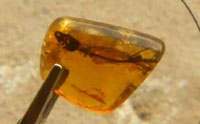
This amber find is remarkably rare because it not only preserves the entire body of a vertebrate, it also preserves some of that creature's original soft tissues. More… …read more Read more here: icr.org

The latest astronomical reports bring no joy, only increased bewilderment, to scientists who presume the Earth and its moon are billions of years old. …read more Read more here: creation.com

It takes much more than calcium to make strong bones. …read more Read more here: AIG Daily
Fossil ant found alive! by David Catchpoole Entombed in amber (Figure 1), this beautiful fossil Gracilidris ant isn’t about to run anywhere in a hurry. Alex Wild <http://www.myrmecos.net> Gracilidris ant How long has it been like that? Conventional dating puts the geological age of such Dominican amber fossils (i.e. amber found in the Dominican Republic, on the island of Hispaniola in the Caribbean) as being from the upper Oligocene or lower Miocene.1 That is, around 15–20 million years old. And with this fossil being the youngest (in fact, the only) specimen of this ant ever identified, the genus Gracilidris has [More]

A fossil skull found with dinosaurs is identical to a modern American alligator, but was given a different scientific name, giving the illusion of evolution. Read more here: creation.com

By Ken Ham After reading your Scriptures this morning, I suggest you read the recent web article on the incredible bees by Dr. Elizabeth Mitchell. Fascinating! Just more evidence that if people don’t believe in the Creator God they are without excuse. The article begins as follows: Honeybees depend on their right antennae to differentiate friends from foes, scientists have learned. Previous studies have shown that bees use their right antennae to process short-term memories and their left for long-term memories. Therefore, explains neuroscientist Giorgio Vallortigara, “We tried to investigate whether the left and the right antennae play different roles in social [More]

Modern astronomy allows us to find the distances, sizes, temperatures, and masses of stars. This is incredible, given how far stars are from us. …read more Read more here: AIG Daily

Scientists find preserved trees and leaves, and say they are millions of years old. They’ve got to be joking. …read more Read more here: creation.com

Altogether, the stored energy from the legs, hips, torso, shoulder girdle, and wrist loads its force to that of the appropriate muscle energies onto the projectile. The end result? Professional pitchers can throw baseballs at close to 90 mph over 100 times during a three-hour baseball game. More… …read more Read more here: icr.org

The term “Junk DNA” should itself be relegated to the trash bin due to the fact that scientists are now discovering that the entire genome is pervasively functional. More… …read more Read more here: icr.org
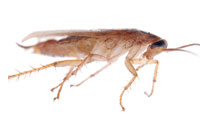
While most cockroaches like sugar, a study found that some do not. These sweet-toothless insects are called “glucose-averse,” and they have special biological equipment that shows they are extremely well-designed creatures. More… …read more Read more here: icr.org

Sometime in its past, the earth’s moon was pounded with thousands upon thousands of meteors. Is it possible to reconstruct the sequence of these strikes, shedding light on the Bible’s teaching about the moon’s creation? …read more Read more here: AIG Daily

DNA from an ancient horse’s foot suggests horses have been horses for a long time. …read more Read more here: AIG Daily

The development of a creation model of astronomy has lagged development of creation models in biology and geology. …read more Read more here: AIG Daily

Part 2: volcanism …read more Read more here: creation.com

Researchers discovered that even under highly controlled conditions, the model mustard plants they were studying exhibited an amazing level of bioengineering and performed mathematical operations. More… …read more Read more here: icr.org

Non-linear genetic information adds a whole new dimension that multiplies the challenge of comprehending a living cell's inner workings. More… …read more Read more here: icr.org

Do magnetic fields decay exponentially? …read more Read more here: creation.com

The very clear teaching of the Genesis account is that the creation took six literal days. What are creation-based alternatives to the big bang? …read more Read more here: AIG Daily

The marine medals for diving go to animals like elephant seals and sperm whales, which can remain underwater for 90 minutes or more. …read more Read more here: AIG Daily