Highest Rated Videos
 7,976 views
12,195 views
7,976 views
12,195 views 12,783 views
11,757 views
11,560 views
12,783 views
11,757 views
11,560 views
 502,889 views
 15,961 views
 18,701 views
 13,102 views
 2,899 views
Related Videos
418 views
260 views
184 views 70,623 views
271 views
70,623 views
271 views










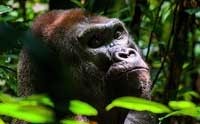
Old evolutionary assumptions seem hard to break. The recent assembling of ape DNA sequences based on the human genome provides a good example. This new gorilla genome study, despite capitalizing on advanced DNA sequencing technology, suffers from the same old malady. More… …read more Read more here: icr.org
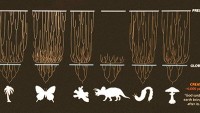
By Dr. Jason Lisle This study shows that created heterozygosity, together with natural processes that are observable, is sufficient to account for species’ diversity. …read more Read more here: AIG Daily

By Dr. Andrew Fabich We need to balance our understanding of the microscopic world because it is an essential part of and critically affects our everyday life. …read more Read more here: AIG Daily
DNA is a biochemical that contains genetic information. And like all other cellular ingredients, it decays if cellular systems don’t maintain it. Now, scientists are more confident about how fast it falls apart after a cell dies .A team of researchers recently completed a thorough investigation of 158 ancient leg bones that belonged to giant extinct birds called moa, which once lived on New Zealand’s South Island. Using radiocarbon ages and measures of DNA integrity, the researchers generated a DNA decay rate with unprecedented rigor. But their results do not fit with claims from secular scientists who have found plenty [More]
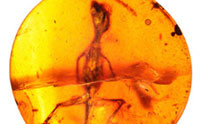
Publishing online in Science Advances, a team of zoologists recognized familiar lizard forms in a dozen amber-encased lizard specimens. What did these lizards look like when they crawled around dinosaur feet? These Burmese ambers clearly show the answer. More… …read more Read more here: icr.org

Why the elephant is losing its tusks (and it’s not evolution!) …read more Read more here: creation.com
By Dr. Elizabeth Mitchell Evolutionists claim to know when mitochondria evolved yet still cannot show how or that mitochondria are anything but one of God’s great designs. …read more Read more here: AIG Daily

Evolutionists have long claimed that human chromosomes were infected with many different viruses over millions of years, which then multiplied in the genome. Then, as some of these sections of virus-like DNA were shown to be functional, evolutionists claimed they had become “tamed” like the domestication of wild animals. When virus-like DNA were first discovered, it was thought the majority of them would prove to be junk—until now. More… …read more Read more here: icr.org
By Brian Thomas Hardly a month passes without new reports of “soft tissue” discovered in fossils. Could this material last millions of years? …read more Read more here: AIG Daily

Everything about the hummingbird shrieks perfect design rather than any random processes. …read more Read more here: creation.com

Beneficial mutations are real but they produce nothing new, only triggering into action the built-in modes of variation. …read more Read more here: creation.com

As a result of studies of the human genome, mutations are being classified into just two categories-‘deleterious’ and ‘functional’. …read more Read more here: creation.com
By Ken Ham Well, the fact that news outlets are calling this extinct creature a unicorn is certainly interesting! Atheists have long mocked older translations of the Bible for mentioning unicorns in several places. And they’ve also mocked the Creation Museum and Ark Encounter in regards to unicorns (even though we don’t feature unicorns at the Creation Museum and the Ark Encounter hasn’t opened for them to know what exhibits it will feature!). We’ve written articles and even a book chapter defending the biblical unicorn and pointing out that it could very well have been an Elasmotherium, a …read more [More]
By David Wright The best question to pose about this article on bilaterian evolution would be, “Are the contents of this article absolutely true?” …read more Read more here: AIG Daily
By Dr. Elizabeth Mitchell Can YouTube video “Proof of Evolution That You Can Find on Your Body” prop up the human evolutionary story through our presumably useless body parts? …read more Read more here: AIG Daily
By Dr. Gary Parker There are obviously all kinds of “change through time” that are not evolution, so evolution must be only a particular kind of change through time. …read more Read more here: AIG Daily

By Ken Ham A recent example of this kind of thinking regards research on the eastern coyote or the “coywolf,” a hybrid of wolf, coyote, and dog. Researchers claim that this is a new species “evolving before scientists’ eyes in the eastern United States.” Well, let’s start by separating the observational science from the unsubstantiated historical science and evolutionary assumptions. Research shows that, due to a lack of mating options, wolves, coyotes, and dogs are breeding together. This has created a highly successful hybrid that is able to survive even in urban centers. This is the observational science. From …read [More]
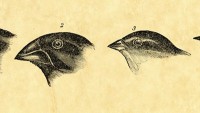
By Dr. Gary Parker There is considerable evidence that Darwin was indeed correct about natural selection and the “war of nature.” …read more Read more here: AIG Daily
Describing their findings as “humbling,” researchers who set out to create a “minimal genome” have concluded that the basic elements of life are enormously complex and remain full of unsolved mysteries. In an article titled “Design and synthesis of a minimal bacterial genome,” a team of more than 20 scientists share the results of years of research on cellular genomes. The scientists, in an attempt to better understand the basic requirement for life, took a bacterial genome and stripped it down of all genes they deemed unnecessary. “We set out to define a minimal cellular genome experimentally by designing and [More]

By Ken Ham Recently an article appeared in the Washington Post regarding an upcoming book, Feathers: Displays of Brilliant Plumage. If the preview provided in the article is any indication, this book is full of breathtaking photos of feathers from birds around the world. The author of the article raves about the “design” of these “works of art and engineering” and some of the complex uses for feathers. But then describes feathers as going “all the way back to the dinosaurs” and says that “today, birds have developed even more complex uses for feathers [than dinosaurs did].” Exchanging the …read [More]

The tiny fruit of a plant lands a big blow against evolution. …read more Read more here: creation.com

By Ken Ham According to this researcher, as humans supposedly evolved, we lost the need for bigger brains dedicated to out-smarting others. Instead, goes the story, we developed smaller brains wired to be social and to gossip. Since social media provides the perfect outlet for gossip, it comes as no surprise to this researcher that many people “have a compulsion to engage with lots of people via social media” because “our brains have evolved for us to be social animals.” It seems that evolution takes the credit, or the blame, for everything these days. Behaviors and choices—from social …read more [More]

Do common mutations found in humans and apes prove evolution? …read more Read more here: creation.com

By Dr. Gordon Wilson Next time you’re tempted to brush away a spider web, stop to consider the engineering required . . . and the Engineer behind the engineer. …read more Read more here: AIG Daily

By Michael Cargill The molecular complexities of staphylococci mechanisms indicate the signature of a divine Designer who has placed his signature on his art piece, staphylococci. …read more Read more here: AIG Daily
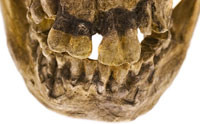
Secular scientists have told incredible stories for over a century about how fossil teeth supposedly support the idea that humans evolved from primates. A lack of knowledge about tooth development has provided fertile ground for wild speculations about evolving tooth sizes, skull shapes, foot shapes, and even life habits. A new report changes all that conjecture. More… …read more Read more here: icr.org

By Devon Spencer, DVM As researchers sequence the DNA of more organisms, they find species (like the red wolf) they called unique physically are not so unique genetically. …read more Read more here: AIG Daily