Highest Rated Videos
 7,974 views
12,192 views
7,974 views
12,192 views 12,780 views
11,755 views
11,557 views
12,780 views
11,755 views
11,557 views
 502,888 views
 15,957 views
 18,699 views
 13,100 views
 1,880 views
Related Videos
![O Come, Angel Band [Live]](http://img.youtube.com/vi/P6Hz5tabQnU/0.jpg "O Come, Angel Band [Live]") 11,517 views
1,451 views
11,517 views
1,451 views 1,456 views
 17,331 views
153 views
17,331 views
153 views 1,169 views










Are native-like protein folds easy to generate naturally from reused secondary structures? …read more Read more here: creation.com

The Human Genome Project—according to the interpretations of evolutionists—scientifically disproved the possibility of all humans being descended from one man and one woman. But what does the science really demonstrate? …read more Read more here: AIG Daily

Claims that the eye-brain nerve connections are incredibly improbable fail to see the proper source of wonder: the brain’s incredible ability to learn to see. …read more Read more here: creation.com

New “fresh flesh and blood” mammoth discovery animates clonal hopes. …read more Read more here: AIG Daily

The declining reaction times and diminishing IQ data are consistent with what the authors called “dysgenic trends”—downward-trending intelligence genes. More… …read more Read more here: icr.org

Are native-like protein folds easy to generate naturally? …read more Read more here: creation.com

Mankind was not the first to invent glass. Since creation, untold trillions of little creatures, called diatoms, have made their homes out of glass. …read more Read more here: AIG Daily

How do squid match their surroundings when they are colourblind? The solution has inspired designers of a camouflaging material. …read more Read more here: creation.com
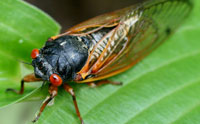
Entomologists regularly discover examples of mathematical genius hardwired into various tiny-brained arthropods. More… Read more here: icr.org

Multicellular organisms’ genomes typically contain a great deal of non-coding DNA (often called “junk” DNA, implying that it has little function), but not the bladderwort. Read more here: AIG Daily

Does this prove molecules-to-man evolution? Read more here: creation.com
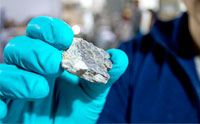
“As we excavated the fossil, I thought that we were looking at a skin impression. Then I noticed a piece came off and I realized this is not ordinary—this is real skin.” More… Read more here: icr.org
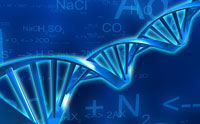
Recently reported research describes massively long and complex gene tails that do not code for proteins, but instead contain hundreds to thousands of built in regulatory switches per gene RNA copy. More… Read more here: icr.org

The archer fish’s ability to snare its prey is no hit-or-miss affair. Read more here: creation.com
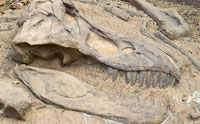
They can ignore the fossils, ignore protein decay, or claim contamination. But all three tactics create far more problems than they solve. More… Read more here: icr.org

For over 50 years in a Russian experiment, foxes have been selected for one trait—tameness. The results have been fascinating. A population has resulted that is as tame as domestic dogs. These changes have been associated with changes in the neuroendocrine system, including lower levels of blood cortisol. Developmental changes have been seen as well. In addition to these traits seen throughout the population, other changes have appeared at a rate higher than would be expected by mutation alone. The most notable example is a white spotting pattern which often results in a star on the fox’s face. The types [More]

This discovery, like so many similar finds, truly embarrasses evolutionist's age assignments. More… Read more here: icr.org

This new data unequivocally proves that Neandertals and Denisovans were well within the DNA variability range of modern humans—not extinct primitive evolutionary offshoots of the human lineage. More… Read more here: icr.org
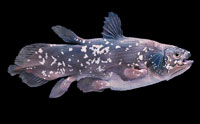
A recent report on the genome sequence of the so-called living fish fossil, the African coelacanth, has some evolutionists scrambling to defend their story. More… Read more here: icr.org

What is the difference between figure 1 and figure 2? Both are patterns of light and dark. Both are arrangements of the same 12 particular shapes in the same groupings. Both exhibit a complexity of arrangement. The probability of either arrangement arising by chance is similar. Neither arrangement has been produced by any action of the properties of the material they appear on. But there is a world of difference between the two, and that difference is equivalent to the difference between the imagined ‘primordial soup’1 of non-living chemicals, and a living cell. This is because a living cell is [More]
Once again, DNA sequence that was once thought to be nothing but a genomic fossil has shown itself to be vital to human survival. More… Read more here: icr.org
Natural selection is an observable process that is often purported to be the underlying mechanism of unobservable molecules-to-man evolution. The concepts are indeed different, though some mistakenly interchange the two. So let’s take a closer look. There are two major questions to answer: How do biblical creationists rightly view the observable phenomenon of natural selection? Could this process cause the increase in genetic information necessary for molecules-to-man evolution? What Is Natural Selection? Below are some definitions evolutionists use to define “natural selection.” The problem biblical creationists have with these definitions lies mostly in their misapplication, as noted by the bolded [More]

Several new studies show how plants adapt in different environments without changing their genetic code through a process known as “epigenetics.” More… Read more here: icr.org

Perhaps you might expect a boxfish to “swim as well as a barn would fly.” In fact, navy engineers are learning important lessons from them. Read more here: creation.com
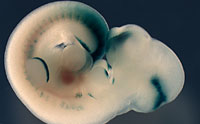
Location is everything, and this same working principle applies to genes and their control sequences in the genome during embryo development. And not just simple location in a linear sense, but three-dimensional spatial location. More… Read more here: icr.org

By Ken Ham Yes, you read that title correctly—human intelligence has been on the decline (since the Fall of Genesis 3), and now a leading geneticist agrees. Dr. Gerald Crabtree recently stated in an article that he believes genetic mutations are adversely affecting human intelligence. In his article in the journal Trends in Genetics, Crabtree claimed, “I would wager that if an average citizen from Athens of 1000 BC were to appear suddenly among us, he or she would be among the brightest and most intellectually alive of our colleagues and companions, with a good memory, a broad range of [More]

Sir David Attenborough and Charles Darwin were both mistaken in their evaluation of the animals of the Galápagos as evidence for evolution. Read more here: creation.com