Highest Rated Videos
 7,974 views
12,192 views
7,974 views
12,192 views 12,780 views
11,755 views
11,557 views
12,780 views
11,755 views
11,557 views
 502,888 views
 15,957 views
 18,699 views
 13,100 views
Related Videos
136 views














Those who say dinosaurs died out millions of years ago never expected to find the real skin of a hadrosaur, which now might be able to tell us about their colour. …read more Read more here: creation.com
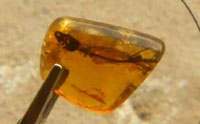
This amber find is remarkably rare because it not only preserves the entire body of a vertebrate, it also preserves some of that creature's original soft tissues. More… …read more Read more here: icr.org

It takes much more than calcium to make strong bones. …read more Read more here: AIG Daily
Fossil ant found alive! by David Catchpoole Entombed in amber (Figure 1), this beautiful fossil Gracilidris ant isn’t about to run anywhere in a hurry. Alex Wild <http://www.myrmecos.net> Gracilidris ant How long has it been like that? Conventional dating puts the geological age of such Dominican amber fossils (i.e. amber found in the Dominican Republic, on the island of Hispaniola in the Caribbean) as being from the upper Oligocene or lower Miocene.1 That is, around 15–20 million years old. And with this fossil being the youngest (in fact, the only) specimen of this ant ever identified, the genus Gracilidris has [More]

By Ken Ham After reading your Scriptures this morning, I suggest you read the recent web article on the incredible bees by Dr. Elizabeth Mitchell. Fascinating! Just more evidence that if people don’t believe in the Creator God they are without excuse. The article begins as follows: Honeybees depend on their right antennae to differentiate friends from foes, scientists have learned. Previous studies have shown that bees use their right antennae to process short-term memories and their left for long-term memories. Therefore, explains neuroscientist Giorgio Vallortigara, “We tried to investigate whether the left and the right antennae play different roles in social [More]

Altogether, the stored energy from the legs, hips, torso, shoulder girdle, and wrist loads its force to that of the appropriate muscle energies onto the projectile. The end result? Professional pitchers can throw baseballs at close to 90 mph over 100 times during a three-hour baseball game. More… …read more Read more here: icr.org

The term “Junk DNA” should itself be relegated to the trash bin due to the fact that scientists are now discovering that the entire genome is pervasively functional. More… …read more Read more here: icr.org
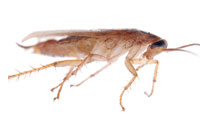
While most cockroaches like sugar, a study found that some do not. These sweet-toothless insects are called “glucose-averse,” and they have special biological equipment that shows they are extremely well-designed creatures. More… …read more Read more here: icr.org

DNA from an ancient horse’s foot suggests horses have been horses for a long time. …read more Read more here: AIG Daily

Researchers discovered that even under highly controlled conditions, the model mustard plants they were studying exhibited an amazing level of bioengineering and performed mathematical operations. More… …read more Read more here: icr.org

Non-linear genetic information adds a whole new dimension that multiplies the challenge of comprehending a living cell's inner workings. More… …read more Read more here: icr.org

Embryology is observable, but the evolution of complexity is not. …read more Read more here: AIG Daily

Muco-viral symbiosis may be key to a ubiquitous immune system . . . but it’s not evolution. …read more Read more here: AIG Daily

A reassessment of the literature. …read more Read more here: creation.com
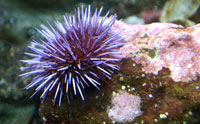
Three researchers wanted to test what would happen to future generations of the purple sea urchin if exposed to more acidic sea water. How did the small, spiny sea creatures respond to the challenge? More… …read more Read more here: icr.org
Throughout North and South America lives one of God’s most amazing creatures, the hummingbird. I like to call it ‘God’s tiny miracle’. There are more than 300 species of this beautiful minute bird, with its iridescent plumage. Hummingbirds range in size from the tiny bee hummingbird, which is only about the length of an adult’s little finger, to the giant hummingbird, which may reach 22 centimetres (8.5 inches)—the width of a magazine page. There are nine species in North America. Read More The Hummingbird: God’s Tiny Miracle – Answers in Genesis.

Refuting the evolutionary ‘sea-water’ argument. …read more Read more here: creation.com
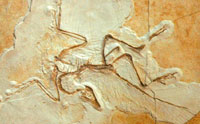
But organic molecules like pigments, and especially proteins, shouldn't be there if the specimen is older than a million years. These results challenge the “millions of years” date assigned to this fossil. More… …read more Read more here: icr.org

Microbiology and parasitology research based on the creation paradigm appears to provide some answers to these puzzling questions regarding the Plasmodium “kind” (Family Haemosporidae). …read more Read more here: AIG Daily

An ounce of primate prompts a pound of speculation. …read more Read more here: AIG Daily

As scientists begin to unravel the complexity of the genome, they are discovering that pseudogenes are not so “pseudo” after all. More… …read more Read more here: icr.org

For any fruitful debate to proceed regarding the plausibility of evolution, the right questions first need to be asked. …read more Read more here: creation.com
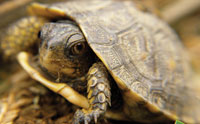
Eunotosaurus already had the organization of leg and breathing muscles unique to turtles, inferred by muscle attachment points seen on its fossilized bones. More… …read more Read more here: icr.org

Are human embryos created through cloning less human than those produced through the union of sperm and egg? …read more Read more here: AIG Daily

Results from a recent study in human and chimpanzee genetics have shipwrecked yet another Darwinian hypothesis. More… …read more Read more here: icr.org

The human cloning method of Shoukhrat Mitalipov’s group at the Oregon Health & Science University isn’t ready to churn out walking, talking clones, but researchers believe it will churn out embryonic stem cells. …read more Read more here: AIG Daily

A biomechanical study of murre—one that dives well but also flies—presumably sheds light on penguin flightlessness. …read more Read more here: AIG Daily