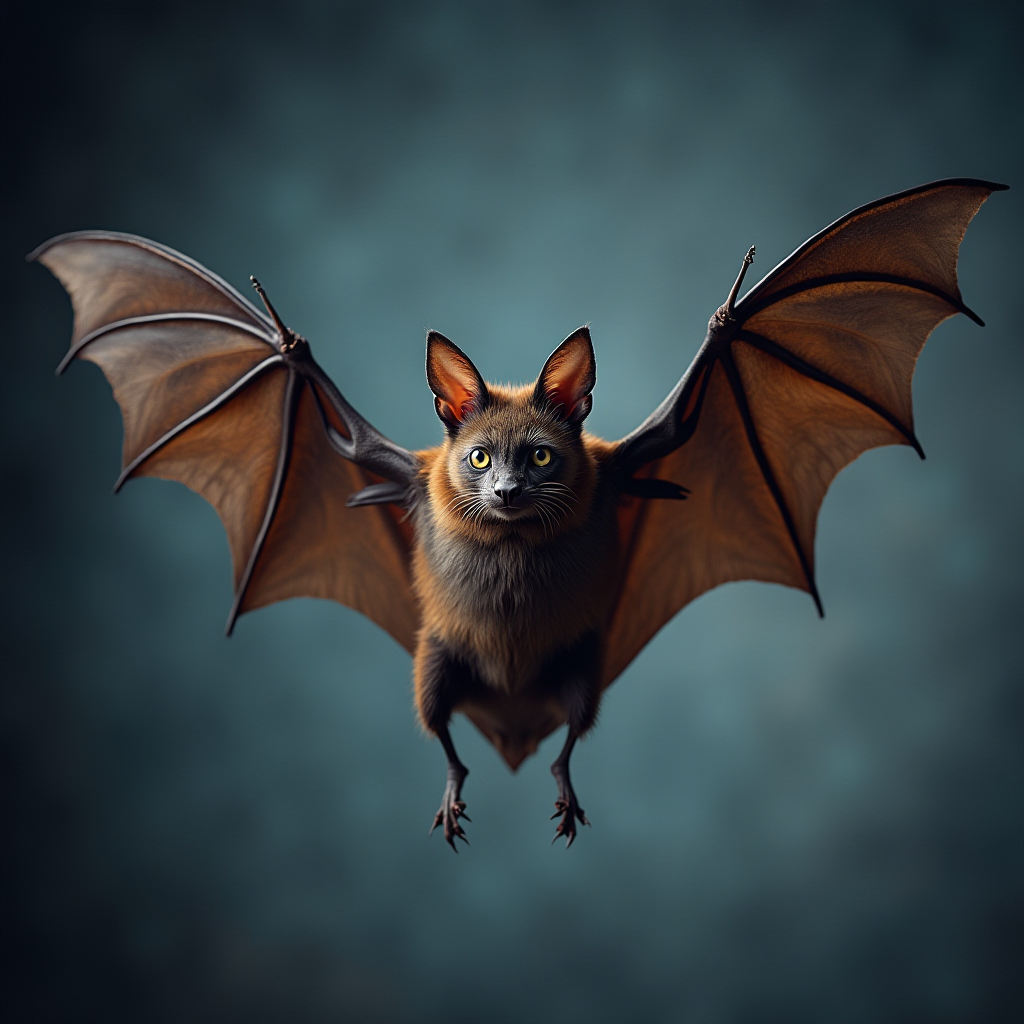
John: Nigel, have you ever just stopped to really think about bats? I mean, beyond the spooky Halloween decorations, actually considered what incredible creatures they are?
Nigel: You know, John, I have. They’re often so misunderstood, aren’t they? But when you scratch beneath the surface, especially when you consider how they navigate the night, it’s just astounding. Truly a marvel of design.
John: Absolutely. It’s almost like they defy the very concept of night. They’re flying, hunting, socializing in absolute darkness, and doing it with a precision that human technology only dreams of replicating. Their whole system is just… fine-tuned for it.
Nigel: Exactly. And the cornerstone of that, of course, is their echolocation. We talk about it, but do we truly grasp the sophistication involved? It’s not just making a sound and hearing an echo; it’s a living sonar system operating at a level that’s frankly mind-boggling.
John: Right? Think about it: they emit these incredibly high-frequency sounds, sometimes up to 120 decibels at the source, which is louder than a rock concert, yet totally inaudible to us. And then, their ears are specially adapted to pick up the faint echoes, even with all that self-generated noise.
Nigel: And it’s not just hearing an echo. It’s the brain processing that echo to build a three-dimensional map of their environment in real-time. They can distinguish between a tiny insect flying in front of them and a leaf gently swaying in the breeze. The amount of data processing happening instantaneously is just phenomenal.
John: It’s like they have a built-in supercomputer, isn’t it? And they can adjust their calls too, right? Like, when they’re searching for prey, they use a broad, sweeping call. But once they detect something, they narrow the beam, increase the repetition rate, almost like a targeted laser beam zeroing in.
Nigel: Precisely. It’s called the ‘terminal buzz’ or ‘feeding buzz.’ They go from maybe ten calls per second to up to 200 calls per second, sometimes more, in the final approach. That rapid-fire emission gives them an incredibly detailed, high-resolution update on the target’s position, speed, and trajectory. It’s exquisite timing and coordination.
John: And the fact that they can do all this while flying at high speeds, twisting and turning, catching insects mid-air… it really speaks to a magnificent piece of engineering. It’s not just one isolated system; it’s perfectly integrated with their ability to fly.
Nigel: Which brings us to those incredible wings. We often think of wings as just skin stretched over bones, but a bat’s wing is so much more. It’s a living, dynamic airfoil, an absolute masterpiece of biomechanical design.
John: The skeleton alone is fascinating. Their arm and finger bones are elongated to support the wing membrane, but they’re incredibly lightweight and flexible. It’s not rigid like a bird’s wing. A bat’s wing has dozens of joints, allowing for an astonishing range of motion.
Nigel: That’s a critical distinction, isn’t it? A bird’s wing acts more like a stiff, single unit for flapping. But a bat’s wing can be manipulated and reshaped during each wingbeat. They can actively change the wing’s curvature, the angle of attack, even create tiny vortexes with their wingtips. It’s like having multiple independent control surfaces.
John: So, they’re not just flapping; they’re actively ‘flying’ each individual segment of the wing, controlling the airflow with incredible precision. And the membrane itself isn’t just skin. It’s packed with blood vessels, nerves, and even tiny touch receptors.
Nigel: Those touch receptors, called Merkel cells, are another layer of sophistication. They can detect changes in air pressure and flow over the wing, giving the bat immediate feedback about its flight performance. It’s like having an array of tiny, biological air-speed indicators and stall warnings built directly into their wings.
John: That’s incredible! So, they’re not only using sound to ‘see’ their environment, but their wings are ‘feeling’ the air currents and providing real-time data back to the brain. It’s a multi-sensory feedback loop that allows for unparalleled agility and control.
Nigel: And the efficiency of it all. Flight is incredibly energy-intensive. Bats have exceptionally high metabolic rates. Their hearts can beat up to 1,000 times a minute during flight, and their respiratory systems are highly optimized for oxygen uptake. Every part of their internal machinery is geared towards sustaining that intense activity.
John: It’s a beautiful symphony of systems working together, isn’t it? You can’t have the echolocation without the brain processing, you can’t have the flight without the unique wings and the high metabolism to power them. Each component is interdependent, and without one, the whole system collapses. It’s a cohesive, integrated design.
Nigel: Absolutely. It speaks to a singular, brilliant conception. And it’s not just one type of bat, either. There’s such a diverse array of species, each uniquely adapted to its niche, but all sharing this underlying blueprint for flight and navigation.
John: Think of the different feeding strategies! You have insectivorous bats, which we’ve been largely discussing, with their incredible aerial pursuit. Then you have nectar-feeding bats with long tongues, precisely designed for reaching into flowers without damaging them, aiding pollination.
Nigel: And fruit bats, who rely more on vision and smell, playing a crucial role in seed dispersal. Then there are fishing bats, skimming over water surfaces, using echolocation to detect ripples made by fish and snatching them with their large claws. Each one, a specialized, perfectly suited tool for its job.
John: It’s like looking at a collection of perfectly crafted instruments, each designed for a specific purpose, yet all sharing the fundamental genius of their construction. The attention to detail in each specialization is just breathtaking.
Nigel: It truly is. The precision of their flight, the acuity of their sonar, the delicate yet powerful structure of their wings—it all points to an intelligent blueprint. It’s difficult to imagine such intricate, interwoven systems arising without a guiding hand.
John: It goes beyond mere functionality; there’s an elegance to it. The way everything fits together, the inherent efficiency, the sheer beauty of their aerial maneuvers. It’s a testament to incredible foresight and ingenuity.
Nigel: And they’ve been doing this for a very long time, continuing to thrive in diverse environments. Their design has proven robust and adaptable, without changing these core, fundamental systems that make them so unique. That consistency in sophisticated design is highly significant.
John: Indeed. They are truly living examples of highly sophisticated engineering. Every aspect, from their smallest bone to the processing power of their brain, is perfectly optimized for their existence. It’s not just flight; it’s optimized, intelligent flight.
Nigel: When you consider the complexity of just one system, like echolocation, and then realize it’s working in perfect tandem with a marvelously constructed wing, and a metabolism that can sustain it, you can’t help but be struck by the sheer brilliance on display.
John: It’s like looking at a finely crafted Swiss watch. You can admire the gears and springs individually, but it’s their precise arrangement and interaction that allows the watch to keep perfect time. And a bat is infinitely more complex than any watch.
Nigel: A beautiful analogy, John. And it’s a reminder that sometimes, the most extraordinary wonders are hidden in plain sight, or in this case, in plain darkness. We just need to take the time to truly observe and appreciate the incredible design that surrounds us.
John: Absolutely. So, the next time you hear that rustle in the evening sky, or perhaps see a shadowy figure flit across the moon, remember the incredible story of the bat. It’s a masterpiece of flight and navigation, a truly ingenious creation.
Nigel: A magnificent design, indeed. Thanks for joining me, John, for this fascinating dive into the world of bats.
John: My pleasure, Nigel. It’s always a privilege to explore such wonders. And to our listeners, we hope this has given you a newfound appreciation for these incredible creatures of the night. Until next time!

















![It Is Finished [Live]](http://img.youtube.com/vi/TxaAmNuL7BU/0.jpg "It Is Finished [Live]")


Thanks! Share it with your friends!
Tweet
Share
Pin It
LinkedIn
Google+
Reddit
Tumblr