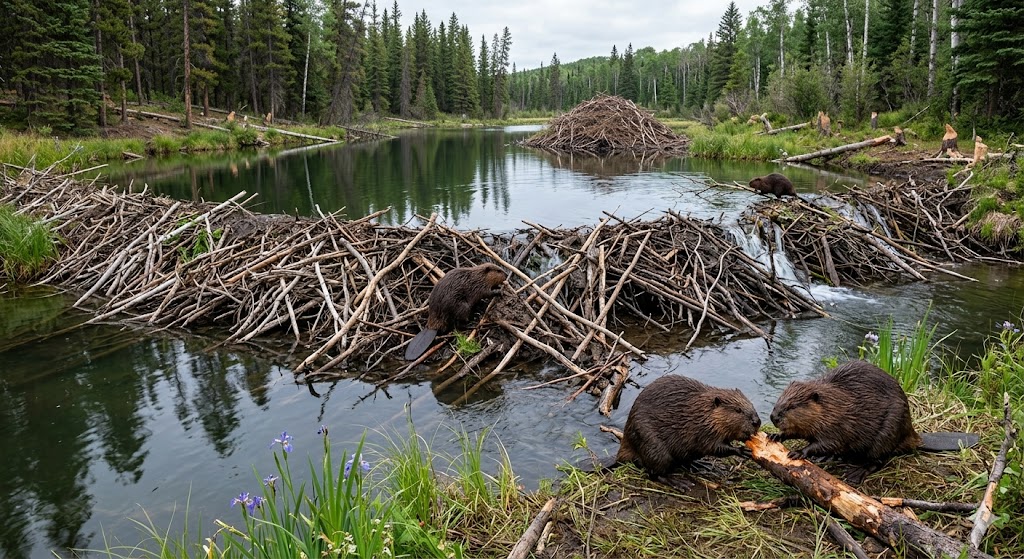
John: Nigel, today we are talking about beavers and their amazing dam building. I mean, it’s really incredible what they do.
Nigel: Indeed John it is incredible! They’re absolutely fascinating creatures. When you look at a beaver dam, it’s not just a pile of sticks, is it? It’s a marvel. A true piece of natural engineering.
John: Exactly! It’s beyond a pile of sticks. It’s a sophisticated structure that completely alters landscapes. I mean, how does a rodent, no offense to beavers, possess this kind of architectural genius?
Nigel: That’s the million-dollar question, isn’t it? They’re not going to engineering school. They don’t have blueprints or textbooks. Yet, they construct these incredibly complex, functional dams that can last for decades, sometimes even centuries.
John: And the precision! They know exactly where to fell trees, how to weave them together, and how to seal it all up. It’s not trial and error in the way we might think. There’s an innate understanding there that’s just… profound.
Nigel: It really is. Think about it. They identify a suitable stream or river, often a place where water is flowing a little too quickly. Their goal? To slow it down, create a pond. And they know how to do that. They sense the current, they pick the right spot.
John: It’s like they have an inherent sense of hydrology. They understand water dynamics better than some human engineers I know! They don’t just build across the water; they build in a way that manages the water flow, creating deep, calm pools.
Nigel: Absolutely. And their tools, right? Their incredible incisors for felling trees, their strong forepaws for digging and manipulating mud and stones, and that flat, scaly tail as a rudder, a prop, and even a tamping tool for mud.
John: It’s like they come pre-equipped with a full construction kit. Those teeth are self-sharpening, continuously growing, perfectly designed for gnawing through wood. And they know how to fell a tree so it falls in a useful direction, often right into the water.
Nigel: Which isn’t accidental. It’s a calculated effort. They chew around the base in a specific way, creating a weak point, and then leverage their body weight. It’s a masterclass in biomechanics and basic physics.
John: But how do they know that? That’s what gets me. It’s not learned behavior passed down through instruction manuals. It’s… implanted knowledge. A deep-seated instinct that guides every single action.
Nigel: It’s a blueprint, you could say. A complex set of instructions embedded within them, dictating not just ‘build a dam,’ but ‘build a structurally sound, water-tight dam that creates a stable pond environment.’ And they adapt these instructions to the specific challenges of each location.
John: And they’re not just building dams for fun. There’s a vital purpose behind it. Protection from predators, primarily. A deep pond means predators can’t easily reach their lodge, which has an underwater entrance.
Nigel: Exactly. The dam creates the pond, the pond protects the lodge. And the pond also provides an ideal storage space for their winter food supply – branches and twigs anchored to the bottom, staying fresh and accessible when everything else is frozen solid.
John: So, it’s not just a single engineering feat; it’s part of an entire integrated survival strategy. The dam, the pond, the lodge, the food cache – all interconnected and perfectly orchestrated.
Nigel: And the materials they use! It’s not just wood. They use rocks, mud, leaves, even their own waste sometimes, to meticulously seal any leaks. They’ll go back and patch up areas, constantly maintaining their structures. It’s an ongoing project, a living piece of architecture.
John: It’s almost like they have an internal pressure sensor for the dam. They know when water levels are dropping or rising too much, and they respond accordingly. It’s active, intelligent maintenance.
Nigel: They do. If there’s a breach, they’ll work tirelessly, sometimes through the night, to repair it. Their survival literally depends on the integrity of that dam. It’s an incredible drive.
John: And their impact on the environment, Nigel, is just as profound. They’re often called ‘ecosystem engineers.’ Those ponds they create become vital habitats for countless other species.
Nigel: Absolutely. Frogs, fish, insects, waterfowl, otters, moose – they all benefit from beaver wetlands. The dams also help filter water, reducing sediment and pollutants, and recharge groundwater. They’re nature’s water managers.
John: It’s like their very existence, their built-in programming, isn’t just for their own benefit, but for the health and flourishing of the entire ecosystem around them. It’s a holistic design.
Nigel: That’s a great way to put it, John. They’re a keystone species for a reason. Their presence fundamentally changes and often improves the environment for so many others. It’s a testament to the intricate interconnectedness of the natural world.
John: So, when we look at a beaver, it’s not just a furry animal chewing on a tree. It’s a highly sophisticated biological machine, pre-equipped with an astonishing level of engineering prowess, all directed towards a specific, beneficial outcome.
Nigel: It truly is. The complexity of their construction methods, their understanding of hydraulics, the way they manage resources, and their tireless dedication to their work – it all points to an incredible, inherent wisdom. It’s not just instinct; it’s intelligent, purposeful action.
John: And the consistency of it, across generations, across continents. Every beaver knows how to build a dam, how to manage water, how to create that safe haven. It’s not something they pick up from YouTube tutorials, is it?
Nigel: Not at all. It’s an internal instruction set, a design that ensures their survival and, in doing so, enriches the entire world around them. When you observe them, you can’t help but be struck by the sheer brilliance embedded within these creatures.
John: It makes you appreciate the wonder of the natural world even more, doesn’t it? To see such intricate, purposeful behavior in a creature so often taken for granted.
Nigel: It absolutely does. Beavers are a living testament to remarkable ingenuity and a deeply intelligent blueprint at work in nature. They truly are master builders.
John: Well, Nigel, this has been an incredibly enlightening chat about our furry, aquatic engineers. It really gives you a new appreciation for what’s out there.
Nigel: My pleasure, John! And next time you’re near a stream, keep an eye out. You might just spot one of these incredible architects at work, silently shaping their world, and ours.
John: Definitely will. Thanks for joining me, everyone, and we’ll catch you next time!


















Thanks! Share it with your friends!
Tweet
Share
Pin It
LinkedIn
Google+
Reddit
Tumblr