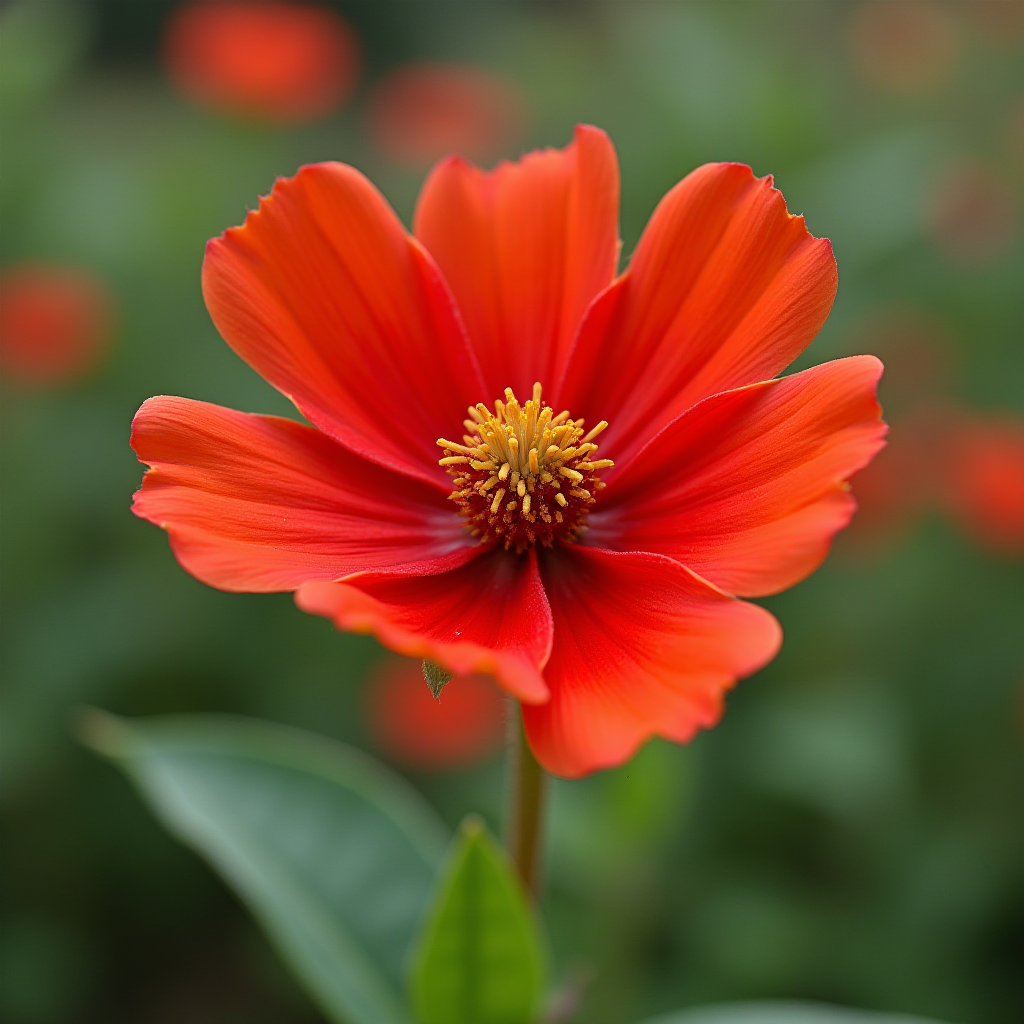
John: Nigel, have you ever really stopped to consider the sheer brilliance embedded in the natural world, even in something as seemingly simple as a flower?
Nigel: Oh, absolutely, John. It’s one of my favorite contemplations. There’s a depth to the functionality and beauty that goes far beyond what we might initially perceive. What’s on your mind today?
John: Well, I was thinking about the scarlet gilia, a truly remarkable plant. Its ability to change color, right there in the wild, is just astounding. It’s not just a pretty show; it’s a precisely orchestrated marvel.
Nigel: Ah, the scarlet gilia! Yes, I know exactly what you mean. That vibrant red, and then it shifts to a soft pink or even white. It’s like watching a living chameleon in the plant kingdom.
John: Precisely! But it’s not random. It’s a deliberate, sequential process, perfectly timed, almost as if someone programmed it with an exact schedule. When the flower first blooms, it’s typically a fiery red, isn’t it?
Nigel: That’s right. And that initial, striking red isn’t just for show. It’s a beacon, a clear signal, specifically designed to attract a particular kind of visitor. Nature’s way of rolling out the red carpet.
John: Exactly. Hummingbirds! They’re drawn to red like magnets. They have incredible color vision, and that bright scarlet is unmistakable against the green foliage. And the flower’s tubular shape is just perfect for their long beaks, guiding them right to the nectar.
Nigel: It’s a complete package, isn’t it? The color, the shape, the nectar reward – all perfectly harmonized. You see this kind of specific tailoring everywhere in nature once you start looking. No wasted effort, just elegant solutions.
John: It’s more than elegant, it’s ingenious. But here’s where it gets even more fascinating. After a few days, after it’s been visited by hummingbirds and, presumably, had its chance to be pollinated by them, the flower starts to change.
Nigel: And that’s the big reveal, isn’t it? From red to a lighter hue, often pink or almost pure white. It’s like the plant has an internal clock, a mechanism that tells it exactly when to switch its advertising campaign.
John: That’s exactly it. And the color change isn’t merely aesthetic. It’s a functional transformation, signaling a shift in target audience. The red flowers are essentially ‘open for business’ for hummingbirds, full of nectar and ready for pollination. The white or pink ones? A different story.
Nigel: So, the white or pink isn’t as appealing to the hummingbirds then? They’ve moved on, found their next red bloom?
John: Precisely. Once the flower has been successfully pollinated, or if its nectar reserves are depleted, maintaining that bright red signal for hummingbirds becomes inefficient. It’s a waste of the plant’s precious resources. So, it changes, indicating, ‘mission accomplished’ or ‘move along, nothing to see here, for you, anyway!’
Nigel: But it’s not just a ‘turn off the lights’ situation, is it? The new color serves a new purpose, attracting entirely different nighttime visitors.
John: You’ve hit on the key, Nigel. The white and pink hues are far more visible in low light, especially at dusk and during the night. And what kind of pollinator is active then, and drawn to lighter colors and often a different scent profile?
Nigel: Hawkmoths! Their eyesight is tuned to those lighter, more reflective colors in the dim light. And I imagine the scent of the flower changes too, to something more appealing to a moth than a hummingbird.
John: Absolutely. It’s a multi-sensory shift. The plant doesn’t just change its visual advertisement; it changes its olfactory one too. The scent, which might have been milder or more ‘flowery’ for hummingbirds, transforms into something richer, sweeter, and more potent to attract hawkmoths.
Nigel: It’s like it has two completely different marketing strategies, one for day, one for night, built into its very structure from the beginning. That isn’t something that just happens by accident. It speaks to a profound level of intentionality.
John: That’s the exact conclusion I draw. Think about the precision involved. The plant needs to sense when it’s been adequately pollinated by hummingbirds, or when the resources for nectar production for hummingbirds are waning. Then, it initiates a chemical process to alter the pigment, and simultaneously, adjust its scent profile. Nigel: And it’s not just a switch; it’s a gradient. You can often see flowers in various stages of this transition on the same plant, can’t you? Some bright red, some pinkish, some almost white. Each one broadcasting its current status to the insect world.
John: Yes, it’s a living botanical billboard, always optimized. This dual strategy maximizes its chances for reproduction. It doesn’t put all its eggs in one basket, so to speak, but intelligently leverages two distinct pollinator groups by adapting its signals.
Nigel: Which, when you think about it, is just incredibly efficient. Why waste energy attracting a pollinator that’s already done its job, or one that isn’t even active at that particular time? This plant has been designed with an almost perfect understanding of its environment and its potential partners.
John: It implies a deep, foundational blueprint, doesn’t it? A wisdom embedded within the very fabric of its existence. It anticipates the needs, the changing conditions, and has a pre-programmed solution to optimize its survival and proliferation.
Nigel: Absolutely. It’s not just adapting on the fly. This system is inherent. It’s built in from the ground up, a testament to foresight. The complexity of the cellular machinery required to manage this color change, to produce and then modify pigments, it’s mind-boggling.
John: Think about the instructions encoded within its genetic material. It’s not just ‘grow a flower.’ It’s ‘grow a red flower, produce hummingbird nectar, attract hummingbirds, detect pollination, then change color to white/pink, change scent, and attract hawkmoths.’ That’s a sophisticated operational manual.
Nigel: It really is. And to think this is just one example, one single species, out of countless others, each with their own specific, meticulously detailed ‘user manual’ for flourishing in their niche. It gives you a profound sense of reverence, doesn’t it?
John: It truly does. It highlights a recurring theme: the exquisite fit between organisms and their environments, orchestrated with such precision and purpose. Every detail serves a function, and often, multiple functions that unfold over time.
Nigel: And the beauty of it all! It’s not just functional, it’s aesthetically pleasing. The vibrant reds, the delicate pinks. It’s as if beauty and purpose are interwoven, not separate considerations.
John: Indeed. It’s a holistic design. The visual appeal isn’t just a byproduct; it’s an integral part of its strategy. Imagine if it changed to a dull gray! It wouldn’t work as effectively for the hawkmoths, even if the scent was perfect.
Nigel: That’s a great point. The white is highly reflective, almost luminous in the twilight. It’s tailored perfectly for maximum visibility when natural light is scarce. It’s a beacon in the dark, purpose-built.
John: It really makes you wonder about the mind behind such intricate systems. Who designs a plant with not just one, but two perfectly timed, perfectly executed pollination strategies, complete with color and scent changes?
Nigel: It certainly doesn’t look like chance. It looks like foresight, planning, and an incredible depth of understanding of ecological interactions. It’s an example of brilliant engineering, really, on a scale we can barely comprehend.
John: And it’s a system that works, year after year, generation after generation. This complex programming is faithfully replicated, ensuring the scarlet gilia continues its ingenious dance with hummingbirds and hawkmoths.
Nigel: Yes, the fidelity of the replication is another astonishing aspect. The instructions are so robust that this intricate process unfolds reliably every season. It speaks to the integrity of the original design.
John: It truly does. It’s a quiet testament, right there in the mountains and fields, to an extraordinary intelligence at work. The scarlet gilia, a small flower, yet it carries such a grand message.
Nigel: Absolutely, John. It’s these kinds of observations that make you pause and appreciate the world around us with new eyes, seeing the signature of intentionality in every delicate petal and purposeful change. What a marvel.
John: Indeed. And that, I think, is a perfect note to end on for today. Thanks for sharing this journey into the scarlet gilia’s world, Nigel.
Nigel: My pleasure, John. It’s always a delight to explore these intricate designs with you. Until next time, keep looking for the wonders!
















Thanks! Share it with your friends!
Tweet
Share
Pin It
LinkedIn
Google+
Reddit
Tumblr