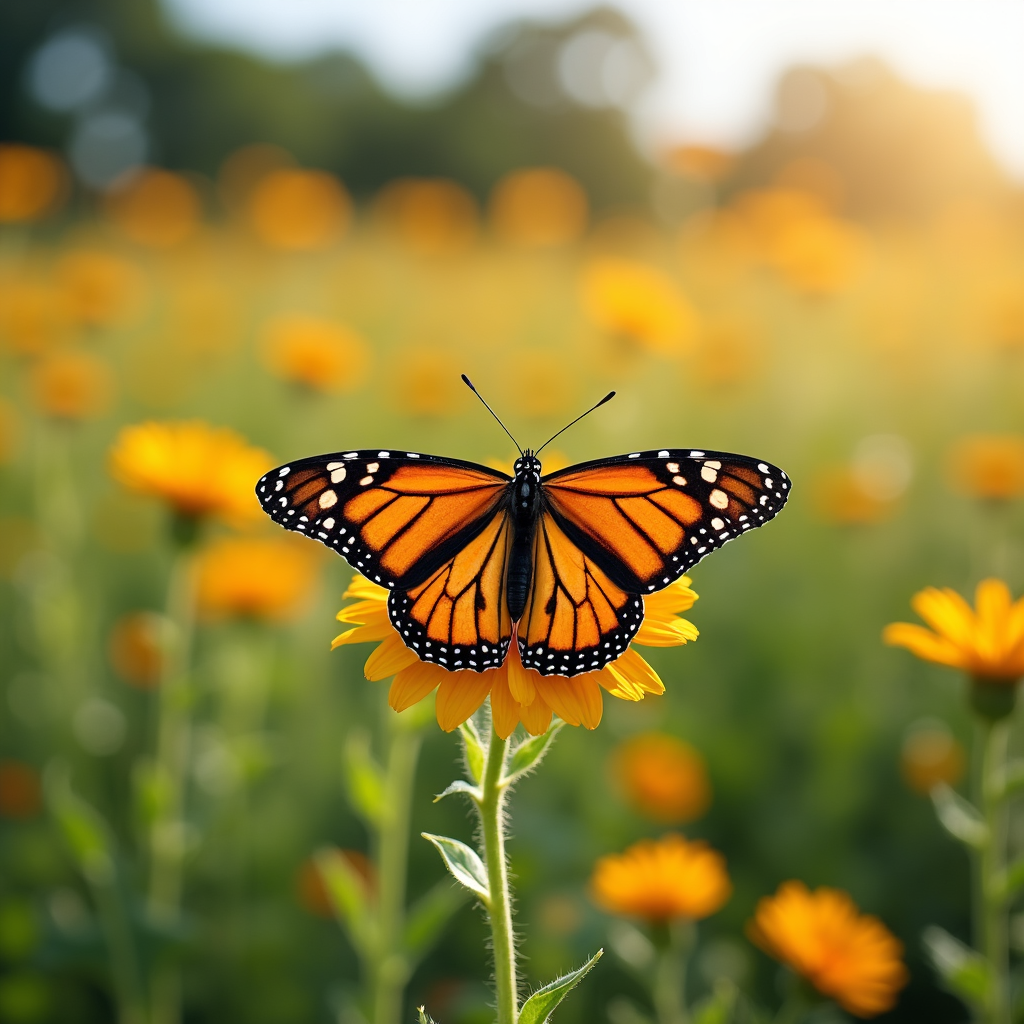
Nigel, have you ever really stopped to think about metamorphosis? I mean, beyond just caterpillar into butterfly?
Oh, absolutely, John. It’s one of those things you learn as a kid and it just blows your mind, but then you don’t really dive into the how of it all. It seems almost magical, doesn’t it?
Magical is a good word, because when you dig into the biological mechanics, it truly is astonishing.
From an intelligent design perspective, it’s practically a masterclass in pre-programmed complexity. It’s not just a change, it’s a complete radical overhaul. Right?
It’s like a creature decides, OK, I’ve had enough of this body, I’m going to completely dissolve it and build a new one from scratch, with wings, and then it just does it.
It’s mind-boggling.
Exactly. And it’s not a gradual transition in most cases we think of, like a butterfly.
We’re talking about holometabolism, or complete metamorphosis. This isn’t just growing bigger or shedding skin. It’s a total four-stage transformation.
Egg, larva, pupa, and adult. Each stage is wildly different from the last, with unique functions and body plans.
So the larva, like a caterpillar, is basically just an eating machine, right? Focused solely on consuming and growing.
Precisely. The caterpillar’s entire existence is about biomass accumulation. It’s got simple eyes, chewing mouthparts, a segmented body designed for crawling and eating. Its internal organs are geared for digestion and growth. It’s an incredibly efficient, albeit aesthetically challenged, biological factory.
And then it hits this point, where it’s had enough, and it forms a chrysalis or cocoon.
That’s the part that always fascinated me as a kid, the pupa stage. It’s like a secret chamber where something incredible is happening, but you can’t see it.
The pupa stage is where the intelligent design argument really shines, in my opinion.
What’s happening inside that chrysalis isn’t just growth. It’s a radical, almost violent restructuring. Most of the larval tissues actually break down, a process called histolysis. Enzymes are released that essentially digest the caterpillar from the inside out.
Wait, it digests itself? Seriously, that’s… intense.
It does. And from this soup of digested larval cells, entirely new structures are built. But here’s the kicker. Not all cells are dissolved.
There are these specialized cells called imaginal discs that have been present, dormant in the larva all along. These imaginal discs are like the blueprints, or preformed packets of adult cells, for the wings, legs, antenna, eyes, all the adult structures.
So it’s not just randomly rebuilding. There’s a very specific plan that’s been in place from the start. Like a construction crew waiting for the old building to be demolished before they start on the skyscraper.
Exactly. It’s a precisely orchestrated demolition and construction project happening concurrently. Think about the level of genetic programming required for this. The same genome, the same set of DNA instructions, has to contain the complete blueprints and operating manual for three vastly different organisms. The larva, the pupa, and the adult.
And the timing, too. How does it know when to start the digestion process and when to activate those imaginal discs? It can’t just happen willy-nilly.
That’s where hormones come in. It’s all incredibly tightly regulated by a dance of hormones, primarily ectosone and juvenile hormone. The changing concentrations of these hormones trigger different developmental pathways. It’s like a sophisticated internal clock and command center telling the organism, OK, time for stage two, and then, now stage three. Any misstep in that hormonal balance and the whole process could go haywire.
So if the instructions for dissolving the old body parts are a bit off or the instructions for building the new ones are messed up, you don’t get a beautiful butterfly.
You get a mess, an unviable creature.
Precisely. And this leads us to the concept of irreducible complexity, which is central to intelligent design.
The entire system of metamorphosis is so interconnected and interdependent that if you remove or significantly alter any one part, the larval stage, the pupil stage, the adult stage, the hormonal triggers, the imaginal discs, the enzymes for histolysis, the whole system fails. A half-metamorphous creature simply wouldn’t survive.
So if evolution proposes gradual changes, how could such a system evolve? It’s not like you can have half a pupa that’s somewhat functional.
It seems like it would have to appear all at once, fully formed and functional for it to work.
That’s exactly the crux of the intelligent design argument here. Evolutionary theory struggles to explain the origin of such a complex, multi-stage, coordinated process through purely gradual, unguided mutations and natural selection. What would be the selective advantage of an incomplete metamorphosis, where the larva digests itself but doesn’t have the blueprints to rebuild a functional adult? It would be a dead end.
It implies foresight, doesn’t it? A plan. Like the caterpillar has to be designed knowing it will become a butterfly and all the parts and processes for that future state are already encoded within it, ready to be activated.
Absolutely. It’s like a sophisticated software program with nested subroutines. You have the larva program running, consuming resources.
Then, at a specific point, a metamorphosis subroutine is called which initiates a complete system reset and rebuild, using pre-existing code for the adult program. This isn’t random trial and error. It’s precise, sequential, information-rich instruction.
So where does that information come from? That’s the core ID question, right? Random processes aren’t known for generating highly complex, functional information.
Exactly. The amount of functional, specified information encoded in the genome to execute this process is immense.
From an ID perspective, information requires an intelligent source. The blueprints for the larva, the blueprint for the adult, and all the precise instructions for the transition, it’s all there, waiting to be executed, and executed perfectly. It truly is elegant.
And it’s not just insects, right? Frogs do something similar from tadpole to frog. That’s also a pretty dramatic transformation.
Spot on. Tadpoles are aquatic, have gills, a tail, and are herbivorous. Adult frogs are terrestrial, breathe with lungs and skin, have limbs, and are carnivorous. Again, a complete remodelling. The tail is resorbed, limbs grow, the jaw structure changes dramatically. It’s the same principle of radical biological change, controlled by a highly complex, pre-programmed system.
It makes you look at nature differently, doesn’t it? When you start seeing these kinds of integrated systems, it’s hard to just shrug and say, oh, it just evolved.
The sheer sophistication of it all.
It absolutely does. It challenges the assumption that all complexity is the result of purely unguided natural processes.
Metamorphosis, in its breathtaking detail and precision, really does scream design to me. It’s not just a survival strategy. It’s an engineering marvel.
So for our listeners, when they next see a caterpillar or a butterfly, don’t just admire the beauty. Think about the incredible, intelligent design that allowed for that transformation. It’s a whole universe of complexity in every flutter.
Indeed, it’s a testament to a grand designer, whose brilliance is evident in the most intricate details of the natural world. It really is something to marvel at and to ponder deeply. Thanks for joining me, Nigel, on this journey into the incredible world of metamorphosis.
My pleasure John and thank you all for listening. Keep an eye out for those hidden wonders.









Thanks! Share it with your friends!
Tweet
Share
Pin It
LinkedIn
Google+
Reddit
Tumblr