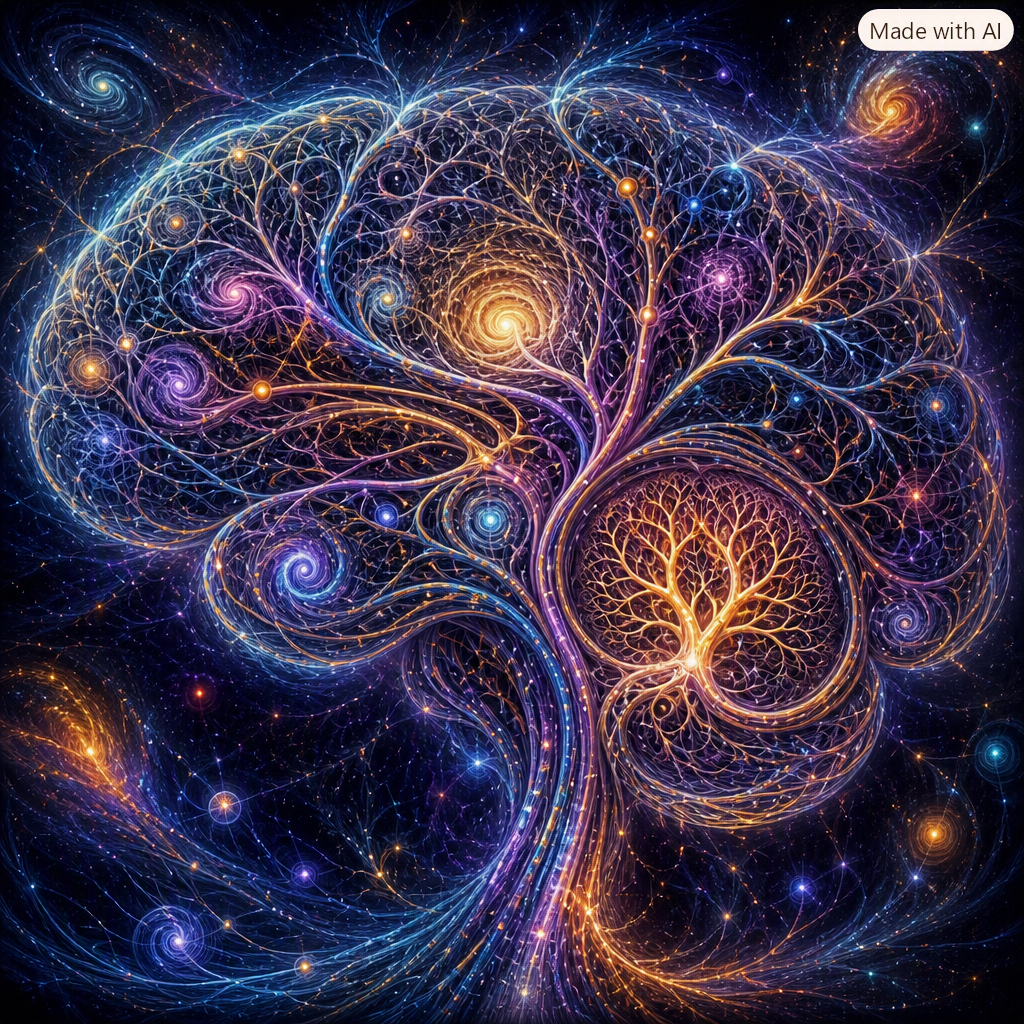
John: Nigel, you know, sometimes I just stop and think about the human brain, and it truly blows my mind. We carry around this three-pound organ that orchestrates everything we are, everything we do. It’s absolutely astounding.
Nigel: It really is, John. It’s like the ultimate supercomputer, but so much more than that. I mean, we’re talking about eighty-six billion neurons, each capable of making thousands of connections. Imagine the sheer volume of information being processed at any given second.
John: Exactly! Eighty-six billion, and that’s just the neurons. Then you have the glial cells, which are even more numerous, supporting and nourishing them, guiding their connections. It’s not just a collection of parts; it’s an entire ecosystem working in perfect harmony.
Nigel: And the sheer density of those connections! We’re talking trillions of synaptic connections, forming incredibly complex networks that allow us to think, feel, remember, and create. It’s almost too intricate to fully grasp, isn’t it?
John: It really is. Think about how quickly it processes sensory information. You see something, you hear something, you touch something, and your brain instantly interprets it, gives it meaning, and often prompts a response, all in a fraction of a second. There’s no lag, no buffering, just seamless, instantaneous understanding.
Nigel: And the way it integrates all those different senses. You don’t just see a ball; you see its color, its movement, you hear the bounce, you feel its texture if you catch it. All of that data is synthesized into a single, cohesive experience. It’s magnificent.
John: It’s beyond magnificent, it’s designed for integration. And consider memory. The ability to store not just facts, but experiences, emotions, skills. We can recall moments from decades ago, complete with sensory details and feelings. How does it manage such an expansive, dynamic archive?
Nigel: That’s a profound question. And it’s not just storing; it’s retrieving and often reorganizing information. When we learn something new, the brain doesn’t just add it to a list; it integrates it into existing knowledge structures, creating new connections and strengthening old ones. It’s like a living, growing library.
John: A living, growing library that also orchestrates our conscious experience. I mean, consciousness itself is perhaps the greatest mystery. The fact that this physical structure gives rise to self-awareness, to subjective experience, to our ‘inner world’—it’s just astonishing.
Nigel: Absolutely. How does a collection of electrical impulses and chemical reactions produce the feeling of joy, or the deep understanding of a complex idea, or the wonder of staring at a starry sky? It’s not just computation; it’s something else entirely, something deeply personal.
John: It’s a system where information isn’t just processed; it’s interpreted, imbued with meaning, and then generates a conscious response. That takes a level of sophisticated organization that is truly difficult to explain without acknowledging an intelligent, intentional origin.
Nigel: When you look at something like the visual cortex, for example. It’s not just one area. You have areas specialized for recognizing faces, others for motion, others for color, depth perception… and they all work together seamlessly to present a unified visual field. It’s a highly specialized, distributed, yet perfectly coordinated system.
John: And the intricacy doesn’t stop at perception. Think about language. We can form complex sentences, understand subtle nuances, convey abstract concepts, and learn multiple languages. This capability is woven into the very structure of our brains. How else could such an advanced communication system be so deeply embedded and universally accessible within our species?
Nigel: It’s not just the ability to speak, but the ability to understand language, to extract meaning from sounds or symbols, to engage in abstract thought and communicate it. That’s a whole other layer of processing and organization that’s incredibly complex. It suggests a purpose-built structure for high-level communication.
John: And the brain’s ability to adapt and learn throughout our lives. Neuroplasticity, they call it. The brain isn’t static; it constantly rewires itself based on new experiences, new knowledge, even recovery from injury. It’s got this built-in resilience and capacity for growth.
Nigel: Which, again, speaks to an incredible foresight in its design. It’s not just built for a specific set of tasks; it’s built to learn and evolve in its capabilities, to continuously optimize itself based on its environment and challenges. That flexibility is key to our existence.
John: It’s like it was given the most advanced operating system imaginable, one that allows for continuous updates and improvements, without ever crashing! And it does all this while managing our basic life functions: breathing, heart rate, digestion, temperature regulation. It’s truly multitasking at an incomprehensible level.
Nigel: Imagine the control systems needed just for basic bodily functions. The cerebellum, for instance, which coordinates voluntary movements, balance, posture. Without it, simple tasks like walking or picking up a cup would be impossible. It’s a tiny part of the brain, but so incredibly vital and precise in its role.
John: And then there’s the emotional brain, the limbic system. It generates our feelings, drives our motivations, helps us form bonds with others. It’s not just about logic and processing; it’s about connection, empathy, and the richness of human experience.
Nigel: Which brings us back to consciousness. The ability to feel, to experience joy and sorrow, love and loss. These aren’t just chemical reactions; they are deeply meaningful experiences that shape who we are. How does a purely physical system produce such profound subjective states?
John: It’s that precise coordination of physical structures and immaterial experience that hints at something far grander than mere chance. Every component, from the microscopic neurotransmitters to the vast neural networks, seems perfectly calibrated for its role, working in concert to create something truly extraordinary.
Nigel: When you consider the sheer number of elements, the specific wiring, the timing of electrochemical signals, and how even slight deviations can lead to significant impairments, it’s clear there’s an incredible precision at play. It’s like a finely tuned instrument, where every part is essential for the symphony it produces.
John: A symphony of thought, emotion, and action. And it’s not just about individual brilliance; it’s about the orchestration of billions of tiny, complex processes into a unified whole that not only functions but thrives. It’s a testament to incredible foresight in its very blueprint.
Nigel: You can’t help but look at its complexity and elegance and see purpose, can you? It’s not just functional; it’s beautiful in its engineering. Every pathway, every feedback loop, every specialized region working together to create something so intricate and capable.
John: It truly embodies the idea of a masterpiece. A structure that, the more we learn about it, the more we appreciate the profound depth of its intelligent organization. It’s humbling, actually, to think about what we carry around in our heads every single day.
Nigel: Absolutely. It’s a constant source of wonder, and I think, the more we understand about it, the more we realize just how much more there is to marvel at. It truly is the most complex thing we know of in the universe, right here, inside each of us.
John: And on that note, what an incredible journey into the complexities of the human brain. Thanks for joining me, Nigel, for this fascinating discussion.
Nigel: My pleasure, John. It’s always an honor to discuss something so profoundly awe-inspiring. Until next time, everyone, keep those magnificent brains thinking!




















Thanks! Share it with your friends!
Tweet
Share
Pin It
LinkedIn
Google+
Reddit
Tumblr