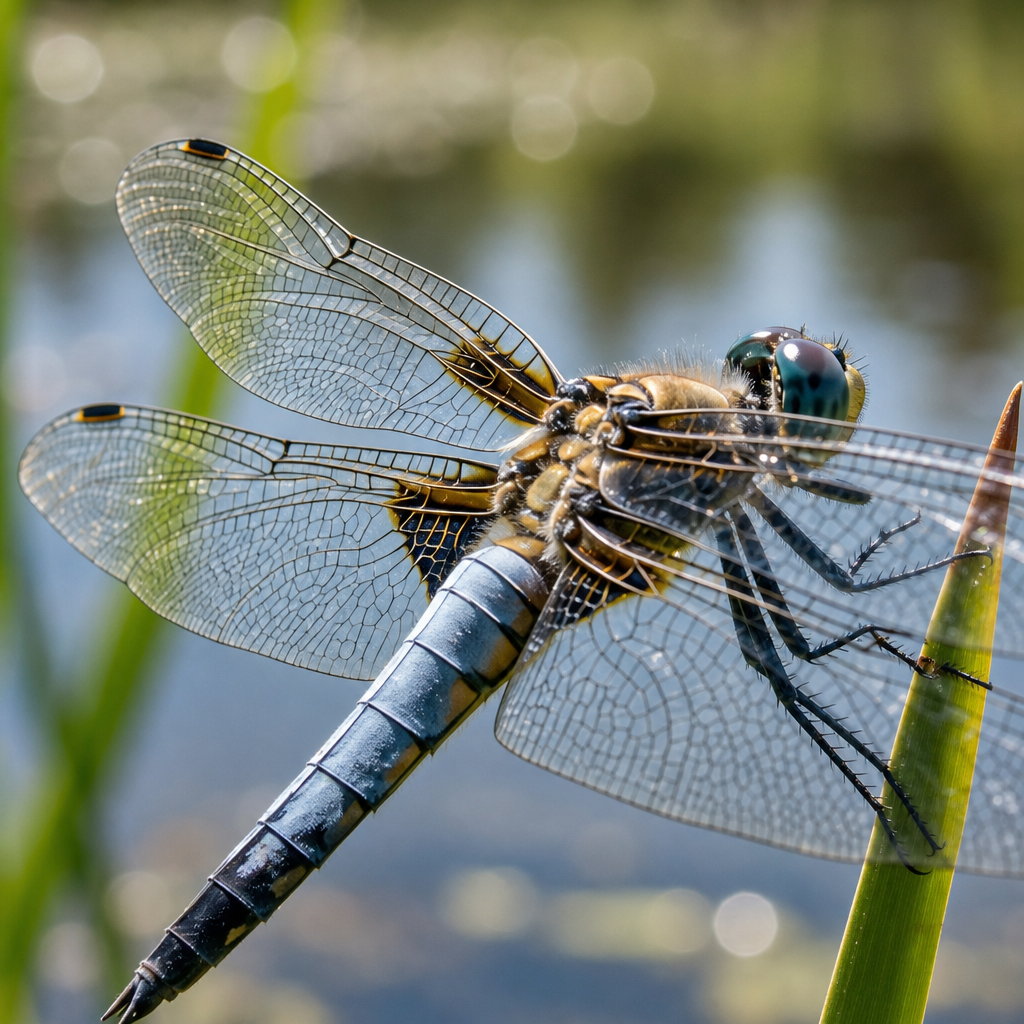
John: You know, Nigel, sometimes I just stop and watch the simplest things in nature, and I’m just utterly blown away. Take the dragonfly, for instance. Just a common dragonfly.
Nigel: Oh, the dragonfly! An absolute marvel, isn’t it? I mean, what an incredible creature. What is it about them that catches your eye today?
John: It’s everything, really, but especially their flight. It’s almost… impossible. The way they hover, then dart, then zip backward, all with such effortless precision. It’s like watching a miniature, highly advanced aircraft that no human engineer could truly replicate.
Nigel: It’s true! I’ve spent hours just trying to follow one with my eyes, and they’re just too fast, too agile. The maneuverability is just astounding. One moment they’re still, the next they’re across the pond. It really does make you wonder at the sheer ingenuity behind it.
John: Right? And it’s not just speed. Think about their four wings. Most insects have two pairs, sure, but the dragonfly’s are independent. Each wing can move on its own. Imagine the complex coordination required for that system to work, to allow for that kind of multi-directional flight.
Nigel: Four independent engines, essentially! It’s not just simple flapping; it’s a sophisticated aerodynamic dance. They can change direction in a fraction of a second, even mid-air, without losing momentum. That’s a level of control that we can only dream of in our own flying machines.
John: And the wings themselves! They’re so delicate, like fine lace, yet incredibly strong. That intricate network of veins throughout the wing isn’t just for show. It’s a structural masterpiece, optimizing for strength-to-weight ratio, ensuring resilience while keeping it incredibly light.
Nigel: Exactly. Every tiny detail, every curve, every connection, seems purposefully placed. It’s not just functional; it’s optimized. It’s a testament to intelligent construction. And then there’s the speed they generate with those wings – some species can reach almost 35 miles per hour!
John: It’s phenomenal. But the flight, as amazing as it is, is only one piece of the puzzle. You have to consider their vision. Their eyes, Nigel. They’re just beyond belief.
Nigel: Ah, the eyes! I was just about to bring those up. Those massive, compound eyes that wrap around their heads, giving them an almost 360-degree view of their surroundings. It’s like they have a panoramic, high-definition camera built in.
John: More than just a camera, really. Each of those thousands of individual lenses, or ommatidia, is a tiny sensor. They’re incredibly sensitive to motion and light. This allows them to detect prey or predators from any angle, almost instantly. They miss nothing.
Nigel: Imagine experiencing the world like that! Such an advantage for a hunter. It’s not just seeing, it’s processing that information at an unbelievable speed to direct their flight. The coordination between their visual input and their flight muscles must be instantaneous.
John: Absolutely. It’s a perfectly integrated system. The incredible visual processing feeds directly into the precise flight control. That’s why they’re such effective aerial predators. They can spot a tiny fly from meters away and intercept it mid-flight with pinpoint accuracy.
Nigel: And the way they catch their prey! They don’t just grab it; they essentially form a ‘basket’ with their spiny legs, scooping up their meal right out of the air. It’s not just a hunter; it’s a living, breathing, expertly designed hunting machine.
John: Exactly! It’s like every component is custom-designed for maximum efficiency and then meticulously integrated with every other component. The sleek, aerodynamic body, the powerful thorax housing the flight muscles, the head almost entirely dominated by those magnificent eyes.
Nigel: It truly is. And then you think about their life cycle. It’s not just the adult stage that’s amazing. There’s the aquatic nymph stage, completely different, living underwater, breathing through gills, also a highly effective predator in its own right.
John: That’s a whole other level of complexity, isn’t it? To have the blueprint for two such distinct forms, each perfectly suited to its environment, yet originating from the same design. The transformation from an aquatic nymph to an aerial adult is just astounding.
Nigel: It speaks to a profound foresight. A design that anticipates completely different challenges and provides the necessary equipment for each stage. It’s not just one perfect design; it’s a sequence of perfectly orchestrated designs.
John: Think about the transition itself. Shedding its skin, emerging from the water, allowing its wings to unfurl and harden. It’s a vulnerable period, but the process is so precise, so programmed. Every step is crucial, and it happens flawlessly, billions of times over.
Nigel: And what emerges is something utterly transformed. From a creature designed to navigate the currents of a pond to one designed to master the skies. It’s like a complete re-engineering, but one that’s been planned from the very beginning.
John: It’s not just about survival, either. Have you noticed the vibrant colors? The iridescent blues, greens, reds, shimmering in the sunlight. It’s an aesthetic touch to an already brilliantly functional design. It’s beauty intertwined with utility.
Nigel: Oh, absolutely! The colors are magnificent, aren’t they? They catch the light in such a spectacular way. It adds another layer of wonder to an already remarkable organism. It’s as if there’s an appreciation for artistry in the very fabric of its existence.
John: So, when you put it all together – the unparalleled flight, the omniscient vision, the predatory prowess, the elegant transformation through life stages, and even the sheer beauty – it really does present a compelling picture, doesn’t it?
Nigel: It does, John. It truly does. It speaks to a level of intricacy and intelligent organization that far surpasses anything we can conceive or construct. The dragonfly isn’t just a collection of parts; it’s a perfectly integrated, optimized system.
John: It’s a testament to incredible foresight and engineering at its absolute finest. Every single element serves a purpose, and they all work in perfect harmony to create this magnificent, living marvel.
Nigel: It’s a masterpiece, really. A tiny, iridescent, high-speed masterpiece flying right before our very eyes, reminding us of the profound design embedded in the natural world. It really makes you appreciate the world around us a little more deeply, doesn’t it?
John: It certainly does, Nigel. A truly humbling and inspiring example of magnificent design. And one that flies right past us almost every day.
Nigel: Indeed. A constant invitation to pause and marvel. Until next time, then, John.
John: Until next time, Nigel and thanks everyone for listening.













Thanks! Share it with your friends!
Tweet
Share
Pin It
LinkedIn
Google+
Reddit
Tumblr