Highest Rated Videos
 8,464 views
12,716 views
8,464 views
12,716 views 13,186 views
11,834 views
13,186 views
11,834 views
 503,439 views
 16,370 views
 19,257 views
 13,602 views
Related Videos
590 views 1,105 views











By Zoey Sky (Natural News) Story time is an important …read more Source: Natural News

By John UpChurch What if we could find an efficient process that extracted a pure source of power—hydrogen gas—directly out of water. …read more Source: AIG Daily
By Joy Jensen, staff writer (NaturalHealth365) Ozone is an odorless, colorless gas, and while the oxygen we breathe has two atoms (02), ozone actually has three oxygen atoms (O3). Today, we’ll focus on the value of topical ozone – as a promising therapy for MRSA, a bacterium that causes infections in many areas of the body. Generally speaking, ozone is used to help improve the body’s ability to intake and use oxygen, as well as to help activate the immune response. It’s being used in medicine to help treat diseases by limiting the effects of protozoa, viruses, yeast, and bacteria. [More]
Popular YouTubers like Rawvana and Bonny Rebecca gave up veganism to save their health. But the fallout from their fans has been immense. Last March, vegan YouTuber Yovana Mendoza posted a video on her channel, Rawvana, that rocked her followers to their cores. “I definitely did not feel ready to talk about this,” Mendoza told the camera, her expression solemn. She had garnered nearly two million subscribers for her raw vegan diet content, but had recently been spotted with a plate of fish and called out for her ostensible hypocrisy. In the video, which has since been made private, she [More]

By Ken Ham God’s Word commands us to “contend for the faith” (Jude 3)—something that we need to do increasingly in our secularized age when the Bible and Christian faith are under attack. And we want to equip you to stand strong and have the answers for the questions of our day so you can effectively share the gospel with others. That’s why we host conferences around the world—and, if you’re in the United Kingdom or anywhere in Europe, we invite you to join us in West Midlands, UK, October 24–26, 2019, for the AiG–UK “Contending for the Faith” …read [More]

By Sara Middleton, staff writer (NaturalHealth365) These days, many parents choose to provide their children with cell phones. It’s not necessarily a bad idea, because when used properly cell phones can provide essential communication and keep children safe. But, a question still remains: is WiFi (wireless) radiation harmful? From cell phones and WiFi routers at home to free WiFi at schools, children are exposed to a significant amount of wireless radiation every day. Unfortunately, many parents, schoolteachers, and guardians don’t realize the potential dangers of microwaves and wireless internet connections. For example, just take one girl’s testimony about her …read [More]
By Daisy Luther I hope it’s going well with your daily challenges! If you missed the previous challenges, you can catch up here: Day 1 Day 2 Onward to today’s challenge! Yesterday, we … Read the rest The post National Preparedness Month Daily Challenge: Day 3 appeared first on The Organic Prepper. …read more Source: Organic Prepper

By Ken Ham Our biblical worldview magazine, Answers, tackles the tough issues of our culture, giving you helpful answers and perspectives—always starting with God’s Word—on these contentious issues. And our latest edition, arriving in mailboxes soon, is no different. This issue features articles on gender and sexuality, helping believers think according to God’s Word regarding hot-button topics such as transgender, gender fluidity, and homosexuality. This is not an issue you want to miss! And all of us need equipping on these timely topics so we can teach our children how to deal with these issues that permeate our culture. All [More]
By Dr Wayne You might have heard in the news recently the report by the CDC that our country’s birth rates have now fallen below the level to replace the existing population. The reason they say is mostly environmental, for example the days are hotter and the air pollution is the worst it has ever been, just to name a couple “environmental” excuses they claim. Now, there’s no question our environment is so polluted that both humans and animals alike are constantly born with deformities and other mutations. But let’s be honest with ourselves – the environment is not the [More]

By Zoey Sky (Natural News) Red beets may be an …read more Source: Natural News
By none Celiac disease may seem like a modern affliction connected with food antigens introduced into the human diet in the past few decades, but it actually dates back to the 1st century A.D., when the Greek physician Aretaeus of Cappadocia took note of a condition that inhibited the retention of food and caused it to pass through the stomach undigested. He called this condition “koiliakos” (derived from “koelia,” the Greek word for abdomen), and patients with this illness were called celiacs.1 Over the years, there have been many breakthroughs regarding celiac disease. These include Dr. Samuel Gee’s publication of [More]

The ICR Discovery Center is now open to the public! We’re excited for you and your family to discover how science confirms creation. What can you experience on an ICR field trip? Are blue eyes in humans a mutation? And how does belief in creation or evolution impact Christian worship? Discover the answers to these questions and more in the September 2019 issue of Acts &am… More… …read more Source: icr.org
Tooth enamel can now be made to repair itself by applying a special gel. The product could save people from developing cavities that require dental fillings. Enamel is the hard, protective layer on the outside of teeth. It can be worn down by mouth acid and repeated chewing, leading to cavities that have to be plugged with fillings to prevent further decay. Because fillings are made from foreign materials like metal, porcelain and resin, they don’t bind seamlessly to the tooth surface and often become loose. …read more Source: Sott health news feed
Drugs taken by thousands of breast cancer patients create deadly “sleeper cells” that may cause incurable tumours years later. Researchers say the hormone therapies kill most of the cancer cells but put some into a dormant state and help them to spread. These can reawaken up to 20 years later, causing tumours elsewhere in the body that are resistant to treatment. Scientists from Imperial College London made the discovery while studying 50,000 human breast cancer cells in a lab. They believe they can use their findings to develop treatments that keep the cells asleep for longer or awaken them so [More]

We present reasons why Jupiter is young, not billions of years old, as claimed in the BBC-TV program The Planets. …read more Source: creation.com
By Sara Middleton, staff writer (NaturalHealth365) If you live in America, you’re almost certainly exposed to fluoride on a daily basis. And as you may know, exposure doesn’t just come from the fluoride in toothpaste or mouthwash – both of which are regularly recommended by conventionally-trained dentists. It’s in the public drinking water supply, as well. Now, breaking research out of York University in Canada drives home a scary reality about the dangers of fluoride exposure. In fact, this health threat is one that’s causing health experts to voice serious concerns for expecting mothers. To be more specific: the authors’ [More]
09/10/19 A Monsanto executive said he wanted to “beat the shit out of” a mothers’ group that urged the company to stop selling its Roundup weedkiller, according to internal emails obtained by lawyers for victims who say the pesticide caused their cancer. The July 2013 emails, reported today by New Food Economy, reveal an exchange between Dr. Daniel Goldstein of Monsanto and two outside consultants about how to respond to an open letter from Moms Across America, a grassroots advocacy group. The emails were obtained during the discovery process for litigation against Bayer, Monsanto’s parent company, over Roundup, which [More]

By Zoey Sky (Natural News) An exciting study published in …read more Source: Natural News
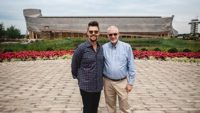
By Ken Ham Two-time Grammy award-winning gospel music artist Jason Crabb is coming to the Ark Encounter to perform two concerts, on September 17 and 18, 2019 (south of Cincinnati). Don’t miss this worshipful and fun evening of music in our brand-new 2,500-seat multi-purpose center within easy walking distance of our life-size Noah’s Ark. Jason has toured the Ark, and he absolutely loved it. He told me he’s excited to come back and perform in our state-of-the-art auditorium. It’s a great time to visit and enjoy some Christ-honoring music and tour the life-size Noah’s Ark (discount …read more Source: Ken [More]

By Stephanie Diaz (Natural News) Archeologists found an ancient estate …read more Source: Natural News
By Thomas Perry Source: 6 Little-Known Fruits You Should Try Today For more content like this visit REALfarmacy.com. Apples, bananas, oranges, grapes — all of these fruits are well-known and easy to find when you want them. But stepping out of your comfort zone and expanding your nutritional horizons offers you the chance to try a new flavor and reap some pretty amazing health benefits. Here are 6 little-known fruits you should try: […] Source: 6 Little-Known Fruits You Should Try Today Learn more at REALfarmacy.com. …read more Source: realfarmacy.com
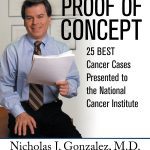
By Jonathan Landsman (NaturalHealth365) As many of you already know, the late Nicholas Gonzalez, MD was a dear friend of mine and great supporter of NaturalHealth365. Over the years, Dr. Gonzalez would do many audio and video programs with me – including “The Truth About Chemotherapy.” Today, I have an exciting announcement to make about a recently released book entitled: Proof of Concept – which features Dr. Gonzalez’s original presentation in 1993 to the National Cancer Institute about his 25 best cancer cases. I want to personally thank his wife, Mary Beth Gonzalez for giving me this opportunity to share [More]

?We respond to a number of comments critical of ‘science-rejecting’ creationists. …read more Source: creation.com
By Thomas Perry Source: 20 Warning Signs of Cancer Commonly Ignored by Women For more content like this visit REALfarmacy.com. It is important to listen to your body and notice anything that’s different, odd, or unexplainable. Don’t rely on routine tests to protect you from cancer. Here are some signs that are commonly overlooked: 1. Wheezing or shortness of breathOne of the first signs many lung cancer patients remember noticing is the inability to catch […] Source: 20 Warning Signs of Cancer Commonly Ignored by Women Learn more at REALfarmacy.com. …read more Source: realfarmacy.com

By Sara Middleton, staff writer raw, egg, yolk (NaturalHealth365) According to the World Health Organization (WHO), 50 million people around the world are living with dementia. This life-altering condition is not considered a “normal” part of aging. But, the good news: lifestyle choices can protect your brain health – as you age – and help you to avoid the devastating effects of dementia symptoms, which include memory loss and personality changes. So, what’s one intelligent lifestyle choice to consider? Eating more foods rich in choline. Basically, choline is a vitamin-like essential nutrient and, actually a component of another compound known [More]

In theory, we shouldn’t be here. …read more Source: creation.com

By Janine Acero (Natural News) If you have decided to …read more Source: Natural News