Highest Rated Videos
 8,465 views
12,716 views
8,465 views
12,716 views 13,186 views
11,834 views
13,186 views
11,834 views
 503,439 views
 16,370 views
 19,257 views
 13,602 views
Related Videos
 1,790 views
 1,008 views
 1,564 views














By Ken Ham Our popular Answers Bible Curriculum (ABC) is our four-year Sunday school curriculum that goes through the Bible chronologically. It features apologetics, an emphasis on biblical authority, and meaty teaching. Over 10,000 churches use it, and so do many homeschool families across the country who adapt it to fit their needs. And we’re excited to announce that ABC just won three Homeschool Family Favorite designations from the homeschool convention Teach Them Diligently! We placed number one in the following three categories: Favorite High School Bible, Worldview, or Character Curriculum Favorite Middle School Bible, Worldview, or Character Curriculum Favorite [More]
By Daisy Luther by Daisy Luther As of today, we’re one week in on our prepper health and fitness challenge. We have added the following habits: Drinking a glass of water before any … Read the rest The post 2020 Prepper Health & Fitness Challenge: Day 7 appeared first on The Organic Prepper. …read more Source: Organic Prepper
By Daisy Luther by Daisy Luther How is it going with your new habits? Today, remember, we’re going to follow up and continue our simple tasks. We’re going to drink a glass of … Read the rest The post 2020 Prepper Health & Fitness Challenge: Day 6 appeared first on The Organic Prepper. …read more Source: Organic Prepper
Metal chelation and detoxification of chemical contaminants are complex and serious matters. It is a fact that you can end up in worse health after chelation than when you started if you are not well-informed and do not proceed carefully under the care of a competent health-care practitioner. Human exposure to heavy metals has risen dramatically in the last 50 years so the need for detoxification and chelation has increased exponentially. The above book cover is from a beautiful edition of my magnesium book in Portuguese. And this is my New Years present, this important information about magnesium, about toxic [More]
By Michael Greger M.D. FACLM Breakthroughs in the field of chronobiology—the study of our circadian rhythms—help solve the mystery of the missing morning calories in breakfast studies. …read more Source: nutritionfacts.org
By Michael Egnor On this episode of ID The Future from the vault, host Ray Bohlin talks with Michael Egnor, a pediatric neurosurgeon and professor of neurosurgery at State University of New York Stony Brook about ways modern science validates the idea that the mind is not reducible to the brain. They delve into oddities of neuroscience that indicate that there is more going on in the brain than mere chemistry, and, in particular, walk through the seminal work of Adrian Owen on MRIs and what it reveals. Your browser does not support playing Audio, please upgrade your browser or [More]
By Thomas Perry Source: The Beautiful Flower That Has Cancer-Fighting Properties For more content like this visit REALfarmacy.com. The genus Passiflora is composed of more than 500 different species of plants, most of which are used as ornamentals. Commonly called passionflowers or passion vines, these plants are well-known for producing brightly colored flowers with different hues. However, passionflowers aren’t just intended for visuals. Ongoing research suggests that these plants also possess a variety of medicinal properties that make them potent […] Source: The Beautiful Flower That Has Cancer-Fighting Properties Learn more at REALfarmacy.com. …read more Source: realfarmacy.com
Cancer rates are on the rise, and researchers are anxious to find possible alternative and herbal remedies to prevent and treat cancer. Conventional cancer treatments include chemotherapy and radiotherapy, both of which work to kill cancerous cells or arrest cancerous cell growth but have numerous negative side effects.[i],[ii] However, a recent study published in the European Journal of Medicinal Chemistry concluded that eugenol and cinnamaldehyde, two of the active ingredients in cinnamon, have powerful apoptotic properties that could be used to fight the growth and regeneration of cancerous cells. Researchers believe that cinnamon, widely used as a spice and flavoring [More]
Folk medicines and herbal products have been used for millennia to combat a wide range of ailments, and in the process confounding modern scientists who have struggled to understand their medicinal benefits. Now a new study from the University of Sydney has revealed exactly how one popular ancient remedy – elderberry fruit – attacks and thwarts the influenza virus. The virus, one of the leading causes of mortality worldwide, affects nearly 10 percent of the world population and contributes to one million deaths annually. In their new paper, Australian scientists describe how elderberry compounds directly inhibit the flu virus’s entry [More]

By Ken Ham More and more scientists and researchers are shocked by the discovery of fossilized soft tissue (or, even more incredibly, unfossilized soft tissue!) in creatures thought to have died millions of years ago. These findings don’t fit the narrative most of us learned in school: a creature is slowly buried by sediments, gradually becoming fossilized. Instead, such fossils point to rapid, catastrophic burial. And a new find points, yet again, to catastrophic burial. Fossilization is a catastrophic process, as something has to be buried quickly. Researchers uncovered the fossils of tiny bug-like creatures that are buried in so-called [More]
01/17/19 “This shows how important it is for parents to monitor what their kids are watching and not assume that if a show is on a particular channel that it’s okay for them to watch.” Admin The Disney Channel will premiere a new cartoon – The Owl House – on Friday, January 10, that promises to introduce young viewers to a world of demons and witchcraft. According to Disney, “The series follows self-assured teenage girl Luz, who discovers a portal to another realm where humans are not well-liked, and she must disguise herself in order to fit [More]
By Michael By Grizzlyette Adams Dealing with a disaster is often exhausting and staying alert can be especially challenging during a prolonged crisis. However, strategies to stay in top form during and after… …read more Source: Natural Blaze

By Dennis Rainey Many parents run from conference to conference looking for the secret to successful parenting. Sometimes they forget another risk: stale marriage. …read more Source: AIG Daily
In the past five years, almond milk consumption in the United States has exploded over 250 percent. The lower-calorie, vegan milk alternative is a staple in grocery stores and coffee shops across the country now, but its booming popularity comes at a heavy environmental cost. According to a new report from the Guardian this week, the titanic and growing demands of the California almond industry are placing a huge strain on the hives of bees used to pollinate their orchards, wiping out billions of honeybees in a matter of months. “My yard is currently filled with stacks of empty bee [More]

By Darnel Fernandez (Natural News) Gastrointestinal (GI) problems have always …read more Source: Natural News

By Darnel Fernandez (Natural News) Nutrition, exercise and smoking are …read more Source: Natural News

By Dr. Alan White Are temperature changes a serious threat to our way of life? …read more Source: AIG Daily

By Tess Pennington For years, we have written extensively on the immune-boosting properties of apple cider vinegar, honey, lemon, cinnamon, and ginger. But what happens when you combine all five of these natural health-boosting ingredients into one drink? A natural, synergistic energy drink that will boost your health. While most apple cider vinegar tonics can be a bit too acidic for my taste, switchel has a lightly sweetened flavor thanks to the honey and cinnamon that is mixed in. Although many like to add seltzer water to this tonic, I like it so much that I can drink it without [More]
Are you one of those people who still believe that butter is bad for you? Butter may have had a bad rep over the last decade but it hasn’t always been this way. In the 1900s, butter was a food staple and was used in just about every recipe. Everyone seems to have a different opinion about butter these days. The government, doctors, and even the media constantly contradict each other on this issue. So, you might be wondering if butter is good for your health or not? While you were told to avoid butter, new research is challenging this [More]

How do you know when something has been engineered? One way to tell is to study the words used to describe its characteristic features. The Mt. Rushmore rock faces have different characteristics from the surrounding uncarved rock that don’t resemble portraits of American Presidents. Good scientific theories should be able to make predictions—including ones intended to explain biological phenomena. ICR previously… More… …read more Source: icr.org
By Michael By Richard Enos The Facts: There are many reasons that most of us feel more relaxed, happy, even creative after spending some time near the ocean. Reflect On: What can we learn about ourselves and… …read more Source: Natural Blaze

By Sara Tipton Since flood season is upon us, and it’s “unprecedented” this year, it could be helpful to learn how to gain some knowledge and learn to survive a flash flood. If you get caught in your car in a flash flood, knowing the proper steps to take could save your life and the lives of anyone else stuck in the vehicle. Flooding is one of the most common natural disasters in the United States. Already this year, record-breaking floods have devastated farmlands across the country destroying crops and land. Some of the floods have even swept …read more [More]
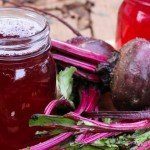
By Lori Alton, staff writer (NaturalHealth365) Millions of Americans suffer with digestive problems – many of them silently. They try over-the-counter medications, laxatives and even prescription strength drugs to improve symptoms, such as acid reflux and bowel problems. But, we all know that’s not the solution. Unfortunately, issues like constipation, diarrhea and heartburn send people to doctors and hospitals every day. According to the National Institute of Diabetes and Digestive and Kidney Diseases, between 60 and 70 million Americans are affected by a digestive disease, with more than 48 million visiting doctors or hospitals for their conditions every …read more [More]
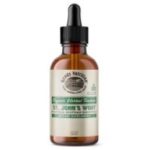
By Sara Tipton Known for its exhaustive medicinal value, St. John’s Wort is one of the best herbs to add to your herbal medicine cabinet. In addition to its medicinal properties, an herbal tincture can have the powerful effect of balancing your mood and helping you achieve a more positive outlook naturally. St. John’s wort (Hypericum perforatum) is a flowering plant named because the bright yellow flowers were said to bloom for the first time around St. John the Baptist’s birthday. The word “wort” means “plant” in Old English. And evidence suggests that the plant might be better at handling [More]

By Dr. Mercola Sugar is one of the most harmful and addictive substances that you can consume, as it’s associated with various metabolic diseases.1 Nowadays, it’s found in almost everything you eat. In fact, the average American consumes around 17.4 teaspoons of sugar per day — that’s more than 5 teaspoons higher than the average sugar intake recommended by the U.S. Dietary Guidelines for Americans, 2015-2020.2 A 2015 article from The Washington Post states that the U.S. even ranks first in the countries that consume the highest amount of sugar.3 According to a study published in the Journal of the [More]

Not a problem for the biblical timescale. …read more Source: creation.com
By Dr. Mercola Taking a daily shower is a fairly recent development for Americans. Just 100 years ago, many thought getting their whole body wet at once (instead of taking the sponge baths that were common then) would invite diseases like pneumonia and someone would “catch their death.” Nowadays, a long, hot shower is a daily ritual for Many Americans. Most soaps and personal care products have surfactants that, when combined with water, bind to oil and remove the beneficial fats called sebum that naturally protect your skin.1 Generally speaking, the more a product bubbles or lathers, the more surfactants [More]