Highest Rated Videos
 8,465 views
12,716 views
8,465 views
12,716 views 13,186 views
11,834 views
13,186 views
11,834 views
 503,439 views
 16,370 views
 19,257 views
 13,602 views
Related Videos
1,137 views
365 views










By REALdeal Source: The most successful kids have parents who do these 7 things For more content like this visit REALfarmacy.com. Much has been written about the attributes of high-achieving adults, and what makes them different from everyone else. But if you’re a parent, a more compelling question may be: “What can I do to make sure my kids succeed in life?” Here’s what researchers say. Researchers have previous found that children of older parents tend […] Source: The most successful kids have parents who do these 7 things Learn more at REALfarmacy.com. …read more Source: realfarmacy.com

By AdminM Pharma Piracy Threatens Brain Health Supplement by Alliance for Natural Health The FDA is complicit in turning another supplement into an expensive drug. Action Alert! Earlier this year, the FDA fired off warning letters to seventeen companies that, in the agency’s view, were illegally marketing supplements to treat Alzheimer’s disease. One of the supplements targeted in the FDA’s action was piracetam, a derivative of GABA, continuing an FDA trend of attacking brain health supplements to protect drug industry profits. Piracetam has been on the market as a supplement …read more Source: Health Impact News

A new analysis of a small pair of T. rex-like fossils, called Nanotyrannus, shows they were actually teenage T. rexes. Holly Woodward, from Oklahoma State University, and her colleagues reporting in Science Advances, counted the growth rings in the leg bones of the two Nanotyrannus specimens. Their results showed the specimens were not a new species. Rather, they were just 13 and 15-year… More… …read more Source: icr.org
By Dr. Mercola In his new book, “Boundless: Upgrade Your Brain, Optimize Your Body & Defying Aging,” Ben Greenfield details his best longevity hacks. “Boundless” is a great title, as the object of longevity isn’t just about tacking on years of life, but finding ways to remain healthy and vibrant for as long as possible. In other words, it’s about quality and not just quantity of life. Greenfield’s goal with this book was to share his best tips for how to improve your energy in every sense of the word. At 640 pages, it’s a hefty …read more Source: mercola [More]
By Michael By Kayleigh Chester, University of Hertfordshire; Ellen Klemera, University of Hertfordshire, and Fiona Brooks, University of Technology Sydney We have seen a dramatic change in health trends for… …read more Source: Natural Blaze

By Ken Ham If you’re an unborn baby (a child) or are elderly or terminally ill, you may want to stay out of California! Abortions are free on public college campuses, and assisted suicide is legal in that state. But if you’re a dog or a cat (unlikely if you’re reading my blog!), head west because California’s governor, Gavin Newsom, is spending $50 million in an attempt to make his a “no-kill state.” But not for people—for dogs and cats. According to reports, the money will be allocated to “helping local communities ‘achieve the state’s policy …read more Source: Ken [More]

By Arsenio Toledo (Natural News) Having too much salt in …read moreSource: Natural News
Yes, fat cells deep under your skin can sense light. And when bodies do not get enough exposure to the right kinds of light, fat cells behave differently. This discovery, published Jan. 21, 2020, in the journal Cell Reports, was uncovered by scientists at Cincinnati Children’s who were studying how mice control their body temperature. What they found has implications far beyond describing how mice stay warm. The study shows that light exposure regulates how two kinds of fat cells work together to produce the raw materials that all other cells use for energy. The study authors go on to [More]

By Sara Tipton There are so many things we can do as a family to stay healthy during the winter. Your health and moving your body shouldn’t stop just because it’s cold outside, and here are a few ideas to help get you and the kids moving this winter! Please keep in mind that there are some things to be aware of before participating in outdoor activities during extremely cold temperatures. Hypothermia can be life-threating and frostbite has left people without limbs. Learn the signs and watch for them in yourself and your children while spending time outside during the [More]
“And I will declare my judgments against them, for all their evil in forsaking me. They have made offerings to other gods and worshiped the works of their own hands.” (Jer. 1:16) Thus spoke the Lord to Jeremiah concerning the cities of Judah who had rebelled against Him and had committed idolatries. It is human nature to worship idols, and in times past that often included literal idols. In the West, due mainly to Christian influence, the practice of worshipping physical idols has been largely abandoned for many centuries. But today, the Christian foundations of the West are crumbling away [More]
By Michael By Tyler Durden Every once in a while, medical researchers simply have a stroke of good luck. In this case, that “stroke of good luck” could have a profound effect on the medial… …read more Source: Natural Blaze

By Sara Middleton, staff writer (NaturalHealth365) Nearly a third of all pesticides used in the world are classified as “pyrethroids.” These are used with increasing regularity over the past several years due to a decline in organophosphates for household use. Now, a new study published in JAMA Internal Medicine indicates that these popular insecticides increase the risk of death due to all causes, including cardiovascular disease. Study reveals the true dangers linked to typically used pesticides Does long-term environmental exposure to household pesticides pose hazardous to human health? A growing body of ressearch says “yes!” The new JAMA study, which [More]
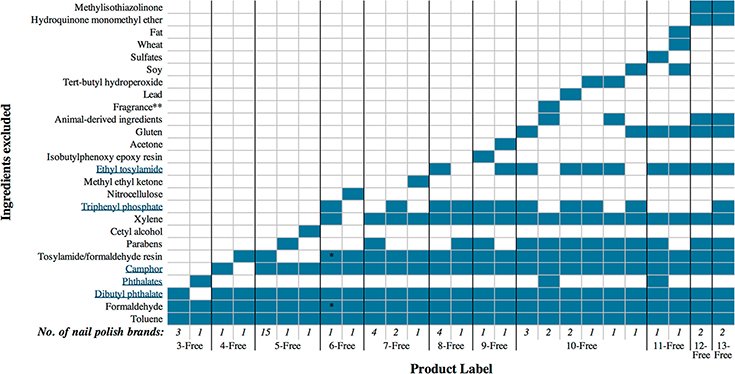
By Julie Fidler Nail polishes have been linked to birth defects, thyroid problems, obesity, cancer, and allergic reactions. That’s why many people specifically shop for polishes labeled “non-toxic.” But as past research shows, even nail polishes marketed as non-toxic may contain chemicals that are harmful to your health. [1] Study co-author Anna Young, a doctoral student at Harvard University, said: [2] “It’s sort of like playing a game of chemical Whac-A-Mole, where 1 toxic chemical is removed and you end up chasing down the next potentially harmful chemical substituted in.” It’s not just the nail polish industry that does this; [More]
By Darnel Fernandez (Natural News) As you age, your brain …read more Source: Natural News

By Dr. Danny R. Faulkner I will address the question of whether the universe really is as big as is often claimed. The short answer is, yes, the universe most certainly is that large. …read more Source: AIG Daily

Smart phones and social media, though amazing digital resources, are portals for information of all sorts, some of it wrong or harmful-use them profitably and wisely! …read more Source: creation.com
A novel method to improve cancer surgery and early cancer detection A study published in the Water Journal describes a novel method for comparing the sounds of cancer cells and healthy cells. The method may lead to the development of an Artificial Intelligence-supported surgical procedure for the removal of tumors. A form of the technology also holds promise for early cancer detection The Singing Cell The discovery that cells create sound, as a feature of their natural metabolic function, was made by Professor James Gimzewski of UCLA, in 2002. Using an Atomic Force Microscope, he and his colleague, Dr. Andrew [More]

By Isabelle Z. (Natural News) The U.S. Food and Drug …read more Source: Natural News
Parkinson’s disease, a progressive nervous system disorder that greatly affects movement, can have a detrimental impact on one’s quality of life. While there are medications available that help control its symptoms, there is no known cure for the disease. However, researchers from the Universities of Edinburgh and Dundee in Scotland recently identified a potential game changer in the fight against Parkinson’s. A common probiotic, or “good” bacteria, found in our stomachs that helps maintain digestive health appears to be able to slow, and even reverse, the accumulation of a protein known to be associated with Parkinson’s. The groundwork for these [More]

Research associated with the Simos Foundation’s Collaboration of the Origins of Life offers a new answer to an old problem for getting a soup of chemicals to somehow turn into a living cell. Assuming that life arose spontaneously, how did the rarely available element phosphorus get concentrated into high enough amounts to supposedly incorporate itself into the many essential biochemicals that contain phosphorus? DNA a… More… …read more Source: icr.org

By Sara Middleton, staff writer (NaturalHealth365) Your liver – a large wedge-shaped organ in the upper right area of your abdomen – has a lot of important roles. In addition to filtering and detoxifying blood from your digestive tract, it also secretes bile into the intestines, makes proteins that helps your blood clot, and more. There’s no question that your liver health is essential for overall well-being. Unfortunately, nonalcoholic fatty liver disease is a common problem facing Americans (to say nothing of liver disease caused by excessive alcohol consumption). And new research reveals why so many people with this condition [More]
By Dr. Mercola In the U.S., 5.8 million Americans aged 65 years and older have Alzheimer’s disease, and this number is expected to jump to about 14 million by 2050.1 Every 65 seconds, someone in the U.S. is diagnosed with the disease, which has no known cure and limited treatments to help manage symptoms. While conventional medicine has focused on drugs to treat symptoms, most have only limited effectiveness. Alzheimer’s has steadily ranked as the sixth leading cause of death in the U.S., but some estimates suggest Alzheimer’s deaths may be underreported, possibly making it the third leading cause of [More]
01/30/20 CAMBRIDGE, England — Human history is littered with examples of political systems that effectively nullified the average citizen’s rights or ability to have their voice heard. From the elaborate monarchies of centuries ago to fascists in Europe just 80 some odd years ago. Even today, there are many nations in which citizens have hardly any say in their government’s activities. In the face of these inequalities, a democracy is by far the most enlightened, balanced, and fair form of government. Unfortunately, an unsettling new study finds that in both developed nations, and on a global basis, dissatisfaction with democracy [More]
01/30/20 “It’s astounding the things going on in the world now, this is just the latest calamity to occur, what’s next? Better get right with God If you are not.” Admin Billions of locusts, in swarms the size of cities, are eating “everything in sight” in East Africa, and experts fear the plague could get “500 times” worse. The ZeroHedge blog reported “ravenous locust swarms that are ‘the size of cities’ are consuming crops at a staggering pace, and this could potentially cause famine on the African continent that is unlike anything we have ever seen before.” Al [More]
By Dr. Mercola Not only do your teeth fill out your face and enable you to eat, they also help maintain the bone structure of your jaw. Your teeth are made of four types of tissue, but only the center, or pulp, is not hard. Inside the pulp are blood vessels, nerves, and connective tissue that provide nutrients to the tooth.1 The outside of the tooth is called the enamel, which has no way to reverse damage from wear and tear (decay) since it contains no living cells. Your gums are responsible for protecting your roots as well as teeth [More]
First there was dark matter, then came dark energy, then dark photons and now there is talk of dark stars, dark planets and even dark intelligent life, in a whole dark galaxy within our Milky Way galaxy. However, physicists actually know nothing about dark matter and dark energy. These terms and the nebulous concepts they represent were actually invented by astrophysicists because they assumed materialism (matter and energy is all there is). They then dogmatically insisted on rigorously applying this to the origin and structure of the universe. Read More
By Thomas Perry Source: Mom Pulls The Plug On Kids’ Screen Time & Reports Results For more content like this visit REALfarmacy.com. The relationship between children and technology is a hot topic for parents all over the world. In an era when more and more parts of our lives are intrinsically linked with the screens that surround us and it can be hard even for adults to keep your feet grounded in the real world. It effects […] Source: Mom Pulls The Plug On Kids’ Screen Time & Reports Results Learn more at REALfarmacy.com. …read more Source: realfarmacy.com