Highest Rated Videos
 8,456 views
12,709 views
8,456 views
12,709 views 13,180 views
11,828 views
13,180 views
11,828 views
 503,428 views
 16,360 views
 19,249 views
 13,595 views
Related Videos
1,212 views








By Creation Moments The electron microscope was developed over 80 years ago and enables us to probe the secrets of God’s creation. One of the most surprising discoveries shows an incredible similarity between those little whips called flagellum – which some microbes use for swimming – and the inside of your ear! read more …read more Read more here: Creation Moments

Self-assembling virtual crystals are said to show the path to life from lifelessness. …read more Read more here: AIG Daily

Over 50 years ago there was intense debate in the conventional scientific community on the origin and formation of granites. However, there are still some unresolved issues. …read more Read more here: AIG Daily
“The incredible process of metamorphosis, changing a caterpillar to the beautiful monarch, is astounding in it’s complexity and defies any evolutionary explanation. It is one of the most powerful arguments for creation I know of.” Admin A monarch’s development from caterpillar to adult and its incredible ability to migrate clearly display the Creator’s design. What animal has a brain the size of a pinhead and yet can pinpoint a location 3,000 miles (4828 km) away and navigate there with an accuracy of 100 feet (30.5 m)?1 It is the most famous butterfly in North America—the monarch. But the winged adult [More]
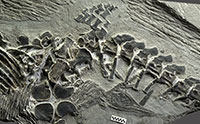
One of the latest ephemeral fossils comes from China—a baby ichthyosaur halfway in and halfway out of its mother’s body. Though fossilization tragically ended the baby’s transition from the womb, could this specimen support the story that a land reptile evolved into the first ichthyosaur? More… …read more Read more here: icr.org
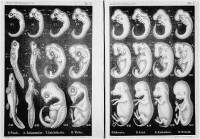
By Creation Moments In 1866, Professor Ernst Haeckel, a German zoologist and strong supporter of Darwin, published his theory that every developing embryo recapitulates all the previous evolutionary stages of its species. So the human embryo began as a fish with gills, then became frog-like, and so on until at the ninth month it was fully human. read more …read more Read more here: Creation Moments

By Ken Ham AiG speaker, researcher, and writer Dr. Terry Mortenson wrote a blog post this week that I thought would be good for all of you to read. Dr. Mortenson observes the following about the group American Atheists: Over the years the American Atheists have been having some serious problems with social behavior at their national convention. So they have developed a code of conduct for the 2014 conference. It is interesting to observe the things they tolerate (e.g., many kinds of sexual immorality) and the things they will not tolerate (e.g., lack of social etiquette). It should also [More]

By Ken Ham Last night, Answers in Genesis, in a live web streaming event from the Creation Museum, announced that funding was in place to begin construction of the full-scale Noah’s Ark in what is called the “Ark Encounter” historical theme park in northern Kentucky. I encourage you to watch the video of last night’s exciting announcement—which also reveals how certain reporters and atheists have misrepresented, distorted, and told outright untruths in their attempts to hurt the Ark project. You may be shocked at the lengths certain people have gone to in their efforts to stop this project because we [More]

The Noah movie makes a mockery of the account of Noah, the Ark, and the Flood. Ray Comfort and AiG have just released Noah-themed videos that are faithful to the Bible’s account. …read more Read more here: AIG Daily

Adam’s sin: deliberately choosing to disobey God and so putting his own authority above God’s. …read more Read more here: creation.com
By Creation Moments Most of us are familiar with the fact that our Earth is being observed by dozens of satellites that keep track of weather systems, natural resources, ocean currents, sunlight, climate and animal migrations which makes every crop grown anywhere on Earth able to be identified. read more …read more Read more here: Creation Moments

You only have two arms and two legs because your gut got in the way, evolutionists say. …read more Read more here: AIG Daily
“One more marvel of design that clearly testifies to Gods handiwork.” Admin Bees can solve complex mathematical problems that would normally keep computers busy for days, according to a new report from UK researchers.1 Through careful observation, University of London scientists have determined that bees routinely solve the “traveling salesman problem,” in which a subject must determine the shortest route between multiple destinations in order to conserve energy. But the scientists don’t know how the bees do it with a brain the size of a grass seed. “Bees learn to fly the shortest possible route between flowers even if they [More]

By Ken Ham Normally I would not encourage you to watch a video clip of HBO TV’s anti-God commentator Bill Maher. And I am reluctant for many reasons—but I thought that with the appropriate warning I should bring this clip to your attention, particularly his comments in regard to the recent debate between Bill Nye “the Science Guy” and me. First, be warned that an expletive is used twice in this eight-minute video clip. Even so, because it’s now on the cultural radar, I believed I needed to comment on it. You can avoid the first expletive by starting the [More]

It is true that ‘God is not dead’ but the arguments used in this movie to prove it have some major problems. …read more Read more here: creation.com

By Ken Ham A supporter contacted us recently with nothing but praise for our Answers Bible Curriculum (ABC) for Sunday school and our IncrediWorld Vacation Bible School (VBS) materials. After purchasing the IncrediWorld VBS kit and the first full year of ABC, she says she is happy that she “doesn’t have to go through our materials with a fine tooth comb” before she uses it. She shared that her church is using some other curriculum right now that mentions “little green men,” and she’s concerned about what it is teaching the students and adults. She’s very happy with our curriculum [More]

Scientists velcroed wood-‘n’-clay tails onto chickens to reverse-engineer dinosaur-to-bird evolution. Really. …read more Read more here: AIG Daily

Get answers to Bill Nye’s arguments against the feasibility of Noah’s Ark and the biblical Flood. …read more Read more here: AIG Daily

If Genesis is mere ‘poetry’ or allegory, then what about the resurrection of Jesus? …read more Read more here: creation.com

By Ken Ham During the recent debate I had with Bill Nye “the Science Guy,” in commenting about the Bible, Mr. Nye claimed that the Bible came to us like a game of telephone. Well, I was so encouraged to learn about a short video that two young dedicated Christian ladies produced to answer Mr. Nye’s false accusation that the Bible was supposedly handed down to us over the centuries like a game of telephone. I urge you to watch this short video—not only to help you refute the so-called “telephone game” claim, but to assist you in defending your [More]
By Creation Moments Most of us are familiar with the Big Bang theory. It says the entire universe is the result of a gigantic explosion that took place about 16 billion years ago. This explosion eventually resulted in stars, galaxies, our Earth and even our genetic codes. read more …read more Read more here: Creation Moments

In the debate, Bill Nye did not talk much about astronomy. But when he did, he made several erroneous statements. …read more Read more here: AIG Daily

It’s a lot younger than many people believe. …read more Read more here: creation.com

Bill Nye and other evolutionists have hijacked the word science. Find out what science really is in this article by Roger Patterson, AiG–U.S. …read more Read more here: AIG Daily

In this 2-part BBC TV program,1 Sir David Attenborough tells us he is going to look at the rise of vertebrate animals, because, he says, “The story of the rise of animals is also the story of why you and I came to be as we are.” As he presents this specious evolutionary fish story, we shall compare it with the biblical record, and seek to ascertain which is correct, as each contradicts the other. He begins in China, which he says is “the new frontier for fossil discoveries”. Unfortunately it is also the new frontier for fossil forgeries. …read [More]
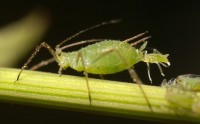
By Creation Moments Did you know that there is a creature that can have a huge number of offspring, yet never have any children? That unusual creature is the aphid. The first aphid of spring is a female, has no wings, and hatches from an egg early in the season. After about 10 days, she will give live birth to another fully formed adult female aphid. There have been no males around. read more …read more Read more here: Creation Moments

The molecular mechanism at the root of cavefish blindness is unmasked. …read more Read more here: AIG Daily